Girl, 5, out of long isolation after transplant

 Nathan Turvey/BBC
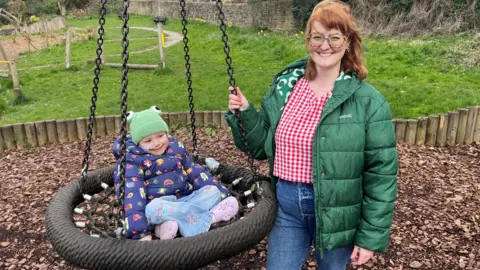
A five-year-old girl has finally come out of six months of strict isolation after having a life-saving bone marrow transplant.
Freya Dixon was diagnosed with Diamond-Blackfan anaemia (DBA) when she was a baby, a condition where bone marrow fails to produce enough red blood cells.
The transplant, which she had in September, was a success - but Freya, from Bingley in West Yorkshire, has since developed a rare and serious complication called transplant-associated thrombotic microangiopathy (TMA).
Freya's mother Amy described the past six months as a "rollercoaster" and said the family were nearly at "absolute breaking point".
 Amy Dixon
Amy said: "She was sick of staying inside with me all the time, I was sick of staying in all the time, she needed to talk to other people and be around kids her own age - and I needed to talk to other people."
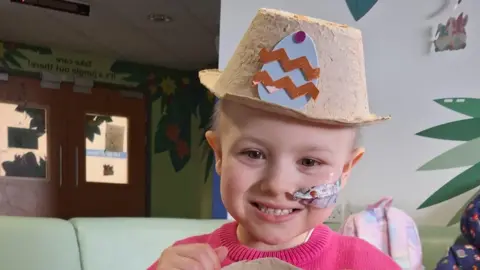
Before the transplant Freya had already endured more than 70 blood transfusions, each taking between five and 12 hours, and had to miss her first year of school.
A 20-year-old man from Germany donated his bone marrow, which means Freya may never need another transfusion.
Amy described the transplant as a "roaring success" - and added that she felt it was "100% the right thing to do".
"For the first time ever she's making red blood cells," she added.
Freya has now been able to start school part-time and said she loves playing with her friends.
 Amy Dixon
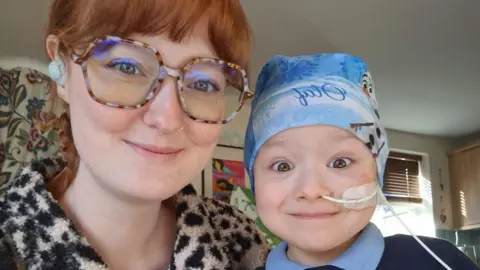
However, despite the success of the surgery, it has left Freya with further complications.
During her isolation Freya caught a virus which then led to transplant-associated thrombotic microangiopathy (TMA).
Amy said they were told about a drug called Eculizumab that might be able stabilise the TMA - but it was not routinely available on the NHS.
Leeds Teaching Hospitals NHS Trust has approved the medication for three weeks and said the family would then need to reapply for it if Freya responded well.
"I'm very happy with the news - but anxious, because more drugs means more chances of reactions and side effects, but I'm very thankful they've agreed to give it to her."
Amy said they were trying to balance that treatment with "ploughing through life" now the transplant had been successful and were looking forward to Freya going to school full-time after the Easter holidays.
"Between the ages of four and five she's done nothing but hospitals, it's time she starting living life," Amy added.
Listen to highlights from West Yorkshire on BBC Sounds, catch up with the latest episode of Look North.