Archaeology work begins ahead of £13.8m project

 Gloucester City Council
Archaeological works searching for Roman, medieval and Tudor remains have started in preparation for a major £13.8m city centre redevelopment.
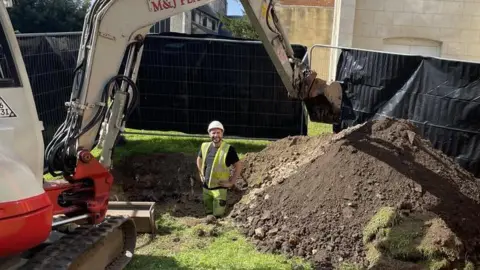
Gloucester City Council last week dug the first trial pit in the grounds of the 13th-century Greyfriars monastery, to the rear of Eastgate Market, to help assess the site ahead of the start of the Greyfriars Quarter project.
The site may contain the surviving below-ground remains of the churchyard of Greyfriars church, the Anchorite's Gate and chapel, parts of the Roman city wall, and more Roman and medieval remains.
The council said four test pits will be dug to enable planners to determine what happens next with the proposed development of the site.
The project is largely being funded by £11m of government Levelling Up money confirmed in 2024 and supported by funds already allocated in the council's capital budget.
"We have released £4m for the first phase, which will see Eastgate Market relocated into a row of former shops in Bell Walk and enable preparation work to take place for other aspects of the project, including the archaeology," the council said.
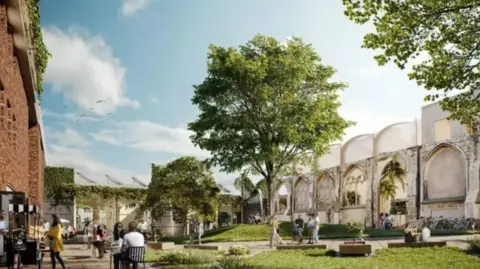
Council leaders previously confirmed that a disused section of Eastgate Shopping Centre and the market hall will be replaced with a new marketplace featuring a 450-seat cultural venue.
 Gloucester City Council
The council said the 19th-century Greyfriars House and the Greyfriars monastery are "both nationally significant heritage assets".
Artefacts uncovered will initially be secured until a display can be arranged.
The Franciscan friary of Gloucester Greyfriars was founded in about 1230, one of three friaries established in the then-town in the mid 13th century.
"In the 1330s it was home to about 30 friars, who performed a daily round of church services and masses, and also preached to the people of Gloucester," English Heritage, which manages the site, said.
"Although most of the medieval buildings of the friary no longer survive, the ruined church of Greyfriars – built just two decades before the dissolution of the monasteries – is a rare surviving example of a Tudor monastic church."
Follow BBC Gloucestershire on Facebook, X and Instagram. Send your story ideas to us on email or via WhatsApp on 0800 313 4630.