Reformer 'would be disappointed' by today's prisons

 Howard League for Penal Reform
The world's oldest prison charity says a reformer born 300 years ago would be disappointed by the state of today's jails.
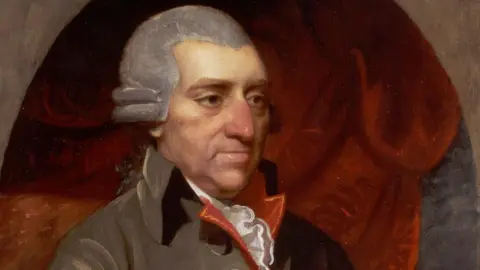
The Howard League for Penal Reform was named after John Howard, a former High Sheriff of Bedfordshire.
He campaigned for better conditions in jails, and against the practice of forcing discharged inmates to pay fees to their jailers.
But who was he, and what did he achieve?
Who was John Howard?
 Google
John Howard was born on 2 September 1726 in London.
His mother died when he was just five, but his father was a wealthy upholsterer at Smithfield Market.
Howard was a sickly child who was sent to live at Cardington, near Bedford, where his father owned some property.
He was educated at a school at Hertford Castle run by John Worsley and then at an academy in London run by John Eames.
When his father died in 1942, Howard inherited the Cardington estate but, six years later, he started a grand tour of Europe.
When he returned to the UK, he took lodgings in Stoke Newington and married his landlady, who died three years later.
Why did he get involved in improving prisons?
 Getty Images
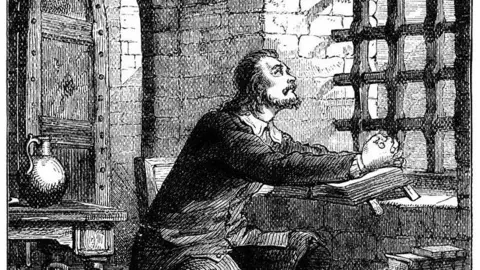
Howard set off for Portugal in 1755 and his boat was captured by French privateers.
He was imprisoned in Brest for six days and got his first taste of prison life - it affected him so much that, on his release, he appealed for help for his fellow captives.
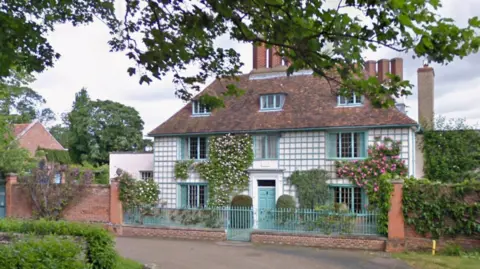
Back in the UK, he bought the property in Cardington that became known as Howard's House, and which today may soon become a school for children with special needs.
In 1774, Howard became High Sheriff of Bedfordshire.
Part of his new role was being responsible for the county jail, which he inspected and found to be "foul and fetid".
He was particularly troubled by the practice of bringing released inmates back to prison if they were unable to pay the fees for their upkeep charged by the jailer.
Howard called for the jailer to be paid a salary so he did not rely on payments from prisoners, and set off across the country to find out if jailers at other prisons were collecting fees.
How many prisons did he visit?
 Getty Images
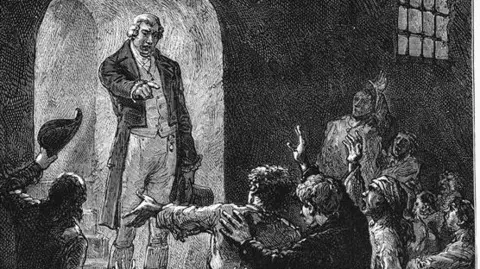
His book, The State of the Prisons in England and Wales, was based on 553 visits carried out, on horseback, over four years.
He visited some prisons more than once, and recorded his findings.
In Abington, Oxfordshire, he found: "Two dirty day-rooms; and three offensive night-rooms: The straw, worn to dust, swarmed with vermin: no court: no water accessible to prisoners.
"The petty offenders were in irons: at my last visit, eight were women."
He extended his researches to almost every country in Europe, including the Russian Empire, and travelled nearly 50,000 miles (80,467km) at a cost of about £30,000.
Did the government listen to him?
 Google
In 1774, John Howard was summoned before a House of Commons select committee to give evidence on prison conditions.
Shortly afterwards, bills were passed to prohibit fees being imposed on prisoners who "should be acquitted" and to preserve the health of inmates.
Howard wrote: "By those acts, the tear was wiped from many an eye, and the legislature had for them the blessing of many that were ready to perish."
Details in his book about overcrowded prisons and the spread of disease led many prisons to introduce single occupancy cells.
How did his story end?
 James Sinclair/Fitzwilliam Museum
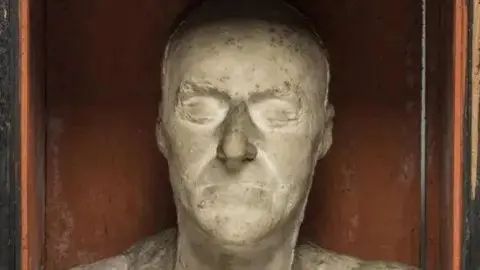
On yet another trip to Eastern Europe, he visited a prison in Kherson, in modern-day Ukraine.
According to some sources, he was asked to meet a woman who was suffering from a fever - he was reluctant to do so but agreed - only to be taken ill shortly afterwards.
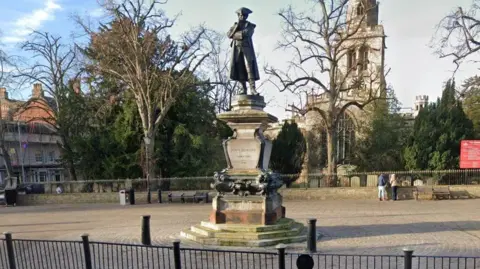
He died on 20 January 1790 and was buried in Kherson, where a monument was erected in his honour.
What is his legacy?
 Howard League for Penal Reform
The most obvious legacy of John Howard is the foundation of the world's oldest prison charity.
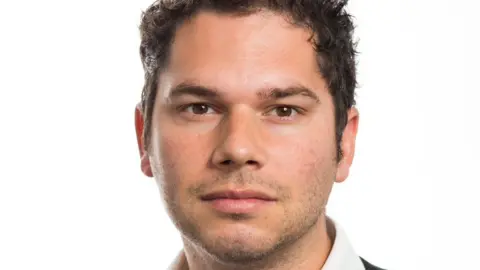
Robert Preece from the Howard League of Penal Reform (HLPR) said: "Admirers of John Howard's work in the late 19th Century decided that his work should continue and founded what was then called the Howard Association, which would later merge with the Penal Reform League to become the HLPR.
"Later this year, we'll be celebrating our 160th anniversary."
He acknowledged there had been many improvements to prison regimes since Howard's death, but said there was still work to do, even at the jail where Howard's work began.
He said a 2024 inspection report on Bedford Prison "talked about people keeping records of how many cockroaches they had seen".
"There were sandbags around because of the poor conditions and [it was] really overcrowded," Preece added.
The Prison Service said at the time that the report had also noted improvements at Bedford "including a reduction in levels of self-harm and the renovation of accommodation".
Preece said: "I'm sure John Howard would see progress in some aspects, but I think he'd be a bit disappointed to see some of the conditions that people are facing right now."
Do you have a story suggestion for Beds, Herts or Bucks? Contact us below.
Follow Beds, Herts and Bucks news on BBC Sounds, Facebook, Instagram and X.