Meet the 98-year-old 'Angel of Route 66'

 Johnny Kompar
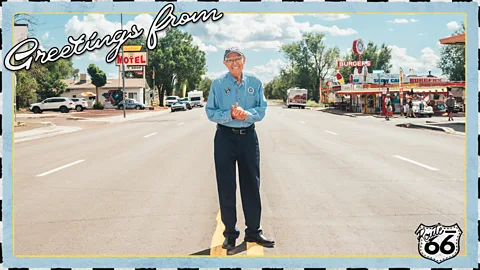
Angel Delgadillo still welcomes travellers to Seligman, Arizona – the town he fought to save when the "Mother Road" was forgotten.
On a dusty stretch of northern Arizona, about an hour west of Flagstaff, the neon glow of Angel and Vilma Delgadillo's Original Route 66 Gift Shop still flickers to life each morning.
Inside, 98-year-old Angel Delgadillo greets the stream of visitors pouring in from tour buses with a handshake and a grin bright enough to power its own neon sign. Its barely 09:00 but the shop is already buzzing with people from around the world searching for a tangible piece of nostalgia: Route 66-themed T-shirts, mugs, water bottles, key chains and other tchotchkes filling the store floor.
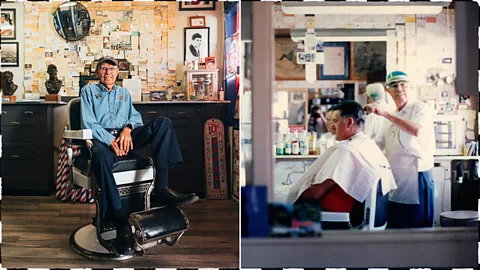
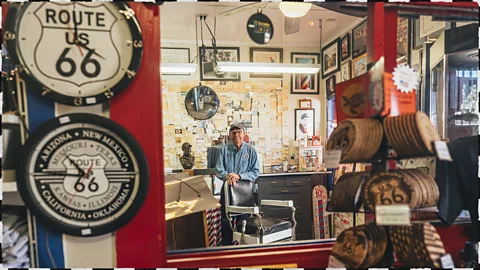
Delgadillo's tiny barbershop sits at the front of the shop, anchored by a single vintage barber chair that once sat in his father's own barber shop. The mirrored walls are covered with the business cards from the men who Delgadillo gave haircuts and shaves to for 75 years.
Before Delgadillo, Route 66 was fading into history. But thanks to him, today it's the US's most mythologised highway. In 2026, the "Mother Road" will celebrate its 100th anniversary, but without the spark Delgadillo kindled, a centennial celebration wouldn't have happened at all.
The man who wouldn't let the road die
Born in 1927, Delgadillo grew up in Seligman when its economy was centred around the Santa Fe Railroad. His parents had immigrated from Mexico a decade earlier, opening a pool hall and barber shop in 1922. The family was large; Delgadillo had three older brothers, three older sisters and two younger sisters.
 Johnny Kompar/ Clarissa Delgadillo
"We had to make our own fun," he recalls. "Travellers would come into town in Model A's and Model T's. My father's house was painted white, and we would all run to the side of the house to make shadows in the headlights and play, watching our shadows move as the car moved. I grew up at a time when America had a much simpler way of life."
The glory days of Route 66
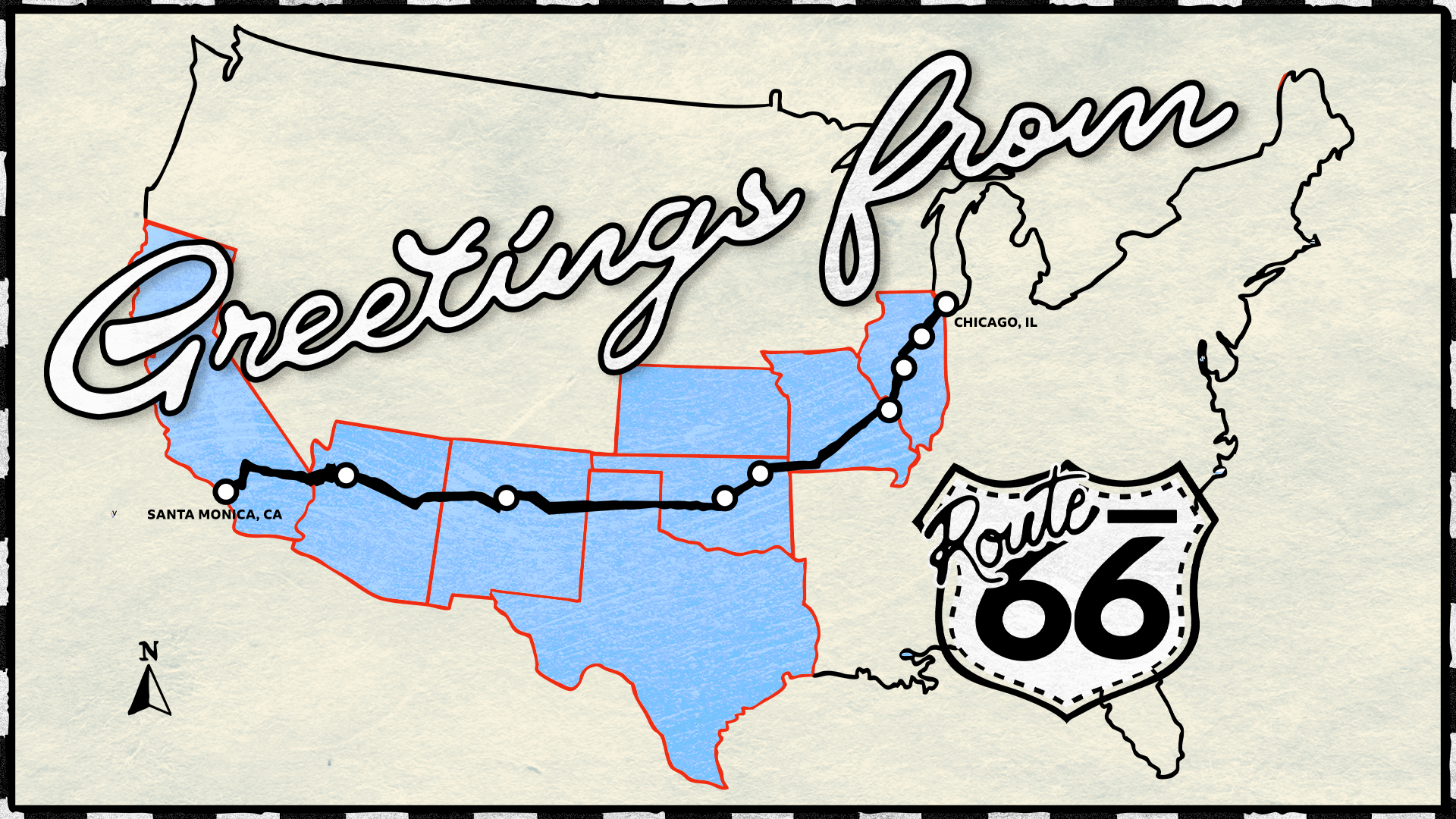
Dubbed the "Mother Road", Route 66 was established in 1926 as the first American federal highway, connecting Chicago to Los Angeles. Stretching more than 3,940km (2,448 miles) and passing through Illinois, Missouri, Oklahoma, Texas, New Mexico, Arizona and California, it carried more than 250,000 people west during the Dust Bowl and became a defining American road trip. Today, it is a pilgrimage for domestic and international travellers who come to celebrate the freedom of the open road and classic Americana.
Back then, Route 66 was a two-lane highway running through the centre of town. "The people travelling in the 1930s and early '40s were breaking down all along the way because they were so poor. As soon as you helped them get back on the road, another one was coming," Delgadillo says. "When people would come through on Route 66, they would stop and spend the night or stop and eat, and that was what travelling Route 66 was like back in those days. You're not trying to get anywhere fast, you're stopping in every town and enjoying it."
By the time Delgadillo returned from barber college to take over his father's shop, Route 66 was thriving, with around 9,000 cars coming through town each day. His brother Juan opened the now-iconic Delgadillo's Snow Cap, a drive-thru burger joint next door, while another brother, Joe, ran the garage and petrol station across the street.
Death of the Mother Road
In the late 1950s, high-speed four-lane highways began replacing sections of Route 66 as part of the expanding Interstate Highway System. By the 1970s, much of Route 66 had been superseded, causing towns all along the original road to wither.
"Our government finished building 100 miles (161km) of freeway from Kingman, Arizona, to Ash Fork, Arizona, on 22 September 1978," explains Delgadillo. "At about 14:30 in the afternoon, traffic in Seligman stopped. They opened up the highway and the travelling public took to it like ducks take to water."
Almost overnight, the entire community of Seligman was forgotten. The town's economy relied on passing traffic, and when Interstate 40 opened just two miles south of Seligman, its businesses suffered. Making matters worse, there was only one sign mentioning Seligman on the new 75-mile (121km) stretch to Flagstaff, appearing after the city of Ash Fork, where drivers would have already stopped to refuel. Angel and his brother Juan petitioned local officials for more signage, but even with the addition of four more, Seligman and its residents still suffered. Angel, Vilma and their four children couldn't afford to leave and start over somewhere else, even as business dried up and the family struggled to make ends meet.
 Johnny Kompar
Turning the tides
Route 66 was officially decommissioned and removed from the US Highway System in 1985. Travellers still trickled into Seligman, often stopping at Delgadillo's pool hall and barber shop. All of them recounted the same sentiment: memories of their parents and families driving that stretch of Route 66 and stopping in small towns along the way.
"I must have heard it hundreds of times – they all sounded like a recording," says Angel. "These people were the children of those people who had travelled to California in the '30s for family vacations. I finally asked myself 'What are you people looking for?' I came to the conclusion that they were looking for the America of yesterday."
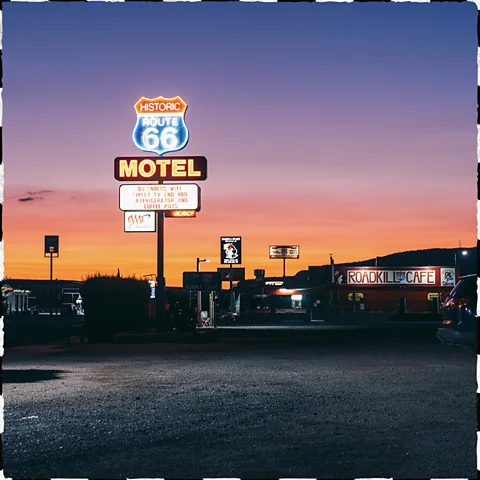
That nostalgia sparked an idea. Angel believed that if the state designated the old road a historic highway, travellers would return. Wanting to inspire people to travel the slower, more scenic route, he and Vilma drove down Route 66 to Kingman, stopping at businesses along the way and persuading them to join his campaign. In 1987, a group of 16 people met and formed the Historic Route 66 Association of Arizona.
 Johnny Kompar
Around the same time, responding to customer requests, Angel began to carry Route 66-themed merchandise in the front room of his barbershop – the early seeds of his now-famous gift shop.
The association launched an intense letter-writing campaign, eventually convincing the state to declare the road from Seligman to Kingman "Historic Route 66". Soon, stretches of the road east of Seligman and west of Kingman were added, eventually totalling 159 miles of uninterrupted road – the longest remaining portion of Route 66 in the country. After a car rally held to celebrate the designation garnered national press, Angel began receiving calls from across the US from people interested in reviving other sections of the Mother Road.
"Having grown up in the Depression, you did not give up. If you gave up, you did not eat and you had to work together. And that's what I told the people who called – I told them to just do it," says Angel. "Pretty soon, all the other seven states formed their associations."
The legacy of the Angel of Route 66
Today, once-forgotten towns like Seligman have seen an extraordinary resurgence. Route 66 itself has become a bucket-list destination, with hundreds of motels, gas stations, diners and neon signs now listed on the National Register of Historic Places.
 Johnny Kompar
As a driving force behind the movement to revive Route 66 and secure its status as a federally recognised historic landmark, Angel has been affectionately nicknamed "The Father of the Mother Road" and "The Angel of Route 66".
"Angel Delgadillo shines as both guide and guardian for Route 66," says Bill Thomas, commissioner for the US Route 66 Centennial Commission. "As the founder of the Historic Route 66 Association of Arizona, he inspired other states to follow suit. He ignited a nationwide preservation and economic development movement for the 'Mother Road'. His efforts didn't just save a road – they reinvigorated towns, inspired global nostalgia and preserved Americana for future generations."
More like this:
• Keegan-Michael Key on why road trips still matter
• Chile's Route 7: A tough, lonely drive to the end of the world
• A wild road to the highest city in North America
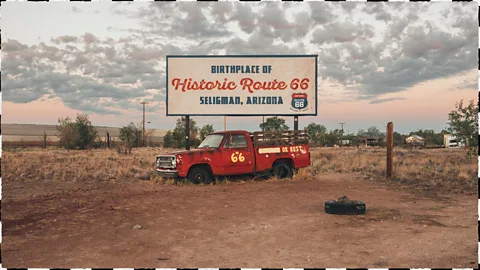
For decades after his success, Angel has continued to work for the communities along the famed highway, acting as Route 66's unofficial spokesman, sharing his smile with everyone he meets and proving that Historic Route 66 is the embodiment of human connection," says Nicole Sarno, a long-time employee at the Delgadillos' gift shop and the author of Seligman, Arizona: Birthplace of Historic Route 66. "His fondness for the 'America of yesterday' and support for small mom and pop businesses have helped create a valued road trip experience for the benefit of generations to come."
 Johnny Kompar
Angel even served as a consulting expert for the animated Pixar movie, Cars, helping inspire the fictional town of Radiator Springs. Since then, he has noticed more young families stopping in Seligman and exploring Route 66 – many of them first introduced to the Mother Road through the film.
"Over the last century, people have tried to close the book on Route 66 time and time again," says Rhys Martin, manager of the Preserve Route 66 Initiative. "Nobody saw the importance of the famous highway – or its potential – quite like Angel Delgadillo. Angel's advocacy, determination and unbeatable spirit showed people that Route 66 still had a story to tell."
Back in Angel and Vilma's gift shop, visitors continue to line up to meet the man who saved their favourite road. Many are so thrilled to be here that they are smiling from ear to ear.
"They came in here to shake my hand, to thank me for giving Route 66 its historic rebirth," says Angel. "I saw men and women in tears they were so happy. But it isn't about me, it's about 'we', the people. It's amazing what we have done. Route 66 is going to live on forever."
--
If you liked this story, sign up for The Essential List newsletter – a handpicked selection of features, videos and can't-miss news, delivered to your inbox twice a week.
For more Travel stories from the BBC, follow us on Facebook and Instagram.