A different ball game as Derry City play 'historic fixture' at GAA ground

 Getty
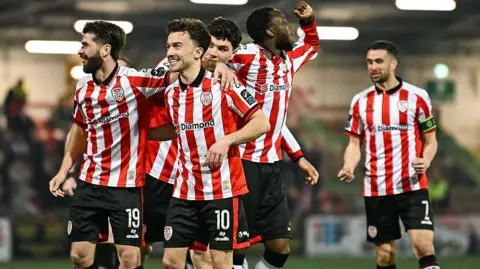
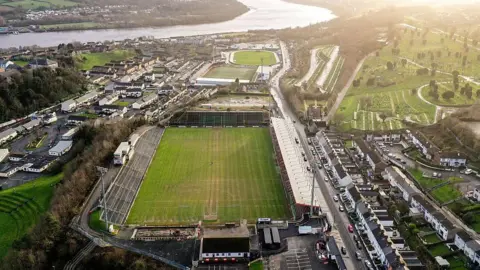
GettyHome to different sports, but neighbours geographically, a city's two main stadiums have stood just a few hundred yards apart for almost a century, yet have rarely crossed paths.
On Friday, however, Celtic Park, the home of Derry GAA, will host a very different ball game as it allows Derry City to use the ground to play the first of five home League Of Ireland fixtures.
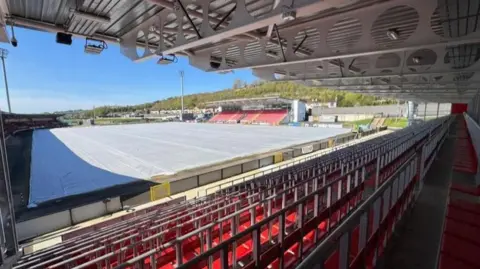
The move comes as work continues on the installation of a new pitch at the Ryan McBride Brandywell Stadium.
Supporters have been sharing their excitement, describing it as a rare chance to see their side play at the home of the Oak Leaf County and be part of a rare moment in the city's sporting history.
 Claire McCarron
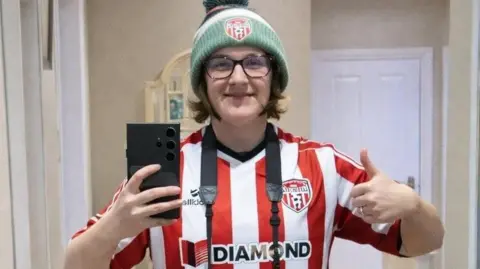
Claire McCarron is a season ticket holder with Derry City and is looking forward to attending the match on Friday at Find Insurance Celtic Park.
She is not a regular follower of GAA, but did go and see Derry defeat Offaly in a Division Two Allianz Football League match last month at the ground and loved the experience.
 Getty
Getty"The ground is fantastic and it will be packed with Derry City supporters on Friday evening, so there will definitely be a great atmosphere," she said.
"It's a wonderful ground and I found it easily accessible, so hopefully it will be a great occasion for everyone involved with Derry City."
The ground share is part of a growing relationship between the two sporting organisations and builds upon Derry City being afforded the use of Derry GAA's Centre of Excellence in Owenbeg, near Dungiven, as a training base from January last year.
'It's sporting history for the city'
Secretary of Derry City Robert Martin told BBC Radio Foyle's North West Today programme it was a "historic sporting moment" for a soccer match to be played in the GAA stadium.
"It's sporting history for the city and the interest has been massive, not just within Derry, but from all over," he said.
"We want to get more GAA supporters coming to watch us and then hopefully they will be there again when we are back at the Brandywell."
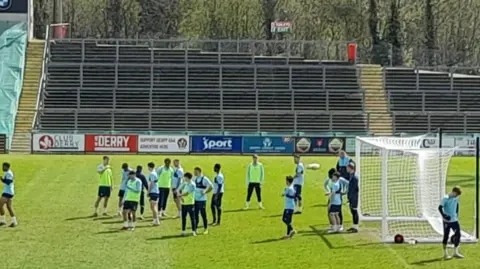
Martin said the pitch was looking fantastic and said so much work has gone on behind the scenes to ensure the venue is ready to host a different sport.
"A Gaelic pitch is a lot bigger than a soccer pitch, so the Gaelic posts will stay in place as they are anchored into the pitch as it's not practical to move them, so they will remain on the field," he said.
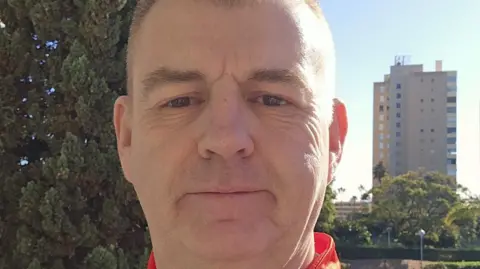 Robert Martin
"Our soccer posts have been put in and placed further inside the pitch to match the same perimeter size as the Brandywell."
Martin said there was a real buzz across the city for match tickets and they estimate about 7,000 spectators will turn up.
"We are restricted with the amount we can fit into the Brandywell, we can fit in about 4,500 spectators there, but because this is a bigger venue we expect around 7,000."
As a former Derry City player in the 90s and now a Gaelic football coach, Ryan Coyle knows what it is like to have a foot in both camps.
Coyle famously scored the winning goal when Derry City beat Celtic 3-2 at Lansdowne Road in 1997.
He is fully behind the GAA hosting the soccer match and believes it can have mutual benefits for both sports.
"The GAA are very strong when it comes to nurturing the next generation of players and I believe soccer can learn from that," he said.
"Both organisations can benefit from this partnership and the cross-pollination can only be a good thing."
The story of Celtic Park: Swapping kicks off for throw-ins
 Getty
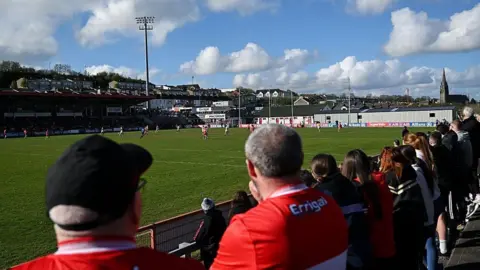
GettyCeltic Park dates back to the late 19th Century and was originally developed as a soccer ground and hosted its first soccer match in October 1894.
Today, the venue, which has a capacity of about 12,500, is firmly associated with Gaelic games, serving as the home of Derry Gaelic Athletic Association (GAA) and regularly hosting inter-county fixtures.
In its early years, however, the ground was home to a soccer team called Derry Celtic.
Originally known as St Columb's Hall Celtic, it was established in the 1890s and became a prominent team in the north west.
The club joined the Irish League in 1900 but resigned in 1913, after which it then transitioned into a GAA club.
In September 1943, Celtic Park was officially bought by the GAA, securing its long-term future as a venue for Gaelic games.
Is non-Gaelic games being played at GAA venues a new thing?
GAA venues being able to host other sports was made possible when delegates at the organisation's congress in April 2005, voted by 227 to 97 to relax 'Rule 42', which prohibited non-Gaelic games from being played in its stadiums.
The landmark decision paved the way for GAA venues to open their doors to other sports.
The proposed redevelopment of Lansdowne Road, home of the Irish rugby (IRFU) and football (FAI) teams, brought the issue into focus, as it meant both sides would need an alternative venue while the work was carried out.
Croke Park, which also serves as the GAA's national stadium, was ultimately used to host those fixtures during the redevelopment.
On 24 February 2007, Ireland defeated England by 30 points in the first Six Nations fixture to take place at GAA headquarters.
Exactly one month later, the Republic of Ireland football team beat Wales 1-0 in a Euro 2008 qualifier, the first of 13 matches they would play at Croke Park.
You can listen to all the build up and the match live on Friday evening on BBC Radio Foyle's Foyle Sportsound from 19:30 BST with commentary from BBC Sport NI's Eric White and former Derry City player Liam Coyle.