The teenagers trained to resolve conflict in schools

 BBC
BBCWhat would you do if you had a disagreement with a pupil or teacher in school?
Some pupils have now been trained to be the first line in resolving conflict and problems in their schools by taking extra training to be a peer mentor.
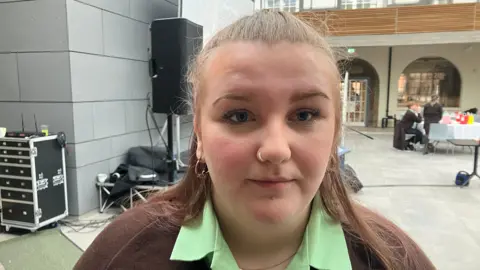
Abbie, 17, from St Louise's College in Belfast said it meant students could "have someone to talk to without having to go to someone like a teacher".
"They can just be themselves with us," she said.
Abbie is one of almost 90 senior pupils from 11 schools who have completed a qualification in peer mentoring run by the Open College Network (OCN) in a scheme organised by the Education Authority (EA).
The EA said that schools who used peer mentors and other restorative approaches had seen pupil suspensions fall by 15% in 2025/26 compared to previous years.
What is a restorative peer mentor in schools?
A peer mentor is a pupil trained to intervene and support when there is conflict between a pupil and a teacher, or conflict between pupils.
They can also help pupils with personal or domestic issues, but adult staff will still deal with more serious problems.
According to Abbie, pupils might be able to "relate more" to other pupils.
"They might have trouble with their classes or they might have trouble with their friend group, or situations that they might not be comfortable talking to a teacher with," she said.
Abbie said it was "so much pressure trying to go to a teacher and explain things".
"We learned how people can go through different things, they think so different and you just have to try and have empathy, try and see yourself in that situation," she added.
"There's a lot of things that go into trying to train yourself to be empathetic and put yourself in situations that you haven't been through."
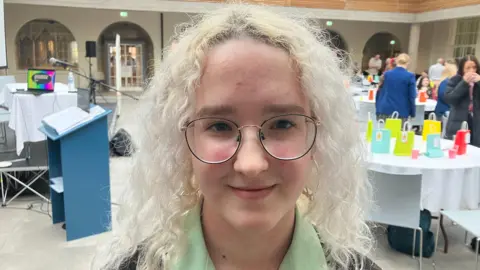
Milla, 17, also a peer mentor at St Louise's College, said peer mentors "talk to younger students if they need help".
"They will help them figure out maybe conflict between other students that they have or help in school, maybe give them some support with their classes if they can," Milla said.
"I feel like teachers, they were brought up in a different time - no offence," she added.
"It's easier to go to someone you can relate to more and has maybe the same experiences as you or will understand what you're going through."
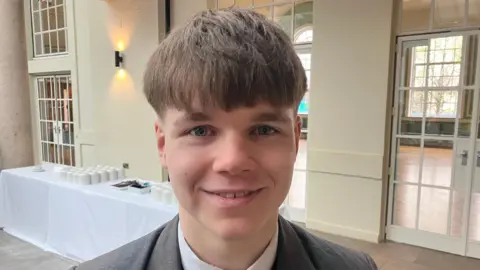
Odhran, a peer mentor at St Mary's Christian Brothers Grammar School in Belfast, said being a peer mentor meant "helping people around the school, especially younger pupils that are still finding their feet".
"If there's an argument or a fight or anything like that we can take them in, and look at it in more of a restorative sense and help pupils to get to know each other and where each other is coming from and finding middle ground," he said.
"So instead of people making mortal enemies throughout school, or a nemesis, they get to know them and understand their point of view, and where they're coming from."
Given the responsibility, why did pupils want to be peer mentors?
Odhran said it was "good just to do a positive thing and help people out".
He also agreed that pupils could often "relate more" to other pupils.
"Sometimes if you go to a teacher it can be a bit daunting, but if it's another pupil you can kind of connect with them quicker," he said.
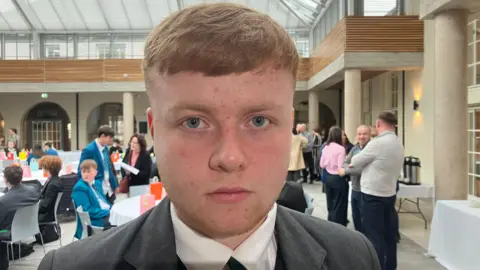
Nathan, who is also a peer mentor at St Mary's Christian Brothers Grammar School, said the role was about resolving "internal conflicts", especially among younger pupils.
"Like they've just got into an argument or they've got into a fight," he said.
"It allows for us to come in and touch base with both parties and try and come to a resolution without having anything serious.
"It gets both parties to see how things had escalated from another person's point of view.
"There's different ways to tackle different challenges."
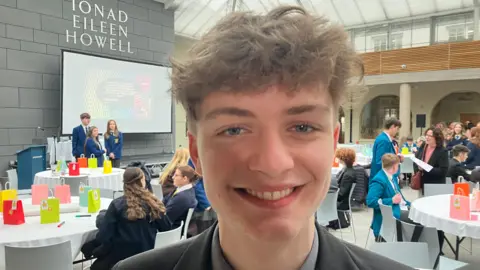
Lewis, 16, from St Mary's Christian Brothers Grammar School, said he wanted to become a mentor as he felt he was "good at bringing people together".
"It was not easy and it did take a bit of training," he said.
He said he didn't talk to pupils "as someone who's better" but as someone "on the same level as them".
"When students talk to a teacher, they often think the teacher's looking down on them - maybe in the body language or how they talk.
"We can talk to them as an equal, as a fellow student."
What impact can peer mentors have?
According to the EA, schools who use peer mentors and other restorative approaches have seen a fall in pupils being suspended.
Across schools who used the approach, there were 1,002 fewer suspensions in from August 2025 - March 2026 compared to the previous school year - a drop of around 15%.