Watch out for ground-nesting birds, urges RSPB

 Getty Images/Arterra
The RSPB has urged the public to help protect vulnerable ground nesting birds.
Walkers are being asked to give birds space during the nesting period between March and September.
Phil Pearson, the charity's senior conservation officer in Lincolnshire, said: "We could all play our part in this."
Pearson reminded people to keep to marked paths, keep dogs under close control and keep a minimum distance of 328ft (100m) away from birds that are nesting.
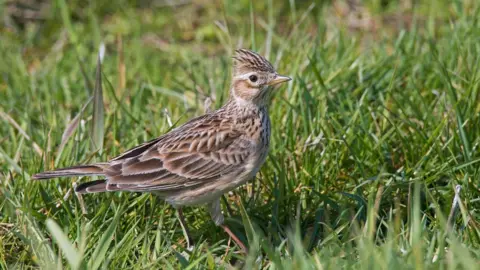
More than half of England's most threatened breeding birds nest on or near to the ground, including the curlew, nightjar, stone-curlew, and lapwing.
Many of these species are on the red list of conservation concern, as their population numbers are struggling.
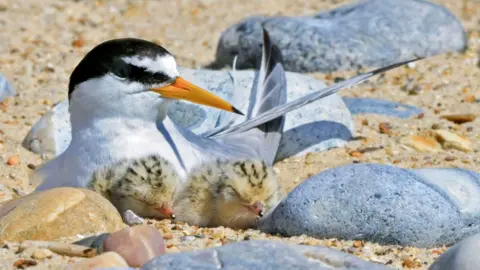
Pearson said Lincolnshire has lost quite a lot of little terns and ringed plovers in recent years – both are also on the red list.
Pearson reminded dog owners to adhere to signs requesting pets are kept on short leads.
"That's for a particular reason, so where requested, if you could keep your dog on a short lead that would be brilliant," he said.
 PA Media
Walkers are asked to watch out for alarm calls, or birds with food in their beaks, or by the coast, little turns dive-bombing into the sea, which are all signs that birds are nesting.
"If you see any of those things, just give that area a wide berth, and that will just allow the birds to nest and the chicks to be kept safe," said Pearson.
He explained that if adult birds are disturbed, it is a drain on their energy. They are also then away from their eggs which can get cold and affect hatching.
"We just ask that people are a little bit careful when they're out and about during the breeding season, just so that those birds that are nesting best chance of their eggs hatching and surviving," added Pearson.
Listen to highlights from Lincolnshire on BBC Sounds, watch the latest episode of Look North.
Download the BBC News app from the App Store for iPhone and iPad or Google Play for Android devices