Visitors flock for glimpse of escaped Eagle Owl

 Stephanie Wilkes
Visitors have flocked to a tourist site in Wolverhampton to catch a glimpse of a large owl rarely seen in the UK.
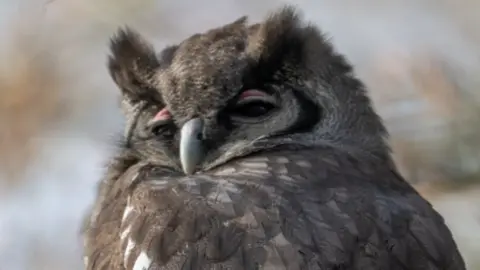
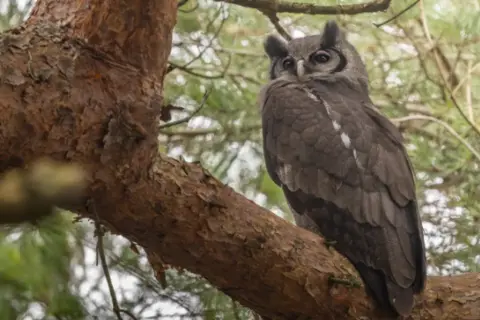
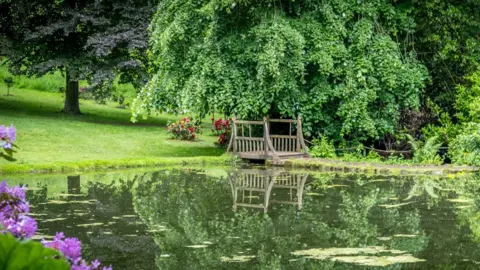
The female Verreaux's eagle owl, who has been named Sawyer, has been spotted perched in the trees of Wightwick Manor and Gardens as well as Smestow Valley Local Nature Reserve.
She escaped from a breeding programme while on loan at Wild Zoological Park, about seven miles (11km) away, and now seems "very happy" in her new home, Wightwick head gardener James Carnell told BBC WM.
He said: "We're absolutely benefiting from the attention that she's getting and while she's living in our trees, people are coming through our visitor reception to see her."
The huge bird of prey is native to southern parts of Africa, and is among the biggest and heaviest of all of the owls, the Owls Trust has said.
 James Cook
After several unsuccessful rescue attempts, it has been agreed by the National Trust, which runs the site, that she can stay in her new home but zoo staff still maintain her care.
Carnell added: "Me and the team first spotted her in our trees in Autumn of last year, I've only seen her fly a couple of times and it is really impressive when she does that."
As apex predators, owls sit at the top of the food chain and play a pivotal role in maintaining ecological balance.
They serve as natural regulators of rodent numbers, curbing potential ecological imbalances caused by unchecked populations.
 National Trust/Lindsey Bucknor
The head gardener added: "She will fly around the area in the evening and she's been seen in the Smestow Valley and beyond our trees.
"Currently there has been no negative impact. We're monitoring her alongside the Wild Zoological Park, and we will make sure that she's okay, that the other wildlife on site is okay, because we just want the best for her and to celebrate this privilege to have her in our trees where people can see her."
Visitors have taken to social media to share their sightings of the "majestic" bird, which caught the eye of local wildlife content creator James Cook.
"It's a very imposing, impressive thing to see. I was in awe," he said.
"They don't get here naturally, so it's basically impossible to spot them in the UK in the wild... it's super mega rare. It's the only one I've seen in the UK."
Follow BBC Wolverhampton & Black Country on BBC Sounds, Facebook, X and Instagram.