Why wildflowers are moving from meadows to the city

 Alamy
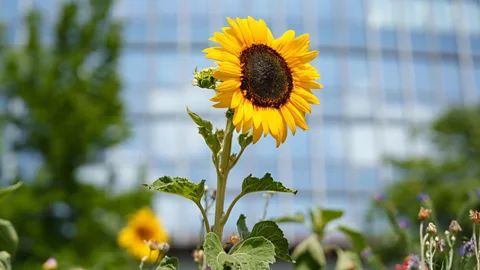
AlamyThe amount of green space for wildflowers in the UK has shrunk amid the rise of modern agriculture. But wildflowers are thriving where other plants can't – cities.
Wildflower meadows are one of the most diverse natural habitats and have been become deeply embedded in ancient folklore, magic and medicine.
But, according to various conservation organisations, the UK has lost 97% of its wildflower meadows over the last century. Just over half the UK's native plants have been in decline since records began in the 1950s.
It's not just building over fields – the UK's native species are also having to deal with increasing competition from invasive species, as well as a changing climate.
With their decline in rural areas, can cities be an unlikely saviour?
Where do wildflowers grow?
Wildflowers grow in nature without being planted. But it's important to distinguish wildflowers from weeds, says Cicely Marshall, research fellow at the University of Cambridge's Department of Plant Sciences.
"A weed is any plant growing in the wrong place; one person's weeds are another person's wildflowers," she says.
The decline in wildflowers over the last century is mostly due to agricultural intensification, which includes less grazing and increased use of pesticides and fertilisers, says Nadine Mitschunas, a pollinator ecologist at the UK Centre for Ecology and Hydrology.
 Getty Images
"Arable land is heavily managed, and everything that's not a crop is taken out," she says.
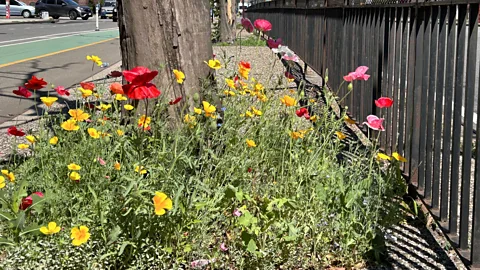
But all hope is not lost; there seems to be an increasing number of local authorities making space for wildflowers in urban areas. One of the reasons for this, says Mitschunas, is because many are trying to boost biodiversity in cities.
While there historically hasn't been much of a focus on urban areas among ecologists, this is beginning to change, says Rumble.
"There aren't many urban ecologists and it's generally an overlooked area in ecology," she says. "The research is really complicated, with people getting in the way and all the private land, but it's getting more attention as people realise how important nature is for people."
A tale of many habitats
Cities might seem like an unlikely candidate for flowers to thrive – but wildflowers love them.
Cities are often associated with stress – and only the toughest plants can cope in them. Thankfully, wildflowers thrive on stress. This is because stress keeps the competition down, says Mitschunas, and wildflowers can't cope with lots of competition.
"They need an unstable environment, because in stable environments, only a few species survive," she says.
Also, there are numerous habitats and microclimates within cities – such as pavements, walls, rivers and parks – so different wildflower species can thrive in parts where the conditions are right for them. This also helps bring down the competition, Mitschunas adds.
"In urban areas they can find their niche, because there are all these specialist habitats," she says.
Brownfield sites
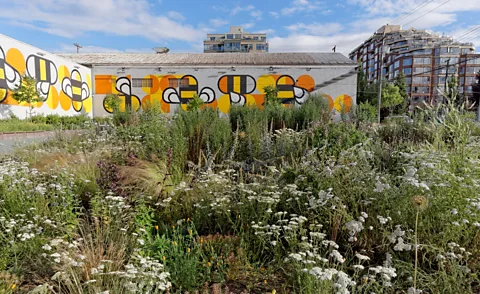
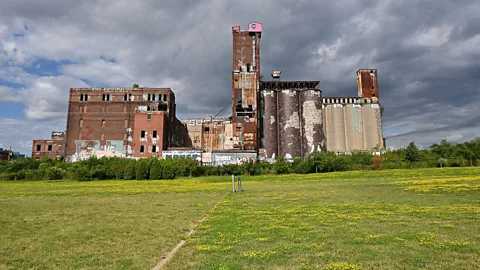
Outside of city centres, wildflowers can also thrive in brownfield sites, which are areas of previously developed land, often used for industrial and commercial purposes, in urban areas.
Some of these sites have contamination from whatever the industry left behind, such as metals and oils, and the soil is often alkaline and nutrient-poor, which encourage plant diversity, says Rumble.
 Alamy
Alamy"Sometimes they also have pollutants that some species love, such as heavy metals," she says.
For example, sheep’s fescue and spring sandwort were apparently used by miners to help them locate lead veins beneath the ground.
This might sound counterintuitive to nature, but, Rumble says, it actually makes a lot of sense. "Species have evolved to use what's around; heavy metals are naturally occurring, we just move them and concentrate them," she says.
Also, these sites are mostly abandoned, and with little footfall, flowers are left to their own devices.
Boosting biodiversity
The diversity and abundance of many pollinators are under threat and, researchers say that wildflowers can help to mitigate this.
Plants across nature support biodiversity by giving insects a habitat for food, shelter and breeding – whether they are in the country or built-up environments.
These wildflower zones can support a wide range of insects, according to the Royal Entomological Society, including beetles, true bugs, hoverflies and parasitic wasps. These species play essential roles in nutrient cycling and pest control.
"The higher the population of wildflowers, the more invertebrates you have in terms of species richness and overall numbers, and this has effects up the food chain," says Marshall.
Research suggests urban wildflowers can be as valuable to biodiversity as wildflowers in natural meadows. In her own studies, Marshall has found urban wildflowers can also encourage more bats, and more species of bats, which come to feed on invertebrates.
In 2020, a relatively small part of lawn at King's College in Cambridge wasn't mown, and was turned into a wildflower meadow. Marshall monitored the meadow and found that, compared to the lawn, the meadow had three times as many species of plants, spiders and insects (as well as attracting bats). (Read more about the people turning their lawns into meadows).
Researchers in Warsaw, Poland, have found that there is no difference in the diversity of species that visited urban wildflower meadows compared with natural ones. They say that urban wildflowers have a high concentration of pollinating insects, and argue that they are just as valuable to many pollinating insects.
There's a lack of research looking into whether non-native wildflowers increase biodiversity as well as native ones, says Heather Rumble, senior lecturer in healthy urban environments at the University of West England in Bristol, the UK. Native species are defined as those that grew in Britain when it was still connected to Europe via a land bridge.
 Getty Images
But there's a theory that the longer a plant has been in Britain, the more other species have evolved to live on them, Rumble says.
In their defence, non-native species flower at different times in the year, which prolongs their ability to support pollinators. As a result, bumblebees can be seen later in the year, says Mitschunas.
The last bumblebees are normally seen in autumn, but now they have established winter colonies, mostly in urban areas, because there are wildflowers they can exploit, she says.
"In winter you also find other pollinators, like hoverflies, still active in urban areas because of wildflowers, which are a food source," she says.
Wildflowers' reputation
One barrier to cities having more biodiverse plant communities than anywhere else is that some people perceive wildflower meadows to be unkempt, says Rumble – especially in colder months when they mostly consist of long grass.
More like this:
• Is it better to neglect your garden?
• The gardeners allowing insects to eat their plants
• The cities full of 'useless' flowers
"There's a culture war over urban meadows," Rumble says. "Local authorities like planting them because it gives them good biodiversity credentials and they're lower maintenance, but people complain that it looks scruffy at certain times of the year."
This, she says, is partly fed by Britain's love of tidy, green lawns, which breeds a suspicion of areas that look less "tidy". (Read more about the strange appeal of garden lawns).
But also, we may have an evolutionary predisposition to be suspicious of long grass, says Mitschunas, because they can host snakes and spiders, but there doesn’t seem to be research supporting this.
"But we need to accept a bit of wildness and untidiness. We can't exist as humans alone; we're part of nature and we need to let nature in."
--
For essential climate news and hopeful developments to your inbox, sign up to the Future Earth newsletter, while The Essential List delivers a handpicked selection of features and insights twice a week.
For more science, technology, environment and health stories from the BBC, follow us on Facebook and Instagram.