Eight of Mexico's most stunning modern homes

 Richard Powers/ Courtesy of Rizzoli New York
From a sculptural icon by an early modernist master to a remote, rosy-hued dream home, here are some remarkable Mexican dwellings.
Mexico has a dazzling architectural heritage – 15,000 to 20,000 years ago, its ancient pyramids were created, and from 1521 ornate Spanish Baroque styles were imported. Over the past century, this rich history has inspired Mexico's most acclaimed architects, featured in a new book Mexico Modern, by Tami Christiansen.
Modernism first emerged after the Mexican Revolution of 1910 to 1920, expressing a new national identity, free of colonial influences. Architects began to emulate indigenous, pre-Columbian architecture whose elemental, geometric forms aligned with the European modernist taste for simplicity.
But the Mexican modernists didn't replicate their European counterparts' work, Christiansen tells the BBC. "Mexican architects reinterpreted their ideas, softening them with colour, texture and by connecting them more to landscape and climate. They also gave concrete more tactile, expressive qualities."
Here's our pick of eight Mexico homes designed by acclaimed 20th-Century modernist architects, and architects working in a modernist vein today.
 Richard Powers/ Courtesy of Rizzoli New York
1. Praxis by Agustín
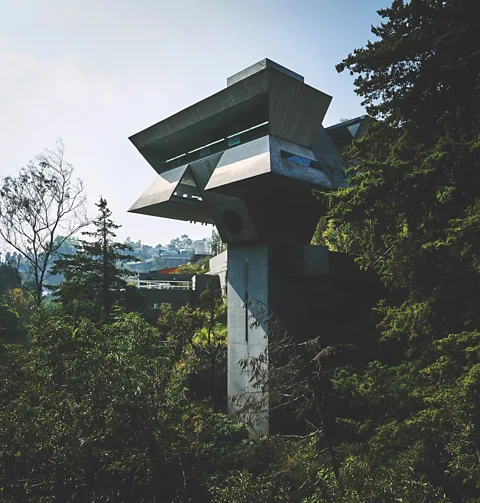
This house was designed in 1975 by Agustín Hernández Navarro (1924–2022), a leading light of Mexican modernism. Its totemic, sculptural tower looms, periscope-like, over the heavily wooded, affluent Mexico City neighbourhood, Bosques de las Lomas ("bosques" means forest in Spanish). Navarro opted for a Brutalist style – a sub-genre of modernism, defined by its use of raw, exposed concrete and massive forms. Inspired, appropriately, by a treehouse, the house was the late architect's private retreat, and combines different geometric elements, such as pyramids and prisms, reflecting Navarro's passion for pre-Columbian architecture.
 Richard Powers/ Courtesy of Rizzoli New York
2. Casa Bernal by Chic by Accident
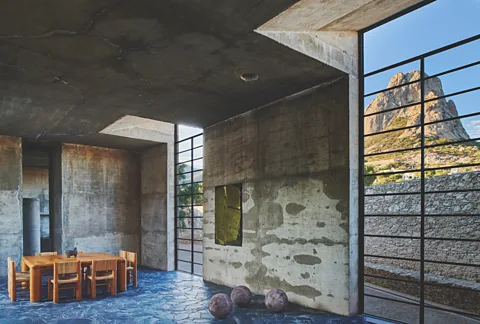
This dining room is part of the modern, concrete wing of Casa Bernal, designed by Mexico-based, French architect Emmanuel Picault of practice Chic by Accident. Annexed to a 16th-Century colonial mansion in the central Mexico state of Querétaro, it responds to its context. "The project offers a playful relationship between the old and new," he tells the BBC. The dining room's full-height steel-and-glass windows are strategically positioned to maximise dramatic views of an extinct volcano – Peña de Bernal – that the house is named after. The floor is made of Mexican slate ("pizarra"). Picault is inspired by Mexican modernism and the dining room is sparsely furnished with a table and chairs designed by Ricardo Legoretta in 1972. The sculptural spheres on the floor, created by Chic by Accident, are made of local volcanic soil.
 Richard Powers/ Courtesy of Rizzoli New York
3. Rain Harvest Home, co-designed by Javier Sanchez Arquitectura and Robert Hutchison Architecture
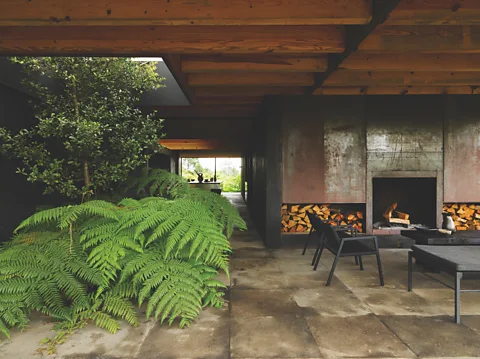
This is the porch of a family-owned bolthole in Valle de Bravo, a popular holiday destination for inhabitants of Mexico City, completed in 2020. Rainwater is harvested in this space, which contains a bathhouse, plunge pool under a skylight, steam shower and a sauna running off solar power. While blurring any division between indoors and out, this room provides shelter – vital in Mexico where it rains heavily from June to October. "It's an experimental house," Javier Sanchez, one of the practice's architects, tells the BBC. "It's rare to construct houses in wood in Mexico." The walls and roof are made of pine. Sanchez adds that ferns and an oak tree were planted here "in homage to a forest that existed here before".
 Richard Powers/ Courtesy of Rizzoli New York
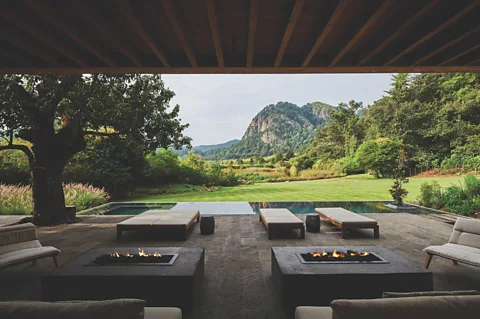
4. Casa de Tierra-Catarina by Taller Héctor Barroso
The outdoor terrace of Casa de Tierra-Catarina is designed to harmonise with its rural, lakeside setting. The house's interior was created by Mexican design studio Habitación 116. Barroso is interested in traditional construction methods and materials. This house is made of rammed earth, while its wooden roof provides shelter from scorching sunlight and rain alike. Volcanic stone fire pits keep the occupants, and their guests, warm in the evenings in the winter months. Héctor Barroso tells the BBC: "In winter in Mexico it's sunny most days, so the terrace is also a great place to hang out."
 Richard Powers/ Courtesy of Rizzoli New York
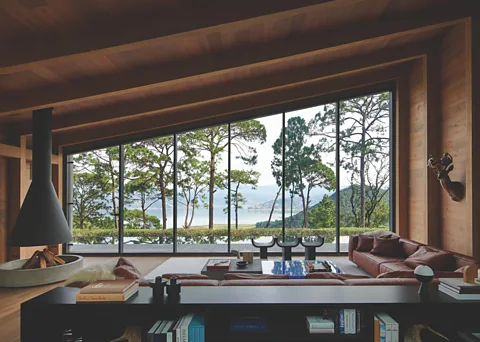
5. Casa Izar by Alonso de Garay of Taller ADG
This is the main living room in Casa Izar, a new-build home designed by Taller ADG. The house was inspired by local mountain cabins with pitched roofs and deep eaves. The expansive window draws the eye to an idyllic view of trees, a lake and mountains. The interior, designed by Estudio MDB, celebrates local crafts and materials: its coffee table and a swimming pool outside are made of a volcanic rock. Its ceramics, fashioned from black clay ("barro negro") found in the southeastern state of Oaxaca, were made by Mexico City-based design studio David Pompa.
 Richard Powers/ Courtesy of Rizzoli New York
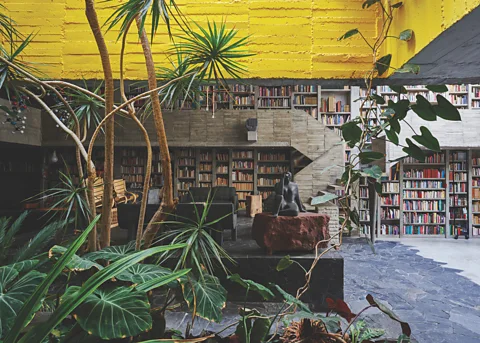
6. Casa Coyoacán by Pedro Reyes and Carla Fernández
This double-height library is the heart of a home shared by architect and sculptor Pedro Reyes and his partner, fashion designer Carla Fernández. Designed by Reyes and located in Mexico City's bohemian Coyoacán neighbourhood (once home to Frida Kahlo and Diego Rivera), it's also used as a workspace. Reflecting the owners' interest in different strands of Mexican culture, its interior is inspired by Mexican modernism, Brutalism and the pre-colonial art and architecture of Mesoamerica, a vast region incorporating central and southern Mexico, inhabited by indigenous civilisations from 1500BCE to 1521CE. The stone stairs leading to a gallery are designed to evoke Aztec temples, rough-textured concrete walls nod to Brutalism, while indoor tropical plants reference Barragán's garden designs. Mustard yellow paint on one wall disrupts and enlivens this otherwise monochrome space.
 Richard Powers/ Courtesy of Rizzoli New York
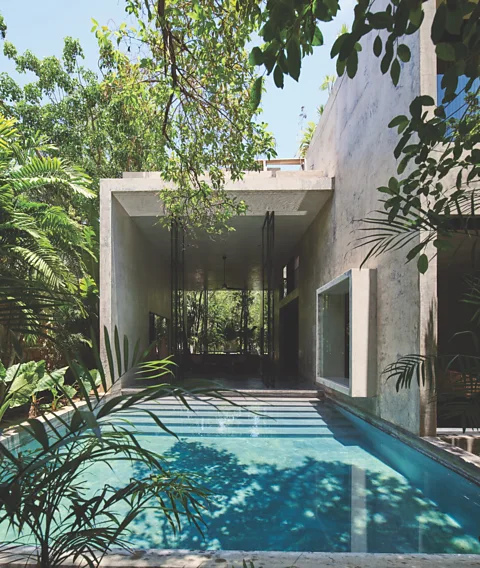
7. Casa Aviv by CO-LAB Design Office
This house adheres to the Mexican modernist tradition of interrelated indoor and outdoor areas, extensively explored by modernist titan Luis Barragán. "We feel a deep connection to Barragán – his mastery of light and material, his interplay of massiveness and lightness and his poetic way of bringing the outside in and indoors out," the practice's co-founder Joana Gomes tells the BBC.
More like this:
• Eight of the world's most stunning penthouses
A boxy section of the house, containing double-height living and dining areas, connects with a swimming pool and luxuriantly planted garden via pivoting, floor-to-ceiling doors. When open, these naturally ventilate the interior. This part of the house and pool are of equal width and so elegantly unified.
 Richard Powers/ Courtesy of Rizzoli New York
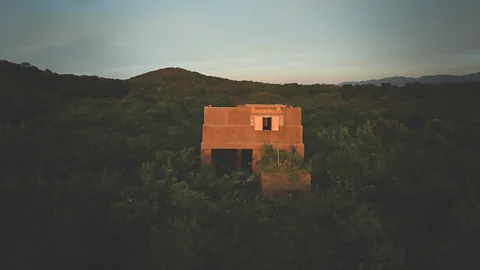
8. Casa Monte by Carlos H Matos
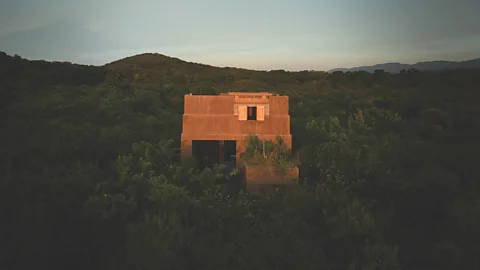
Monumental Mexican architecture sometimes stands in isolated rural spots, dwarfed by untamed nature on all sides. A good example is Casa Monte, situated on a remote stretch of Oaxaca coastline, and completed in 2023. It's made of a pigmented concrete in a rosy hue that echoes the colour of nearby mountains. In this setting, the romantic, weathered-looking, ruin-like structure is reminiscent of ancient Mexican monuments engulfed by vegetation. In fact, Casa Monte references pre-Hispanic architecture, since its upper half recalls Mexico's traditional roofs made of dried palm leaves – called "palapa" – found on beaches and deserts. It is a homage to Mexico's past – and its future.
Mexico Modern: Architecture and Interiors by Tami Christiansen is published by Rizzoli.
--
If you liked this story, sign up for The Essential List newsletter – a handpicked selection of features, videos and can't-miss news, delivered to your inbox twice a week.
For more Culture stories from the BBC, follow us on Facebook and Instagram.