Eighteen is the new 32, say rising stars of Dales hospitality

 BBC/Seb Cheer
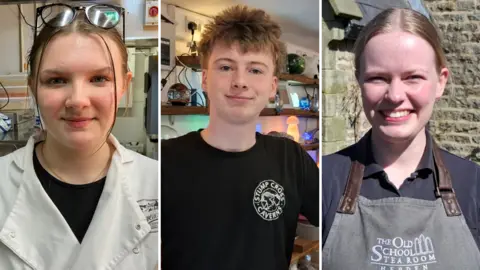
When her parents decided to leave their jobs as teachers in Hull to run a village pub in the Yorkshire Dales, 16-year-old Lucy Edwards found rural life a "nightmare", with a lack of transport and feelings of loneliness. Two years on, she is regularly running a busy pub kitchen, and says life is "great".
"I needed a job to save up for things in my future," she says.
But searching for work as a young person in Upper Swaledale was challenging, with few options.
"If you're born and bred around here you've got your family business," she says.
"That'll be farming, building, agricultural, looking after animals, looking after children.
"If you're not, sometimes it's really hard."
Often, the best option for young people like Lucy is hospitality.
However, recent changes to the national minimum wage mean some businesses are "disincentivised" from recruiting teenagers, according to Philip Bolson, who has worked in the industry for nearly 40 years.
On 1 April, the hourly rate for 18 to 20-year-olds rose 85p to £10.85, compared to an increase of 50p an hour for those aged 21 and older, to £12.71.
The government plans to eventually scrap the separate rate for younger adults.
Philip says firms generally "pay [younger staff] a wee bit less because they don't have the experience".
 BBC/Seb Cheer
He says hospitality "is the Yorkshire Dales", supporting the whole community ecosystem.
"People of all ages and all generations will work there. They'll run it, they'll own it, they'll buy stuff, they'll support suppliers."
In 2023, he founded the Hospitality Junior Board, which supports young people working in the sector across York and North Yorkshire.
"The challenge is isolation, loneliness, feeling that what they're doing is pointless and not appreciated.
"As soon as they make a friend who's also in hospitality in a rural area - could be a hotel, could be a café, doesn't really matter - they realise that it's quite normal."
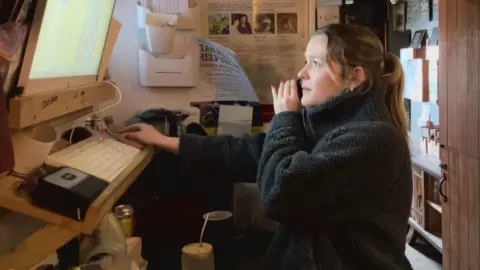
Isobel Reeves, 21, who works alongside Lucy at the Tan Hill Inn, says she sometimes felt isolated after her family moved from London to Garsdale when she was a teenager.
She says many people in cities do not think about the "little things".
"It takes 40 minutes to go to a big food shop and if you go to the little convenience store which is 15 minutes away, it's 10 times more expensive.
"You have to drive so far to get anywhere so petrol is really expensive as well."
She worked at a restaurant chain in Glasgow during her university studies, but says the Tan Hill Inn has a wider range of ages and personalities among its team.
 BBC/Seb Cheer
The staff often socialise at the pub as they stay onsite overnight between shifts.
"When you live so rurally, especially when you're 21 and most of your friends have moved away to live in cities and go to university, you kind of end up spending a lot of time at home by yourself, not really doing anything," says Isobel, who works front-of-house and in the housekeeping team.
"When you get a job, because there's so many girls around my age who work here and sometimes we all finish work at the same time, we can all sit and have a drink."
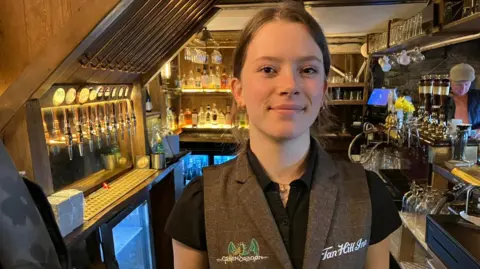
Hope Whitten, who works mainly in Tan Hill's front-of-house team while saving money for university, adds that life without her job was a "non-existence".
"We still have friends and we still have a nice time but it's different to the starry world you're painted when you're younger."
But the 19-year-old says everyone on the team makes sacrifices.
She recently used her earnings to achieve the "life goal" of buying a car, which helps with her 45-minute commute.
 BBC/Seb Cheer
Lucy adds that living in a rural area has pushed her to "grow up really quickly" to make sure a lack of public transport does not leave her stranded.
She says she has the "responsibility that someone my age would not really get in a hospitality job in the centre of York or Hull because you're seen as immature".
"Here, 18 is the new 32 and it's great."
A 2023 report by the Youth Futures Foundation found personal networks and contacts were often key for securing work in rural areas.
Researchers said many opportunities in rural areas were "seasonal, insecure, low-paid and part-time".
Andrew Hields, who owns the Tan Hill Inn and runs two other remote pubs in the Yorkshire Dales, says young people are "vital to our workforce".
"We need staff who can work flexible hours and these often fit around studies," he says.
"We also offer positions that don't require previous experience."
He says the changes to national minimum wage "won't cause problems" at his pubs, partly because staff start on a higher wage and are given a pay rise within three months.
 BBC/Seb Cheer
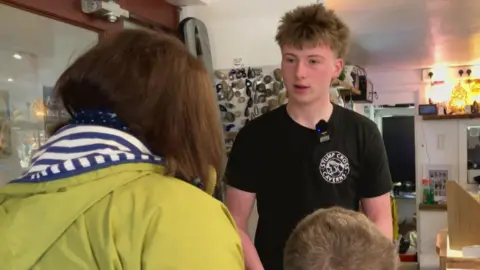
On the other side of the Dales, 16-year-old Kayden spends his weekends and school holidays working at natural caving attraction Stump Cross Caverns.
He is saving his earnings to buy a laptop to use for A-levels.
"Being able to do those big purchases for myself, it was quite appealing to me," he says.
It was challenging to find a job, with no luck touring his hometown of Skipton with his CV in hand.
However, his mum saw an advert for Stump Cross Caverns on Facebook and he applied successfully a year ago, taking on "insanely unique" roles on the cave system as well as working in the café and shop.
Being introduced to the "more physical sciencey sort of stuff" has also resulted in a change in Kayden's career goals.
After previously wanting to become a lawyer, he has since explored options including archaeology, geology and geophysics before settling on meteorology.
Stump Cross Caverns' managing director Oliver Bowerman, himself part of Gen Z at the age of 28, says recruiting "really good talent" is challenging in a remote area.
"The Yorkshire Dales is beautiful but it's beautiful because you've got these big rolling fields and there's not a lot here really, other than tourism," he says, adding that the challenge goes both ways.
"You need experience to get a job but how do you get a job without experience?"
 BBC/Seb Cheer
Oliver worries that businesses like his may not be able to recruit as many young workers because of the minimum wage changes, although he thinks "people deserve a really good wage".
"Why would you take someone, train them up and put all that effort into them if you could get someone who's already got that experience for not that much more?"
He says he plans to continue to recruit young people, finding "creative" ways to expand the family business.
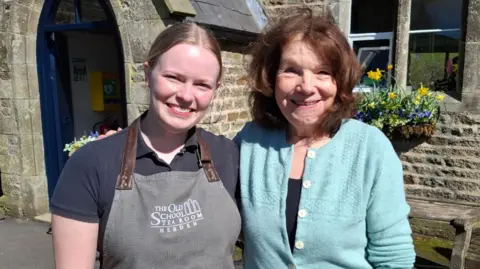
Maggie Eagleton, who co-owns The Old School Tea Room in nearby Hebden with her daughter, says wages must be balanced against rising costs.
"We don't have regular gas, we have kerosene and that's tripled in the last month.
"We don't want to put prices up too much."
The café's team ranges up to 72 years old, with a large number of teenagers, especially on weekends.
"They start off not being able to do much and soon learn all sorts of skills, whatever job they go on to do."
 BBC/Seb Cheer
Maggie says many small businesses may be less tempted to "take a chance" on teenagers following the minimum wage changes, even though hers generally pays a higher rate.
After increasing wages of the lowest-paid workers, she adds, the business will need to give all of its staff a rise.
"So it feels like a bit of a trick to raise all the wages which then creates other problems - do we put the prices up? How do we balance the books?"
But one of her employees, Emily Selby, 20, welcomes the change, saying that at a previous workplace, younger people were "doing more" than older colleagues.
"It feels a bit unfair that there was that big pay gap," she says.
"You work hard so there's no reason why you shouldn't be getting paid what you deserve."
Listen to highlights from North Yorkshire on BBC Sounds, catch up with the latest episode of Look North.