Burger kitchen boss defends turning away people with allergies

 Daisy Partridge/Zoe Applegate/BBC
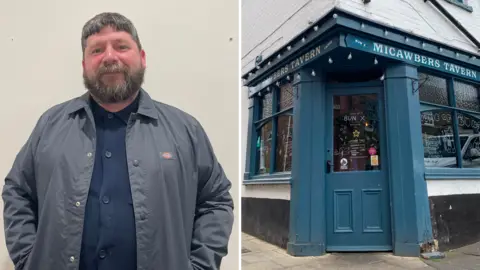
A business owner who tells his staff to turn away customers with certain food allergies insists the burger kitchen's policy is "fair".
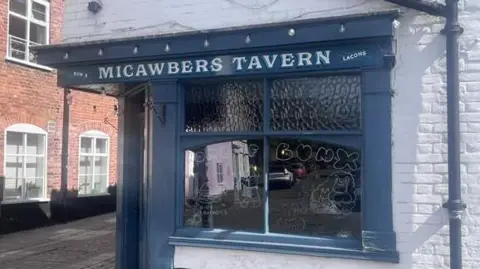
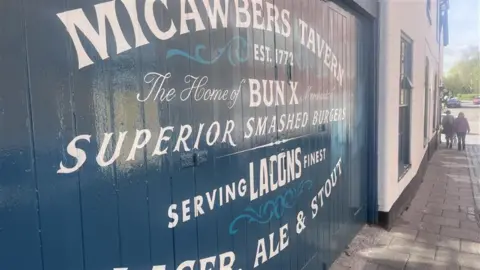
Jeff Taylor, who owns Bun X, which operates out of two pubs in Norwich, found himself facing criticism on social media after he shared an angry online review from someone who was refused service due to allergies.
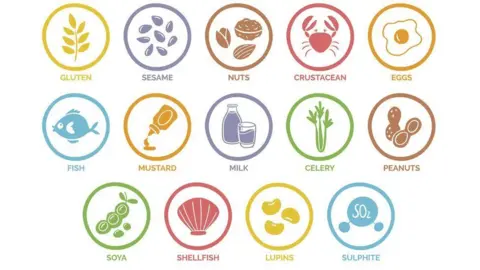
He said Bun X is unable to cater for anyone with a gluten, nut, soya or sesame allergy due to it operating out of a small kitchen and he believes this policy is transparent upon booking.
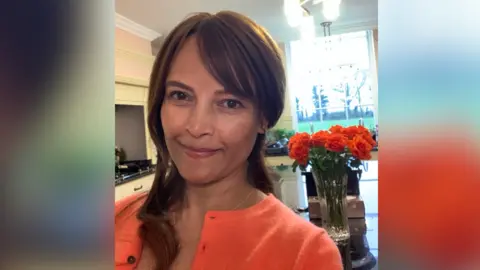
While the business has been praised for its openness by some, Ratula Chakraborty, a professor of business management at the University of East Anglia, argues Bun X could do more to cater to allergens.
What is Bun X doing?
 Neve Gordon-Farleigh/BBC
In February, Bun X announced it would be changing its policy on allergens after "due diligence concluded that there is no safe way to 100% eradicate cross contamination".
Taylor says the buns are handmade in a bakery that handles nuts, the oil the kitchen uses is soya bean vegetable oil and sesame seeds on the buns "cover the entire kitchen".
"We are not being pedantic, we are being extremely fair" when it comes to turning people around due to cross contamination, Taylor explains to BBC Radio Norfolk.
Due to the space of the kitchen, Taylor says the business had to make "tricky decisions" while abiding by the laws on serving and preparing food.
In order to be transparent with customers, Taylor says upon booking with Bun X customers receive terms and conditions and a text that states the business is unable to cater to people with those allergies.
What is the advice?
 Getty Images
The Food Standards Agency advises people with an allergy visiting a restaurant to be upfront with the eatery and make sure it is able to make the changes to suit any dietary needs.
In the UK, food businesses must follow labelling laws, provide allergen information and handle food allergens effectively in food preparation.
The Food Standards Agency says there are a number of actions businesses can take to avoid cross-contamination, including cleaning utensils, handwashing and storing ingredients separately.
It advises if cross-contamination cannot be avoided, then customers should be informed that allergen-free dishes cannot be provided.
What reviews has Bun X received online?
 Getty Images
Bun X has received a number of negative reviews on social media, TripAdvisor and Google, Taylor says.
One person wrote: "If you have a food allergy and you want to eat there, don't bother, they won't serve you. Was felt like I had a disease of something."
After sharing a negative review on social media, the business received a number of supportive messages, however, it has been criticised previously for not catering to allergies.
Another person with a nut allergy wrote in an online review that they were "flat out refused service" despite accepting the risk and that the restaurants rule on allergies is "not an acceptable one".
Another family wrote online than upon making it known one of the party had an allergy they were refused service.
What is Bun X's reaction?
 Neve Gordon-Farleigh/BBC
As a small independent business, Taylor says: "We are just me and a team of people trying our very best trying to live up to our reputation of really good hospitality... we are doing our very best to look after everyone who walks through the door."
Despite publicising that the business cannot cater for all allergens, he says people still turn up for their booking, which can cause additional pressure on staff in a "fast-paced environment".
He adds: "The responsibility lies solely at my footsteps. I want to protect my team, I want to protect the guys who work very hard in a fast-paced environment, I want to protect fellow diners.
"Ultimately I want to protect the guys that have got these allergies we don't want a medical emergency mid-service - we don't want to put anyone through that."
What can people with an allergy do?
 Allergy UK
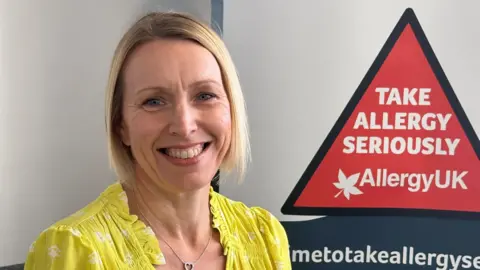
Simone Miles, the chief executive of Allergy UK, says it is not just the business who has a responsibility when it comes to allergies, customers need to be upfront too.
She says: "It can be really stressful to eat out, many people with a food allergy choose not to eat out... because of the concerns that potentially their life could be at risk if they go into a restaurant.
"Communication is key here. It's making sure both the restaurant and the person with the allergy both feel well informed enough and confident enough to have those conversations about allergies in the restaurant."
She said restaurants are much more aware now than even five or six years ago.
"We understand at Allergy UK how challenging it is for restaurants as we understand how stressful it is for someone with an allergy going into a restaurant to lead an inclusive life going out with their family and friends," she said.
Can a business choose not to cater to allergens?
 Ratula Chakraborty
Chakraborty said allergens must be made known to customers whether they are buying pre-packed food or ordering a meal.
However, she says businesses should be responsible for catering for allergens.
She says: "What they absolutely and must do is make sure that nobody suffers from any situations in their restaurant, eatery or cafe, they are legally obliged to protect the customers."
While it can add an additional burden to small businesses, she says they should still cater to allergens.
"Part of me is happy to see a business which is upfront and honest about it rather than telling customers 'I don't know this' or fobbing them off with answers which are partially correct or not, they are not taking a risk.
"I have been to Bun X myself, it is a very fine establishment but it needs to get out of this situation of saying, 'no we can't', the bottom line is they have to cater to it."
Do you have a story suggestion for Norfolk? Contact us below.
Follow Norfolk news on BBC Sounds, Facebook, Instagram and X.