What happens when the lone ranger hangs up his boots?

 BBC
BBCIf you're thinking of heading out for a hike in the sun this weekend, will you be keeping your dog on a lead?
Will you be thinking about your impact on the natural environment, or be aware of any potential fire risks?
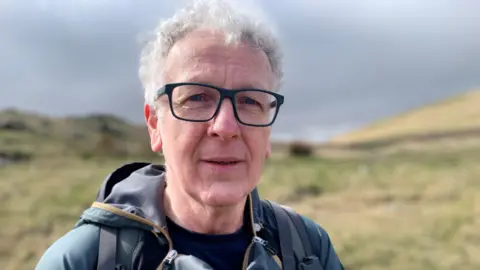
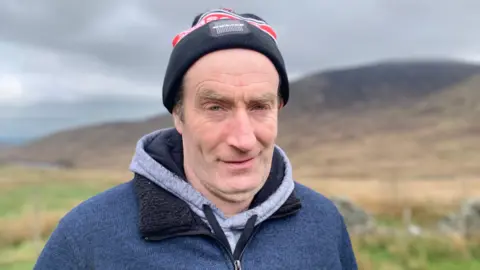
Those concerns used to be managed in the Mourne Mountains by a special team, but a lack of funding saw the last engagement ranger, Peter Rafferty, hang up his hiking boots in December.
And he's worried about who will look after the mountains now, as he saw first hand how hard it was "to get the message out".
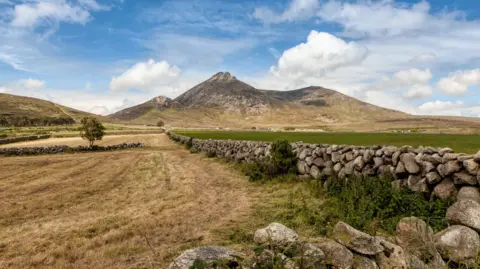
"The environment's getting hammered with so many people," he said, adding that people needed to know the "reasons why they should be staying on the paths, why they shouldn't be walking on top of the Mourne Walls".
"I have found people bringing bags of logs out on to the mountain when there's actually a fire warning," he added.
He said he was concerned how this information would get out to people if there was no one there.
Visitors to the Mourne Mountains reached an all-time high during the Covid-19 pandemic and the engagement rangers were introduced to help people use the area responsibly.
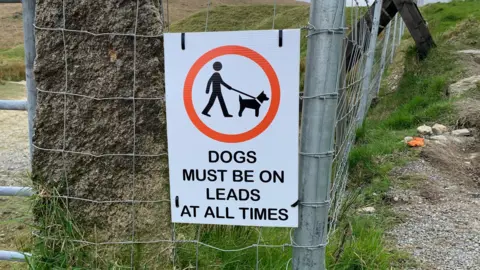
They worked on the ground to advise hikers on a range of issues - from managing dogs on leads to changing terrain and wildfire risks.
There were initially three engagement rangers employed by the charity but last year that was reduced to one, and then none.
Mourne Heritage Trust said they are concerned about the damage that could be caused to the area as a result.
The conservation charity said external funding had gradually declined over the years and "despite its importance" they could no longer sustain the initiative.
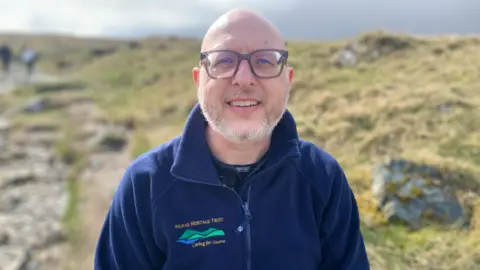
Chief executive Nigel McKinney said they estimated that "in excess of 300,000 visitors" were coming each year which brought "additional pressures" on the infrastructure of the mountains.
Farmers' concerns
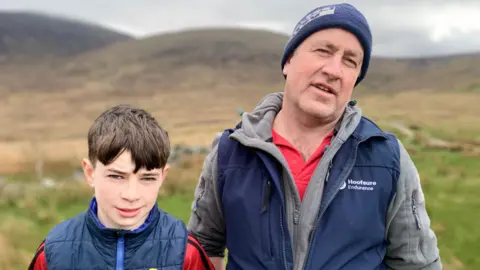
The loss of engagement rangers is also a concern to farmers like Brian O'Hanlon whose family has been grazing sheep in the Mournes for generations.
Since the pandemic in 2020, he said the Ott Track, a popular walking route, had become "10 times busier than it's ever been before".
The biggest issue for him and other farmers was dogs not being kept on leads.
"We had an incident last year here ourselves. We only had the sheep out two days and we had four sheep killed, put out over a cliff on the back mountains out here."
 Getty Images
He said this was a particularly dangerous time when the sheep were heavily pregnant.
"A stray dog can make a disaster in five minutes."
For O'Hanlon, not having engagement rangers is a big loss as "they were giving people good advice".
John Keown runs between 500 and 600 Mourne Blackface ewes in the hills - and he said more people coming to the area had brought a "big lot of worrying of sheep".
This, he said, had led to "ewes with legs broke and sheep found in rivers".
He said people should "look after the mountains" by closing gates, keeping their dogs on leads and taking their litter home.
Funding challenges
Nigel McKinney from Mourne Heritage Trust said he was concerned about the future now there were no engagement rangers in place.
"The last time I was up here in March, I counted myself 80% of dogs were off leads and that's a big problem now we're in bird nesting season."
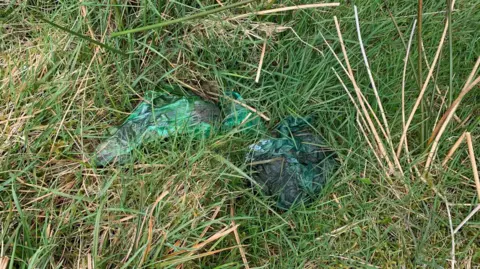
He said that and the increased amount of dog poo left behind was becoming an issue.
McKinney said the charity would try to source alternative funding for the rangers.
"But really, an area such as the Mournes, the most visited upland area in Northern Ireland, I think our reasonable expectation is of more sustained statutory funding rather than a charity having to go and look for resources elsewhere that are increasingly hard to find."
The initial funding came from the Department for Agriculture, Environment and Rural Affairs (Daera), Newry, Mourne and Down District Council and Sport NI.
A Daera spokesperson said the department recognised "the valuable work carried out by the environmental sector in Northern Ireland", adding that it previously provided support and continued to "provide significant multi-year funding" to the Mourne Heritage Trust through the ongoing Environment Fund 2023 - 2028.
A Sport NI spokesperson said it recognised "the value and popularity of outdoor sport including hillwalking and rambling".
"We were proud to play a small role in the Mourne Heritage Trust's engagement ranger initiative, providing 15% of the funding over the four-year period," the spokesperson added.