I'm a carer but I can't afford to go to work because of fuel prices

 Handout
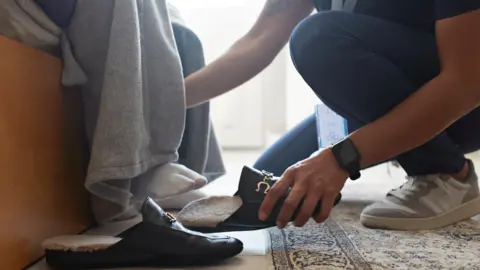
Kevin Brewer loves his job and can't afford to be without it - but these days he can't afford to do it either.
A domiciliary care worker, Kevin drives about 70 miles a day between clients' houses and the rise in fuel prices means he doesn't "know how much longer" he can carry on.
"I thought last week I was going to have to phone up and tell them I couldn't go. I had to borrow money to pay for fuel," he said.
With the US-Israel war with Iran pushing petrol and diesel prices up, carers like Kevin who spend every day on the road are feeling the strain - and now industry body Independent Health & Care Providers (IHCP) has called on the authorities to help.
They say the Department of Health "needs to take urgent action to support staff through this fuel crisis in order to sustain the vital service in our community".
In a statement, the Department of Health have said they understand that "recent volatility" in fuel costs is having a "significant impact" on the public and service providers, including providers of health and social care services.
They added: "This is the subject of wider ongoing engagement across government."
About 20% of the world's oil trade, the raw ingredient for producing both petrol and diesel, has been halted by the closure of the Strait of Hormuz.
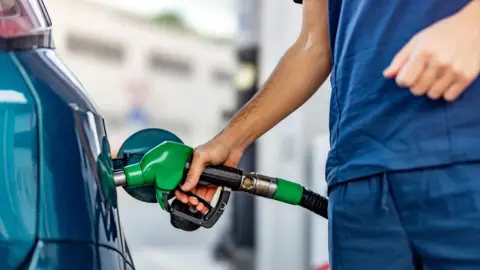
Petrol and diesel costs have also risen sharply. In Northern Ireland, the average price of petrol is 154p per litre while diesel costs 188.1p, according to the Consumer Council.
That is up from a pre-conflict average of 124.8p per litre for petrol and 132.6p for diesel.
'I love my job'
 Getty Images
Kevin works in Donemana, County Tyrone, and used to pay about £30 every second day for petrol for work, but that has increased to £70.
He works for a private company and gets 20p a mile back, leaving him short.
"I love my job. I love care work," he said, but added: "I just don't know how much longer I'm going to be able to do it."
He's calling on politicians to help home care workers.
"Something needs to happen because we are going to lose our care staff in the community because I've been talking to colleagues myself and they're all suffering the same issues," he told BBC News NI.
"I don't know how much longer I can carry on. I'm out money to go to my job.
"I can't afford to go to work," Brewer said, adding that he cannot afford to stay off either.
What are the mileage rates?
 Getty Image
Health and Social Care Trusts (HSCTs) provide social care services to people in their own homes and also commission these services from the independent sector.
The mileage rates that home care workers can get back differs depending on if they work for the health trust or an independent organisation.
Health and Social Care Trust staff get 58p per mile for the first 4,500 miles travelled in any one financial year and 30p per mile thereafter.
Health trusts do not cover mileage costs in tariff rates to private providers.
Rates in the private sector vary and are often lower.
The social care workforce is the lowest paid across the health and social care system.
'Cannot lose this workforce'
 Getty Images
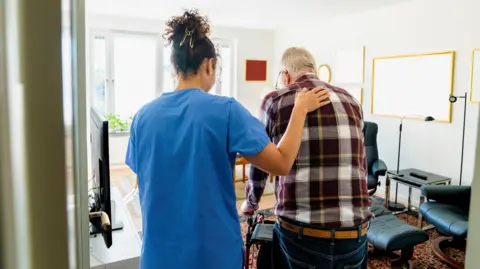
The IHCP said they are "bracing themselves" for staff turnover figures to rise because of the fuel increases.
In a statement, they said costs "are forcing many care workers into a financial position where they are having to choose if they can continue to work in home care".
They also said home help enables people to leave hospital and workers provide community contact for the most lonely and vulnerable in our society, adding: "We cannot afford to lose this workforce".
They also said: "The Department of Health is fully aware of the high risks involved."
'Scared to turn their heating on'
 PA Media
On Thursday, Stormont ministers approved a support package which means that households with a total income of £30,000 or less or those on certain benefits will receive a £100 payment to go towards their home heating oil.
The communities minister said the payment will be available during the summer at the earliest.
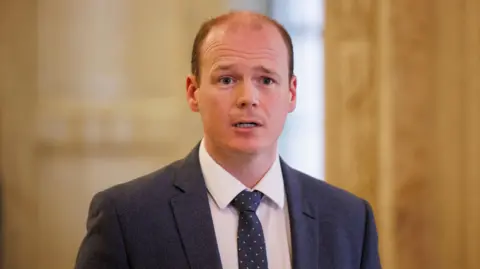
Speaking on Radio Ulster, Gordon Lyons said: "I understand this is not enough, I understand that this will take time, but we have limited levers at our disposal, we're trying our best."
Brewer is not eligible to apply, but said "it would help" if he could.
He said he has spoken to many of his coworkers who feel like "our backs are against the wall" and feel "scared to turn their heating on".
"They're trying to make it last because they don't know if they're going to be able to get to work with their fuel. And they're skimping and scraping in the house, with their food even.
He said: "I've heard actually a few this morning tell me they're double layering in the house and not turning on their heat just so they can afford their fuel just to go to work.
'Drop the profession'
Brewer said it's such "a struggle" that his partner has taken a second job and he "without a doubt" will have to change roles if nothing changes.
He said a lot of his colleagues are in the same position.
"They've all said the same, that they would have to drop the profession and go maybe into a nursing home or something else."
"It's not what they want to do, because we've obviously got into this role for a reason."
Brewer thinks service users, who "really depend on us," will be affected if home help workers start to leave their jobs.
He said: "They need us there and without us they're stuck as well - where do they turn to?"