Girl's 'mammoth' bone find may be 500,000 years old

 Supplied
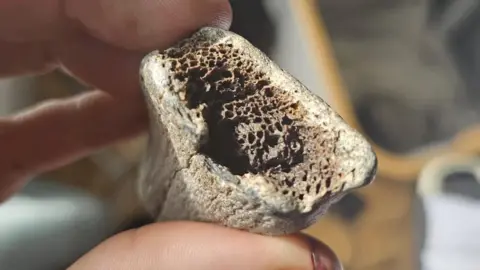
A chunk of bone discovered on a beach by a schoolgirl could be up to half a million years old, according to an evolutionary biologist.
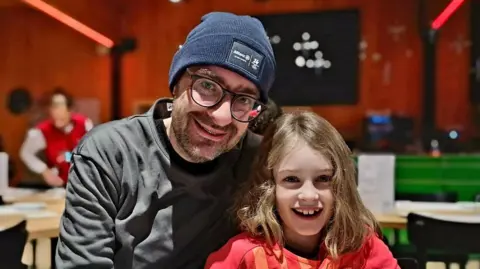
Nina Evans, from Ipswich, was looking through the rocks on Felixstowe beach with her dad, David Evans, 41, and brother, Ivan, nine, on Easter Saturday.
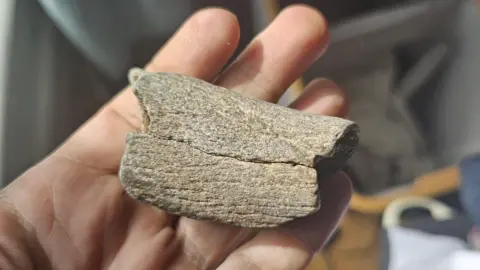
After searching for shark teeth, the seven-year-old found a piece of bone which an AI app – after assessing photos of the find – said may have belonged to a mammoth.
Professor Ben Garrod, from the University of East Anglia, said while the piece could potentially be a mammoth's bone, it is possible it may also have come from a multitude of other large mammals.
 Supplied
"It's from something bigger than a cow, from a mammoth, Irish elk and aurochs to more unusual stuff like wild horse or rhino," he told the BBC.
"So far as I can say, it is old, sub-fossilised, and probably Pleistocene - it's a massive ballpark, but most likely somewhere between 100,000 and half a million years old."
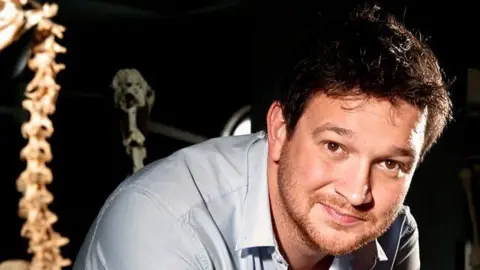
Garrod said it may even have shared the same habitats as ancient humans.
"When it was walking around Suffolk, it could have walked all the way to mainland Europe, as the North Sea wasn't there then," he added.
"It is a lovely find and real piece of prehistory."
According to UK Fossils, Suffolk is "well known" for its fossils from the Pleistocene era - also known as the Great Ice Age - including those belonging to mammoths.
David said he took his children to places like Felixstowe and Southwold every couple of weeks to see what they could find.
But such an old mammal bone was the last thing he and his daughter had expected to discover.
 Supplied
"She asked me what type of stone it was, and I thought it might be a bit of wood, but then it became clear that it was a bone, so we were quite excited," he said.
"Nina has hidden it in a special box in her safe in her bedroom at the moment and she is very protective of it.
"She is quite a quiet girl, and not one to brag, so I think she will be quietly happy that she found it, but she is not one to grab credit."
Do you have a story suggestion for Suffolk? Contact us below.
Follow Suffolk news on BBC Sounds, Facebook, Instagram and X.