Bowel cancer test change sees rise in diagnoses

 NHS
NHSLowering the test threshold to detect bowel cancer earlier has seen an increase in diagnoses, health experts have said.
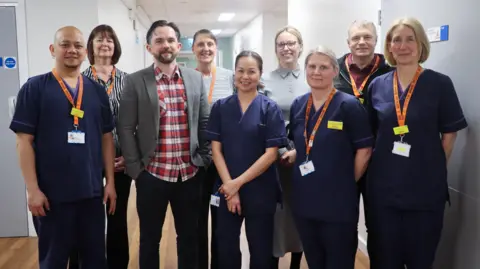
As part of a national trial, Tees Bowel Cancer Screening Programme, based at the University Hospital of North Tees, is one of eight early-adopter sites in the UK.
Lowering the sensitivity of the screening test means that patients who display even small amounts of blood in their faeces will be called in for further screening.
Programme manager Andrew Henson said: "Detecting cancer earlier means more effective, less invasive treatment and, for many people, it can prevent cancer from developing at all."
The change is helping to detect and prevent significantly more bowel cancers and high‑risk polyps as part of a national NHS drive.
Henson said: "The significant rise in abnormal FIT (faecal immunochemical test) results, diagnostic investigations and cancers detected locally shows just how valuable this change is.
"Early detection can be instrumental in positive healthcare outcomes when treating bowel cancer."
The NHS said lowering the FIT threshold nationally should help it to detect about 600 additional bowel cancers early each year and identify 2,000 more high risk polyps - preventing cancers from developing.