UK 'not prepared' for foot-and-mouth outbreak

 BBC/Judy Hobson
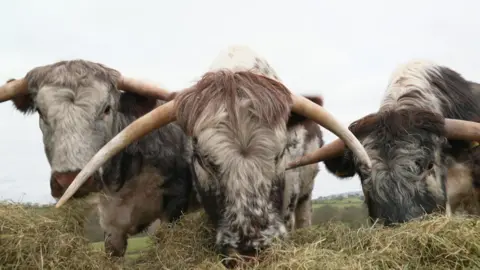
The UK is not prepared for another outbreak of foot-and-mouth disease (FMD), one of the country's senior vets has said.
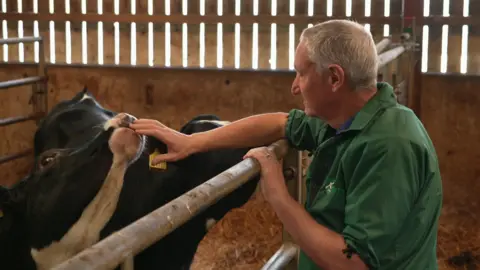
President of the British Cattle Veterinary Association David Black shared his concerns 25 years on from the major outbreak and after cases have been confirmed in Greece and found across four other European countries.
Black, from Cumbria, said: "It's easy to look back with nostalgia and regularly commemorate things like FMD, but we should take it as a chance to soberly reflect on where we are now, because we are not actually any further forward."
A Defra spokesperson said: "This government will do whatever it takes to protect farmers and their livelihoods."
FMD was discovered at an Essex abattoir in February 2001 and the highly contagious virus spread rapidly to other livestock across Britain.
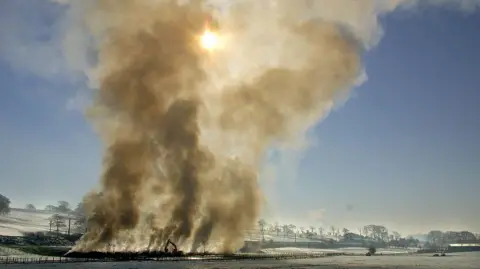
In an attempt to control it, six million farm animals including sheep, cattle and pigs were slaughtered, with mass pyres of burning carcasses and billowing clouds of smoke visible across the countryside.
 BBC/Judy Hobson
Black said the UK's borders must be made more secure to prevent animal diseases entering the country.
The senior director at Paragon Veterinary Group in Carlisle and Penrith was a young vet during the outbreak quarter of a century ago.
He described Cumbria as a "completely devastated county" and said his veterinary practice lost 85% of the animals it was looking after at the time.
"We don't have enough resource within the state veterinary services, we don't have enough contact between the state veterinary services and private vets," he said, describing his reasons for why he thought the country was "under resourced" for another potential outbreak.
With the new cases of the disease found in Europe, Black said he was "terrified" about the impact of proposed closer economic ties to the EU, which could increase freedom of trade between Britain and the continent.
The National Farmers Union's North regional director Adam Briggs was also concerned about the movement of cattle, in particularly imports of illegal meat.
He said: "That poses a bigger risk because that's not going through any regulatory checks.
"You've got no idea where it [the meat] comes from."
 BBC/Judy Hobson
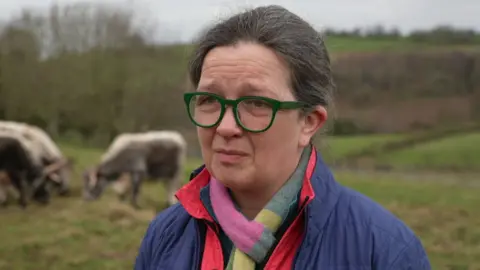
Julia Aglionby's family farm in Carlisle lost its animals during the 2001 outbreak.
She said it was "heartbreaking" to see her mother's ewes being killed by an injection "while they were in the middle of lambing".
Describing the period as "the worst thing for farmers to go through", she recalled the "awful smell" as she drove past the burning pyres.
Thousands of healthy animals were also killed, simply because they roamed within three miles (4.8km) of an infected site.
"It's really critical that we protect Britain, because we can't go through this again," she added.
 Getty Images
A Defra spokesperson said the government had tightened import rules, increased checks at the border and secured £3.1m for the Dover Port Health Authority this year.
"These strengthened measures are working. We are seizing significantly more illegal meat at the border than ever before and keeping dangerous products out of the UK food chain," they added.