What the 'biggest changes to renting in history' mean for London

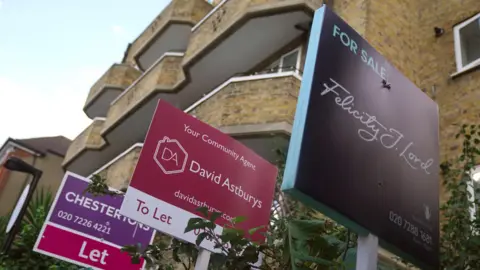 PA Media
On 1 May, the Renters' Rights Act will come into force across England and Wales. It has been described as the "biggest change to renting in history".
The changes include:
- Banning of "no-fault" evictions
- End of fixed-term tenancy contracts, as renters move on to so-called rolling agreements
- End the practice of "bidding wars" so new tenants cannot be asked to pay more than the advertised price
- Clearer rules on having pets
The upcoming shakeup has divided opinion - with landlords and renters broadly at odds over the changes - but what is not in dispute is how much this will reform the rental market as a whole.
Why does this matter to Londoners?
London has the highest proportion of renters and landlords in the country.
- 1.1 million of the UK's 4.7 million privately renting households are in London. That means 28% of households in the capital are private renters, compared to 17% in the rest of England
- Government figures show most landlords are based in London (27%) - seven times higher than the North East which has the smallest proportion of landlords (4%)
How do London's renters feel about the changes?

BBC London has spoken to renters who are broadly welcoming of the stability they hope the law change will bring.
But some are still worried about the rising costs of rent.
On Saturday, a national housing demonstration, bringing together tenant groups, housing campaigners and trade unions, demanded more measures to make rent affordable, calling for rent controls and rent caps.
Maxine Hamilton, who is 33 and has been renting in London since 2017, contacted the BBC about the issue of renters' rights.
She claims her landlord admitted to raising her rent by £200 a month specifically ahead of the law changes. The cost of her small one-bedroom flat in south-east London has gone up £500 in seven years, to £1,350.
With her partner's poor health leaving her the sole earner, she's been pushed on to benefits.
She told us: "I do think the changes will make a positive difference to a lot of people… I do think they could've gone further with rent caps… it feels ridiculous we're paying so much of our money towards rent."
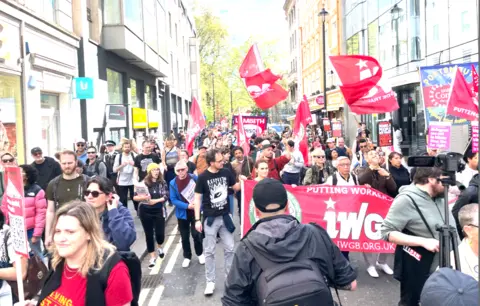
Hamilton isn't the only renter with mixed feelings about the upcoming changes - both positive about having more rights as a renter, but also wanting the laws to go further.
How do London landlords feel?

It's a mixed bag but those with fewer properties are generally quite worried that they'll lose control.
Some landlords have told the BBC they've been selling their properties ahead of the biggest overhaul of the private rental sector.
Others say they've been dishing out Section 21s - the sort of no-fault evictions outlawed from next month.
Deshal Raja owns 50 properties with his family, and manages a further 230 as an agent. He also has close family members who are renters.
He says with fixed-term tenancies ending as a result of the new law, he could be "stuck with" tenants - and ahead of the changes he served 10 eviction notices in one week in April.
"Any landlord that's been slightly uncomfortable with a tenant, maybe they've paid too late a few times... I just don't trust them," he said.
Raja doesn't plan to sell any of the properties, and would rather "move through the storm" but does describe the Renters' Rights Act as a "total nightmare".
He told BBC London he believed private rental supply would drop in London and said he thought landlords would leave, especially smaller ones who own one or two properties. As a result, he said "rents will go up eventually, so renters are just gonna be hit with the bill".
How did we get here?
Policies aimed at strengthening rights for renters have long been discussed in Westminster.
The rental law changes were a Labour Party manifesto pledge in the 2024 general election, however the previous Conservative government initiated the earlier legislative process through a different bill: the Renters (Reform) Bill 2023.
The Renters (Reform) Bill was introduced to the House of Commons in 2023 by the Conservative Levelling Up Secretary Michael Gove. It was billed as a flagship reform and built on a 2019 Conservative manifesto pledge to overhaul the private rented sector, including the eventual abolition of Section 21 evictions, but it failed to pass before Parliament dissolved for the 2024 general election.
After winning the July 2024 general election, Labour introduced the Renters' Rights Bill (not a continuation of the Tory bill) on 11 September 2024.
What are political parties saying?
 PA Media
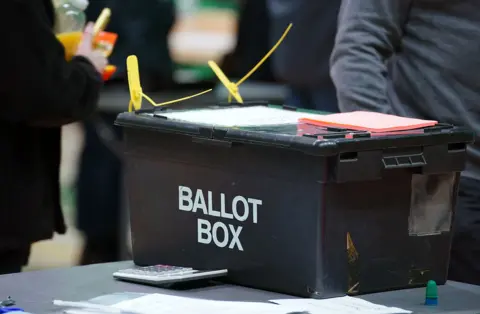
Labour's Renters' Rights Act will become law during the local election campaign. A recent YouGov poll ranked the cost of living and housing to be among the top 10 issues locally for British people, ahead of polling day on 7 May.
Secretary of State for Housing, Communities and Local Government Steve Reed said: "Across London, 2.7 million renters will benefit from Labour's Renters' Rights Bill, ending Section 21 no-fault evictions so families can't be forced out without reason, capping unfair rent hikes, and introducing a new ombudsman and stronger enforcement to drive up standards.
"It will also ban bidding wars, stop blanket bans on families and those on benefits, and give renters more rights over their homes.
"This is what change looks like: a Labour government working with Labour councils and a Labour mayor to bring down the cost of living and give Londoners the security of a home they can rely on."
Here's what the other political parties have told BBC London:
- Conservative Party
The Conservatives said the Renters' Rights Act "was legislation that the Conservatives put forward in the last Parliament".
It added: "Labour's version does not seek to strike an appropriate balance with landlords and, in the midst of a housebuilding collapse, will exacerbate housing costs for Londoners by driving landlords out of the market."
- Liberal Democrats
The Lib Dems say the rental market should offer "security, not stress... everyone has the right a safe, warm and affordable home".
A spokesperson from the party told us they've "long called for an end to no-fault evictions - a promise the Conservatives made and repeatedly broke. We're glad this has now been delivered, and we'll keep pushing to make renting fairer."
- Green Party
A spokesperson for the Greens told us: "Rent controls are not included in the Renters' Rights Act - something the Greens have campaigned on.
"Greens are hugely disappointed that this Labour government refuses to devolve powers for rent controls. The mayor of London hasn't done enough to push for this – Greens will keep up the pressure."
- Reform UK
Reform said: "Labour's Renters' Rights Act has been a disaster for renters in London. It's already driving landlords to sell up in droves, slashing rental supply and pushing up rental prices."
