'Medical cannabis cost my brother everything'

 Family handout
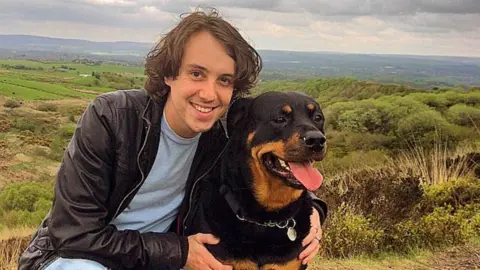
The brother of a man who took his own life while on medical cannabis has launched a campaign to tighten rules on its access for patients with complex mental health issues.
A coroner found that Oliver Robinson from Bury had refused help for psychiatric and addiction issues because of his use of the prescription drug.
Some experts say there is a lack of evidence that cannabis can help with serious mental health issues and might make them worse.
The private clinic which issued the prescriptions says decisions are made by a multi-disciplinary team and informed by an evidence base.
 Family handout
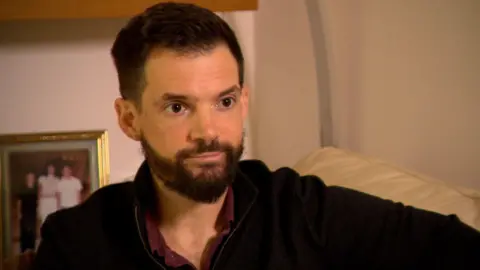
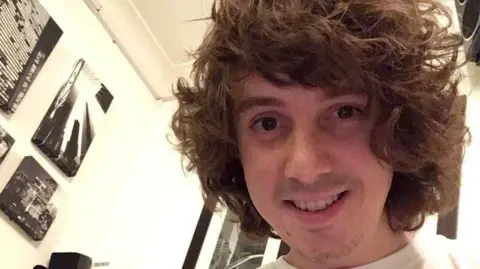
Alexander Robinson sits in a neat living room surrounded by memories of his younger brother.
Oliver was a talented artist. His pictures line the walls and a small sculpted rose lies on the mantelpiece.
"He was one of the kindest people I ever knew," says Alexander.
"He was incredibly loving and generous. He had the gift of the gab, he loved being sociable, chatting to people."
But Oliver had also struggled with depression and addiction problems for years. He had become a regular user of cannabis at university, first seeking help in 2016 and eventually being admitted to the Priory twice – in 2019 and then in late 2020.
Alexander says his brother initially responded well to treatment, but after another depressive episode in early 2022, he saw an advert for medicinal cannabis and decided to try some, a decision, say his family, which changed his life.
He started to become incredibly angry, violent, aggressive. He was punching holes in the walls round here," says Alexander.
"On several occasions he threatened to firebomb the home, the car. All in response to being unable to access cannabis or having run out of his supply."
His family accept that Oliver was also buying street cannabis but feel that the fact he was also being prescribed it allowed him to justify his use of it to himself.
Medical cannabis was first legalised in 2018 after a campaign by parents of children with severe epilepsy who suffered from frequent seizures.
The law required the decision to be made by a specialist doctor on the register of the General Medical Council – the UK regulatory body. They could only prescribe the drug if they judged that the patient had an "unmet clinical need" which could not be treated with any other licensed product.
But crucially, the law didn't restrict the medical conditions which could be considered.
 Family handout
Initially, it was thought medicinal cannabis would be used primarily for a limited number of cases. But the intervening years have seen a huge rise in prescriptions – from 282,920 in 2023 to 659,293 in 2024, the most recent year for which there is full information.
An investigation by the Times newspaper, published in March, revealed that many of those are for adults with mental health issues like depression, PTSD, and anxiety, a claim backed by several of the private clinics themselves along with observational studies.
All of these prescriptions are issued by private clinics. The NHS can only generally prescribe cannabis for severe epilepsy, nausea from chemotherapy, or muscle spasms caused by multiple sclerosis.
But many experts say there is not enough evidence to support using cannabis for mental health issues and it could even be harming some patients.
 Family handout
A major study published in the Lancet in March concluded that: "Given the scarcity of evidence, the routine use of cannabinoids for the treatment of mental disorders and SUDs (substance use disorders) is currently rarely justified."
The findings echo the position of the The Royal College of Psychiatrists, who say "recent studies have shown that the benefits of cannabis as a medicine may have been overstated for many conditions".
They added: "While these products have evidence of modest benefit for some addictions, they should not at present be offered for the many mental illnesses for which no benefit has been found." Both say that more high-quality research is needed.
Professor Sir Robin Murray is a professor of psychiatric research at King's College London who has carried out numerous studies on the links between cannabis and mental health. He says that, far from helping, regular use of strong cannabis can lead to psychosis.
"If you start off being healthy and you use a lot of cannabis then you increase your risk of going psychotic by between five and nine times," he said, adding that for patients with pre-existing mental health problems, the outcomes were likely to be even poorer.
"There's a lot of evidence, most recently in the Lancet, showing that it's a risky business because you're likely to exacerbate your problems."
The Medical Cannabis Clinicians Society, a not-for-profit organisation which provides advice to clinicians on prescribing cannabis, states in its recommendations guide that medical cannabis generally has a lower percentage of THC, the substance linked with psychosis, than street cannabis. Because of this, it says, such side effects are less likely. However the same guide also adds that there is no conclusive evidence that cannabis is effective in treating depression and limited evidence for some other mental health issues including anxiety and PTSD.
'A psychological dependence'
Alexander Robinson says his brother refused to accept NHS treatment for his deteriorating mental health because he was so convinced that medicinal cannabis was the 'miracle cure'.
"Because it was branded and marketed as medicine it prevented Oliver seeking any alternative help. He would only seek help if it involved cannabis. That shut down every other avenue available to him," he says.
By early 2023 Oliver was living alone, jobless and taking out loans to fund his cannabis prescriptions, which Alexander says were costing up to £1,000 a month.
His mother had been reluctantly persuaded by police to take out a restraining order against him after frequent threats of violence. He was self-harming and sending his brother videos of the results.
That November, aged 34, he took his own life. The inquest, which concluded earlier this year, concluded that multiple factors had led to his death including conflicts over housing and NHS services and debt. The court also found that Oliver's probably didn't intend to take his own life but simply to communicate the strength of his distress.
But it also concluded that his "emotional dysregulation" had partly been caused by a psychological dependence on both prescription and illicit cannabis, and that "use of prescription cannabis had acted as an obstacle to him receiving appropriate psychiatric and addictions care", a finding his family and legal team believe is a first in this country.
The coroner was so concerned, she wrote a Prevention of Future Death Report to Curaleaf, the private clinic that treated Oliver.
 Family handout
In its eight page response, Curaleaf disputed the finding that his treatment with them stopped him getting other help, saying that he had continued getting psychiatric medication from his GP and had also been seen by psychiatrists at the Priory and the NHS. It also added that it had informed his other clinicians of his treatment with them.
The response also stated that Oliver had already been using illicit cannabis before he approached the clinic for treatment, and his depression had measurably improved during his time with them.
Alexander has now launched a campaign called Oliver's Law to tighten up regulation on prescribing medicinal cannabis, particularly to mental health patients.
It wants a ban on cannabis prescriptions for people with serious and complex mental illnesses, face to face initial consultations rather than video calls, a central NHS registry recording all cannabis prescriptions, and routine official inspections.
He is now talking to other campaign groups and MPs to push for a parliamentary debate.
"We've launched this campaign so that no other family has to go through the utter hell and torment that we went through for the last three years," he said.
"If the current regulations are what allowed my brother to die then it's the current regulations that need to change."
In an additional statement to the BBC, Curaleaf said: "Our thoughts are with Mr Robinson's family and everyone affected by his death.
"Curaleaf Clinic takes patient safety extremely seriously. We have made improvements to our clinical governance processes, many of which were in place before the inquest. Our detailed response to the coroner's report is publicly available.
"Every prescribing decision at Curaleaf Clinic is made by a multidisciplinary team, not a single clinician, and is informed by an evidence base that is kept under continuous review.
"We are committed to responsible, safe practice and will continue to engage openly with regulators, clinicians and patients to provide the highest standards of care."
If you have been affected by the content in this article, support and information can be found on the BBC's Action Line.
Listen to the best of BBC Radio Manchester on Sounds and follow BBC Manchester on Facebook, X, and Instagram. You can also send story ideas via Whatsapp to 0808 100 2230.