Ketamine is 'not worth losing your bladder for'

 BBC
BBCKetamine use among young people has risen sharply across the UK and addiction services say they are now treating more users than ever before.
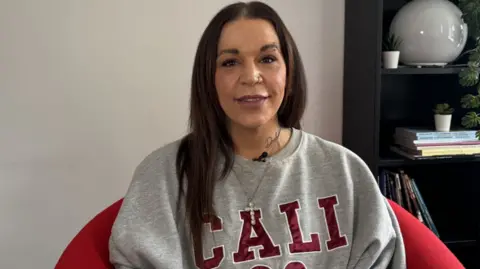
One of them is Hollee, 38, from Swindon, who became addicted to ketamine and experienced excruciating abdominal pain known as "k cramps", a symptom increasingly seen by drug workers.
She said: "It's not worth your health, it's not worth losing your bladder for."
Ketamine, once seen as a niche club drug, is now one of the fastest‑growing substances among young adults. The number of 16‑ to 24‑year‑olds using ketamine has increased from 52,000 in 2012-13 to 222,000 in 2022-23, according to the Crime Survey for England and Wales.
Hollee turned to ketamine, alcohol and cocaine after the death of her father.
She said she used the drug "every day, straight away", taking between one and 1.5 grams at a time.
The mother‑of‑one was taken to hospital several times because of the intense abdominal pain caused by heavy ketamine use.
She was addicted to it for just five months before moving onto cocaine, but said the damage was already done.
It took five years before Hollee made the decision to quit cocaine.
After her daughter was removed from her care and she lost her driving licence and home, she decided she needed to get sober.
"I had a rock bottom, and my rock bottom had a basement and I had to lose everything at once - and I did."
'Very, very toxic'
Now living in a dry house in Gloucester, she has been clean for more than a year and volunteers with local drug and alcohol services.
"I know of a lot of people who have far more severe health concerns since," Hollee said.
"It's an awful drug, it's very, very toxic, it's very harsh on the body. The health implications that are permanent are catastrophic.
"It's not worth your health, it's not worth losing your bladder for."
Hollee says many young people she speaks to do not believe the long‑term health risks will apply to them.
'My bladder has been destroyed'
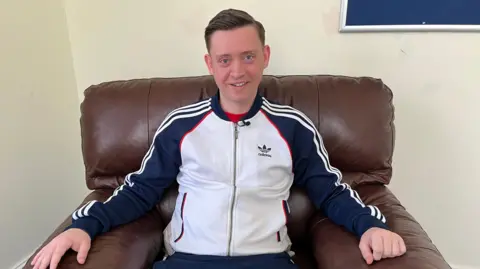
Peter, 29, from Edinburgh, is on his third attempt at getting clean at the Abbeycare rehabilitation centre in Gloucester.
He said years of heavy ketamine use has severely damaged his bladder. He had been using up to seven grams daily since the age of 21.
"My bladder has been destroyed and I'm not wearing one today but I've been using a sheath catheter, to make me able to sit in groups, otherwise I'd be running back and forth to the toilet," Peter said.
A sheath catheter is a wearable, condom-like device used by men for incontinence, featuring an outlet tube that connects to a drainage bag.
Peter's bladder has improved since coming off the drug but he still needs to go to the toilet at least every half an hour or so.
"I feel I've done that much damage that I'm ready [to get clean]."
After getting into ketamine in his teenage years at raves and house parties, Peter said is looking forward to spending his 30th birthday in rehab.
He hopes to move to Bristol at the end of his treatment into a dry house in the city.
"They've got a good sober community [there] so I'm looking forward to it," Peter said.
Ketamine overtaking other drugs
At Abbeycare in Minsterworth, Gloucester, a residential rehabilitation centre for drug and alcohol, staff say ketamine has rapidly become the most common drug they treat after alcohol, even above heroin and cocaine.
Ketamine's explosion has been significant because the health effects are so adverse, with more young users arriving with chronic bladder conditions, staff say.
Tim Pope, Abbeycare's registered manager, said that when he started his career in the early 2000s, "ketamine wasn't even talked about as a party drug".
"Ketamine didn't start coming in until after about 2008 to 2009," he said.
"It's become a much younger drug, I would say it has taken over the mantle that cocaine had."
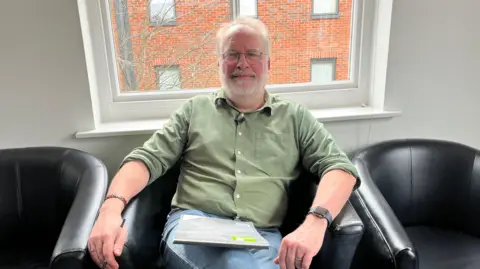
Although Gloucestershire is not seeing rises as steep as other parts of the country, local drug and alcohol charity Via has introduced three ketamine experts in anticipation of a growing need.
"Their role is to be the one in the team that's most informed about the harms of ketamine use and to advocate a little bit for ketamine users who are coming into treatment," said Chris Tarran, Via's quality and compliance officer.
National concern
In medicine, the drug is used widely as an anaesthetic, sedative and pain reliever, and is also commonly used on animals.
But on the black market ketamine is classed by the government as a Class B drug, which means it is illegal to take, carry, make or sell.
In January The Advisory Council on the Misuse of Drugs published its findings, advising the government ketamine should remain a Class-B drug.
But it advised police and health care professionals should "receive greater support to better identify, prevent and respond to ketamine‑related harms."
Details of organisations offering support and information with addiction are available at BBC Actionline or you can call for free, at any time to hear recorded information on 08000 155 947.
Follow BBC Gloucestershire on Facebook, X and Instagram. Send your story ideas to us on email or via WhatsApp on 0800 313 4630.