Habitat will allow humans to stay underwater for weeks
A company aiming to "make humans aquatic" is set to launch its first test mission.
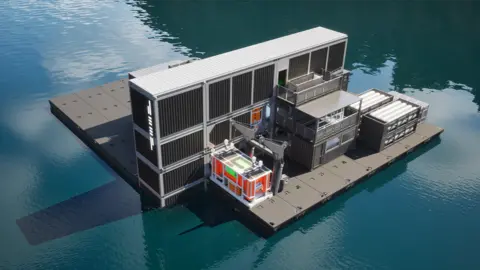
DEEP, a Gloucestershire ocean technology firm, has developed a modular habitat system to allow research crews to operate on the ocean floor for weeks at a time.
Currently, divers can stay underwater for up to about six hours, depending on their equipment and conditions.
Dennis Nelson, DEEP Institute CEO, said: "DEEP is effectively looking to make humans aquatic. The habitats are time machines. What we are trying to do is to expand our understanding of what is going on in the oceans."

 DEEP
DEEPHe added: "Between 50% and 80% of all of the oxygen in our atmosphere actually comes from the oceans, the photosynthesis that's happening there.
"It's one of the two lungs, we have the forests, and we have the oceans, and the oceans are underappreciated and are under-researched."
DEEP, based at the former National Diving and Activity Centre in Tidenham, said the new Vanguard habitat will remove the need to resurface and decompress in between individual dive missions.
Its systems and technology are set to be tested in America's Florida Keys at a depth of about 18 metres (59 ft).
"Vanguard is real, what we are doing is real, and it is within touching distance. It's the type of thing you can be proud to tell your kids about," said Nelson.
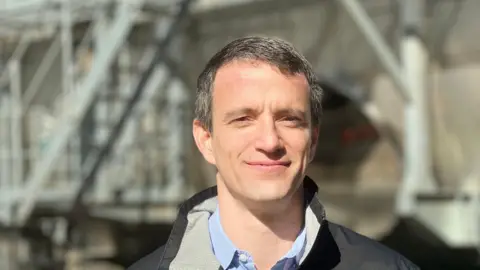
The team said they are also building the world's most saturation immersion diving training facility.
The closed bell chamber facility - a hyperbaric training environment where commercial divers learn to operate at pressure - is only the second such training base in the world.
"There's only one other closed bell training facility in the world today, as it stands, and that's in Tasmania," said dive manager Mark Hamilton.
"So it made absolute sense for DEEP to develop its own closed bell training facility."
Follow BBC Gloucestershire on Facebook, X and Instagram. Send your story ideas to us on email or via WhatsApp on 0800 313 4630.