How a barber's boy wrapped the world

 BBC
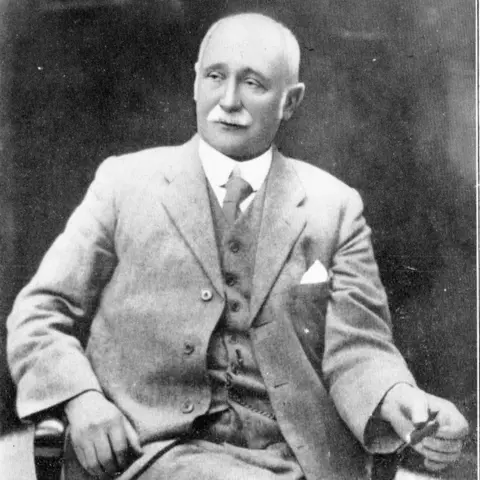
BBCA boy spends his evenings sitting by candlelight, sketching ideas for a revolutionary machine. William Rose is an apprentice barber and tobacconist at the height of the Victorian era – and he has become fixated on a frustrating part of his daily work.
When assisting the master barber with a cut or shave, he often has to stop what he is doing in order to serve another customer tobacco. It means washing his hands, weighing the tobacco, wrapping it up and then washing his hands again.
His solution? A machine that will weigh and wrap automatically.
By the time William has become a man, in the 1870s, he is working on his first patent – an invention that will change global manufacturing and become a blueprint for machines in factories around the world.
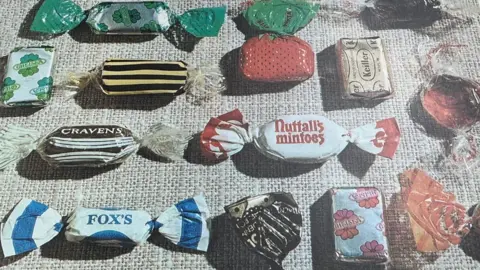
His company, Rose Brothers, of Gainsborough, will go on to develop wrappers for some of the most famous sweets of the 20th Century, make parts for the World War Two bouncing bomb, and, so the story goes, inspire the name of Cadbury's Roses chocolates.
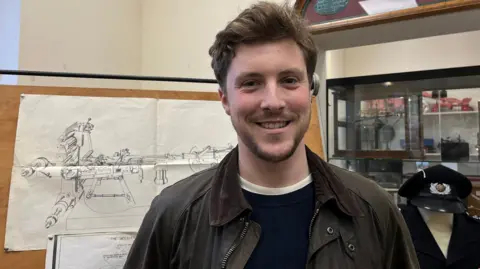
According to William's great-great grandson, Joseph Rose, his determination runs in the family.
"If he's anything like my grandpa, he's very driven, he has an idea and he wants to chase it," Joseph tells the Secret Lincolnshire Podcast.
"I was always told when William Rose started, it was sweets he sold, not tobacco. Just, you know, to make it a bit nicer for a kid.
"They would wrap bread, they would wrap sweets, they would wrap everything, parcels, you name it. They made tins, butter, margarine, all sorts."
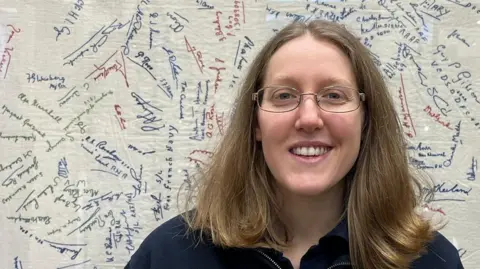
Gemma Clarke, a volunteer at Gainsborough Heritage Centre, finds William's story fascinating.
"He wasn't an engineer by trade or anything like that, so he was really trying to get his head around mathematics and things," she says.
Fortunately, his brother-in-law, Fred King, was a railway engineer, and the two of them spent their spare time in the rooms above a shop, believed to be in Market Street, working on designs and inventions into the early hours.
By the early 1880s, they had managed to invent a semi-automatic machine, which wrapped tobacco in a cylinder, Gemma says.
They took the prototype to one of the leading tobacco manufacturing companies in Britain at the time, W.D. & H.O. Wills, in Bristol.
By this point, William was running out of money and the firm's support was crucial in developing the prototype.
 Gainsborough Heritage Association
Soon, William was selling his first tobacco machines and by 1895, he was so successful, he had to move out of the barber's shop and into a factory known as Albion Works, on the banks of the River Trent.
Over the following decades, the firm went from strength to strength.
Among the companies it worked with was Cadbury, a relationship said to have influenced the launch of Roses chocolates in 1938.
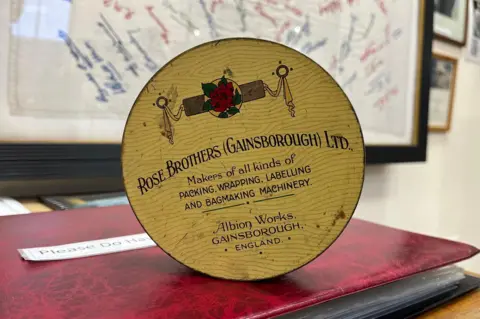
According to a history of the firm, the Rose Brothers logo – a red rose resembling the one used on the chocolate box – inspired the name Roses, although Cadbury has also linked the name to the Bournville Works, which was known as the "factory in a garden".
During World War Two, the company played a significant role in supporting the war effort.
It made elements for the bouncing bomb designed by Barnes Wallis for the Dambusters raid, which was launched from RAF Scampton in Lincolnshire, and developed an improved gun turret for the Lancaster bomber.
"Roses developed a turret which could twist to the side to allow the rear gunner to bail straight out," Joseph says.
Before this there had been "no other way for the gunner to bail" in an emergency.
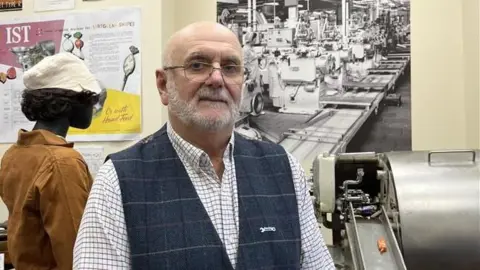
Alongside its pioneering legacy, the company left a mark on generations of people who worked there.
For Keith Vince, who spent 24 years at the Gainsborough works until its closure in 1987, Roses was more than a workplace.
"When I was at school, I was useless," he says. "Roses had given me my life. And this I'm thankful for now."
Keith recalls walking into the factory for the very first time.
"When you've left school and drop into the industrial era, there was cranes 30ft up in the sky. It was an all-new world, and it was quite scary."
Despite leaving school with no qualifications, Keith was supported to go to college "with Roses behind me to push me to do it".
"To the day I die I shall be a Roses bloke, and you can't take that away from me. It's like a piece of Blackpool rock, it's written right through me," he adds.
 Gainsborough Heritage Centre
Today, the legacy of Rose Brothers lives on in Gainsborough. The Roses Sports Ground is named after the firm, as is Roseway Street which, Joseph notes, "was a main road from the houses, leading towards the factory".
For Joseph, all of that stems from his ancestor William's work on developing the wrapping machine.
"William Rose was a man who had that idea and then grew it.
"It grew and gave this area a community and a family.
"It is amazing. He started something that we still use today. Wrapping machines are in every country and all over the world and they're used for every product."
Listen to highlights from Lincolnshire on BBC Sounds, watch the latest episode of Look North.
Download the BBC News app from the App Store for iPhone and iPad or Google Play for Android devices