Could dog's discovery be evidence in murder case?

 BBC
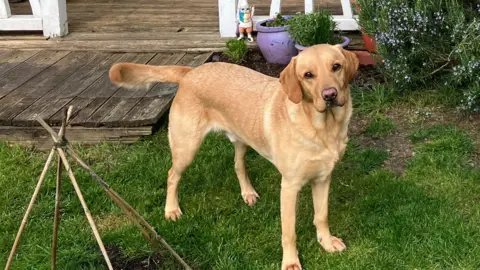
BBCA dog may have unwittingly dug up a crucial bit of evidence from a notorious Victorian murder, his owner believes.
Paul Phillips live in Clyst Honiton, the east Devon village where Mary Ann Ashford murdered her husband William in 1865 by placing arsenic and strychnine into his tea.
She was eventually tried and hanged for the crime outside Exeter Prison in one of the last public executions in Devon
More than 160 years later Phillips believes his golden Labrador Stanley has found a piece of previously buried evidence after he dug up a Victorian poison bottle just yards from the murder scene marked "not to be taken".
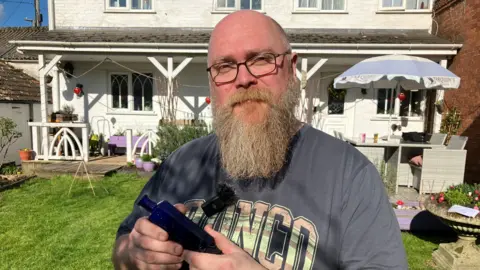
Phillips said his dog kept digging in the same spot until he uncovered the bottle. Having done some research, he found the blue glass container dated from the time of the crime, which happened close to his garden.
He said the murder took place next to the village's old police station - next door to his property.
Phillips said "if the story is true, then Mary could have hidden the bottle in our garden and it's laid there for 160 years".
He said Stanley, dubbed Sherlock Bones by his family, had been praised for his tenacity but the family did not want to keep the bottle in the house because "it comes with a bit of a dark story".
The family said they hoped a museum might want the item if it was proven to be part of the Mary Ann Ashford murder case.
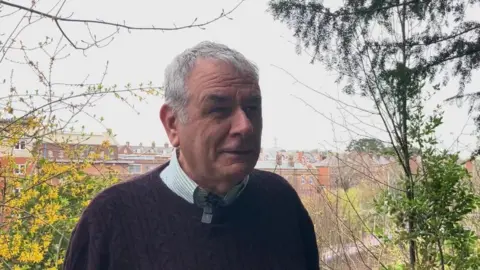
Historian Dr Todd Gray, from the University of Exeter, has previously researched the Ashford murder case.
He said the blue poison bottle was only a "possible" piece of the jigsaw and could represent an "additional piece of evidence".
Gray revealed that, during Mary Ann Ashford's trial, police had brought out packets and several other bits of evidence relating to the arsenic poisoning found at the scene of the murder.
Follow BBC Devon on X, Facebook and Instagram. Send your story ideas to spotlight@bbc.co.uk.