'No politician stands for what I stand for'
 BBC
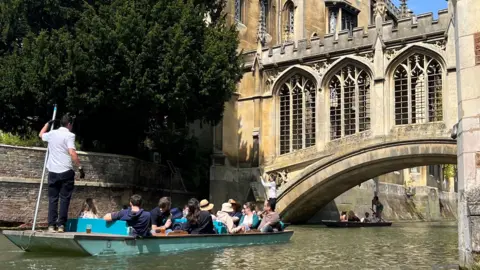
BBCThe university city of Cambridge has become synonymous with the government's plans for growth, with seemingly never-ending announcements about the science and technology sector. But with local elections taking place in the city next month, how do people in a social supermarket and cafe feel about politics?
The chancellor Rachel Reeves hopes to make the Oxford–Cambridge corridor the UK's "Silicon Valley", with about £800m set to be available for new homes, labs and workspaces, to "supercharge future growth".
There has even been a consultation about a development corporation to makes the plans come to life.
In stark contrast to the hi-tech talk is the 185-year-old St Paul's Church on Hills Road, where residents can pop in for tea, coffee and board games, and those on low incomes or struggling with the cost of living can come for subsidised food, known as Fairbite.
The welcome is genuinely warm and friendly. The view on politicians is low.
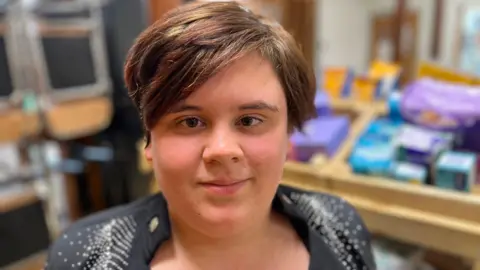
"None of them really stand for what I stand for," says Sydnii, who now volunteers having been helped by the associated food bank while she was rough sleeping.
"I care about equality, about helping people get off the streets, making sure that things are fair and affordable for everyone... I personally believe that they [politicians] just want to help the rich get richer. I don't stand for that."
When asked if she will vote in the upcoming elections, Sydnii responds "probably not".
"I'd like to see them maybe try and live like us for a day, or for a week, and see how we feel. I feel like you won't truly understand the struggles of the day-to-day life if you haven't been through it yourself."
Clive, who came to the church for company and a hot meal, says he feels it is important to vote, but adds: "That it makes any difference? I don't think so, because I will cast a vote on my conscience regardless of whether the candidate is going to have a huge majority, or is not likely to get much at all."
He believes "now more than ever there's a feeling that politicians just don't represent the people who vote for them".
"We have more and more career politicians, people who stand, who haven't actually done much else with their life other than local politics, and when they're canvassing and making manifestos they have dozens of brilliant ideas - but when push comes to shove, and when they win, I don't think that they give the electorate merely much thought."
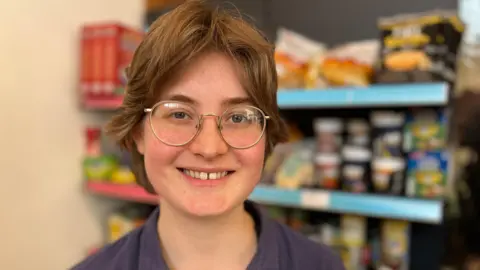
Emma Caroe, the community development worker at St Paul's, says the service was set up in November.
"That's been in response to the massive demand that there's been. We're one of six Fairbites around the city and the others were full with waiting lists - people really need this support."
Emma says a lot of the people they see are out of work and have been for a long time.
"They're in a chronic state of struggling to make ends meet, especially as benefits often aren't enough to cover their essentials - and the reasons that people are out of work are also deep-seated."
If politics does come up, Emma says: "People have opinions on the bigger picture - questions like, 'Who makes the decisions about benefits?' or 'Where is all our money going?' and 'Who is benefitting from the system?', because they can feel that's not them and they can feel that there must be somebody benefitting at their expense."
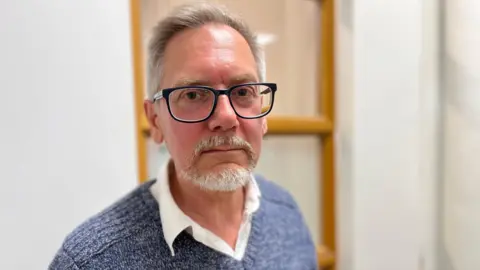
The chief executive of Cambridge City Foodbank, Steve Clay, was meeting the team at the church and says there is a "general apathy" towards politics.
"For many people in their living memory, it has just been a continuous cycle of the amount of income that they get has just been dwindling, in terms of the cost to be able to provide for the basic essentials," he says.
He adds that Cambridge is "one of the most unequal cities in the country", including some so-called "food deserts, where there just isn't a decent supermarket that provides low-cost food", such as in the north of the city.
"We all know convenience stores are great if you want your tin of beans, or if you want your loaf of bread or your pint of milk that you've just forgotten to get in your normal shop.
"But there are some areas in Cambridge... where if you don't have the means to transport, you don't have your own car, you don't have the funds to get on public transport... you can't get to a supermarket that's got a cheap range of food for you.
"So you're probably paying somewhere up to 40% more by doing your shop from a convenience store than other people who are much more mobile."
 Local Democracy Reporting Service
What do the parties say?
About one third of the seats at Cambridge City Council - currently under the control of Labour - are up for election on 7 May.
The local party says "supporting people who are struggling is the number one priority for Cambridge Labour", adding it has built 700 new, energy-efficient council homes, with plans for a further 1,300 in the next 10 years.
The opposition Liberal Democrats say: "Our focus is restoring the everyday basic services the council chose to forget, like street cleaning and public loos, and enabling new homes to be built where the shortage keeps prices here so impossibly high."
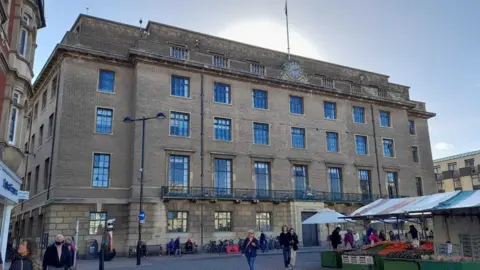
Both the local Greens and Conservatives have raised concerns about the council spending about £50m refurbishing the Guildhall, which includes plans for new work spaces and meeting rooms for council staff.
The Greens say "local people aren't seeing council resources used to fund the things that matter to them".
The Conservatives say they are "the only party to consistently call for lower council tax" locally.
Reform UK said Cambridge residents had seen council tax go up by nearly the maximum amount for the past five years "with precious little to show for it", adding the party would direct resources to support existing food banks and help to set up more in areas of critical need.
A full list of candidates taking part in the Cambridge City Council elections on 7 May can be found on the authority's website.
Do you have a story suggestion for Cambridgeshire? Contact us below.
Follow Cambridgeshire news on BBC Sounds, Facebook, Instagram and X.