How an unconventional countess helped women take root

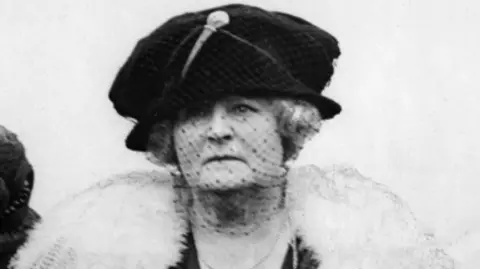 ullstein bild via Getty Images
Nearly 130 years ago, a glamorous aristocrat turned socialist writer, opened one of Britain's first gardening colleges for women.
Daisy Greville, Countess of Warwick, was passionate about gardening and made it her mission to ensure women could make a living through gardening.
In 1898, she created a horticultural college exclusively for women in Reading, Berkshire.
At the time, the idea was considered radical, with most women expected to stay far away from manual work.
Radio Berkshire's Lorin Bozkurt spoke to horticulture expert and former BBC Two's Gardeners' World producer and gardener Louise Hampden to find out more about Daisy's vision.
"Part of the 'Marlborough set', which included lots of rich people in London, she [Daisy] used her estate in Essex Eastern Lodge to host amazing parties where everybody came and had a lovely time," said Louise.
"Then she met a newspaper editor, who I think lambasted her slightly.
"I think the idea was, it's all very well to have glittering fundraising parties but what are you actually doing?
"So that made a fundamental change in what she did."
Louise said the countess was concerned about "what she called surplus women".
"Surplus women were middle-class women who had not been educated to do anything apart from sit around," she said.
"Daisy was very concerned that there was a whole generation of women who wouldn't be able to support themselves.
"Her idea was that if she started a horticultural school she would be able to arm these women with ways of making a living."
Based on the Bath Road, the school had more than 225 students in the five years it was in the town before it was succeeded by a larger all-inclusive college, land and accommodation scheme in Studley, Louise explained.
World War One saw the creation of the Women's Land Army (WLA), recruiting women to work in agriculture while men fought on the front line. It changed the role of women in society dramatically.
Louise said: "Early women's schools in gardening in this particular era formed the seed of of the WLA.
"Women were no longer just sat sewing and doing a bit of embroidery, we could just get on and do things.
"They'd thrown away the sewing needle and taken up the trowel.
"I mean, how dare they pick up a spade? How dare they learn about growing flowers? Because they weren't supposed to do that. So I think it was fairly radical."
While women have gardened for centuries, when they became visible doing these roles, it became usual for people to see women making things, growing things, making a living and going to horticultural college, she said.
"I just think it must have been really empowering and I think that's what she facilitated.
"We've got some famous horticulturists and women are going into gardening. There are amazing women garden designers. It really is an occupation for everybody now, it's an equal occupation."