Rachel Reeves says she's angry at Trump's decision to launch war with Iran

 PA Media
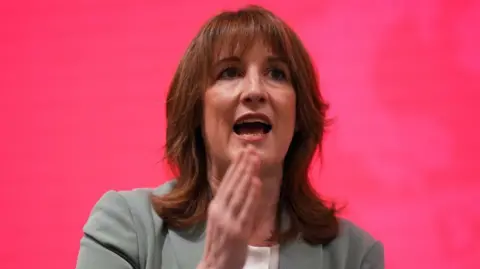
Rachel Reeves said she is "angry" that US President Donald Trump chose to go to war with Iran, adding there is no "clear" exit strategy.
The chancellor said the decision is "causing real hardship for people now", with higher inflation, weaker economic growth and lower tax receipts among the potential consequences.
Relations between the US and the UK have become increasingly strained following Prime Minister Sir Keir Starmer's refusal to be drawn further into the war with Iran.
The direct criticism of Trump by Reeves went further than Sir Keir, who earlier on Wednesday said he would not change his decision "whatever the pressure".
Trump has repeatedly criticised Sir Keir in recent weeks after the PM refused to allow the US to use UK bases for its initial offensive strikes against Iran.
Sir Keir later gave permission for them to be used for defensive action against Iranian missile strikes, but this has not stopped Trump's critical remarks.
Speaking to BBC Radio 2's Jeremy Vine show, Reeves said: "I'm angry that Donald Trump has chosen to go to war in the Middle East – a war that there's not a clear plan of how to get out of. It's why we didn't want to enter this."
Reeves said the government is monitoring the situation closely and "trying to bring the oil and gas into the UK so that those supplies are there and to try and get the prices down".
She also defended the government's response to cost of living pressures, with opposition parties asking for more details on how to protect people from rising energy costs.
The Conservatives and Reform UK both want VAT to be taken off household energy bills, while arguing a planned hike in fuel duty from September should be cancelled.
The Liberal Democrats are also calling for the increase not to go ahead, while the Greens say the government should commit billions of pounds now to subsidise energy bills from July, when the price cap is recalculated.
Plaid Cymru said the government should set out now what support would be available if energy bills rise, while the SNP argues Holyrood should control energy policy.
The tax rate on petrol and diesel is due to rise from September, when a 5p cut made after Russia's full-scale invasion of Ukraine is set to be phased out over six months.
Reeves and Environment Secretary Emma Reynolds also met supermarket bosses on Wednesday to discuss how they can work together to "ease the cost of living for consumers and strengthen supply chains", according to a government spokesperson.
Helen Dickinson, chief executive at the British Retail Consortium, described the talks as "constructive".
She said: "Supermarkets are doing everything they can to keep food prices affordable and maintain the ongoing resilience of their supply chains."
Sir Keir earlier used a press conference to say the UK would pursue closer economic ties with the European Union as a result of the US-Israel conflict with Iran.
He said: "It is increasingly clear that as the world continues down this volatile path, our long-term national interest requires closer partnership with our allies in Europe and with the European Union."
Conservative shadow chancellor Mel Stride said Britain is "weaker" because of choices made by Reeves and Energy Secretary Ed Miliband.
He said: "Tax hikes and Labour's net zero obsession are driving up costs and hitting families in the pocket."
Reform UK's treasury spokesman Robert Jenrick said Sir Keir was "using the war in Iran and his inaction on the cost of living as a guise to take us back into the single market".
He claimed this had been Sir Keir's "plan all along", and he was now "trying to do it by the back door".
Plaid Cymru's Heledd Fychan said it was "unclear" what support will come from the UK government.
Fychan said "Brexit was a disaster for the UK" and welcomed Sir Keir's talk about the need for closer links with Europe, adding: "It's about time we saw that progress."
On Thursday, Foreign Secretary Yvette Cooper will host a virtual meeting of 35 nations - including European and Gulf countries - to discuss possible measures to reopen the Strait of Hormuz after the fighting has stopped.
Iran has effectively blocked the strait - one of the world's busiest oil shipping channels - leading to soaring wholesale oil and gas prices.
A sustained rise in the price of oil is likely to lead to a jump in household energy bills in the UK, when the current cap is reset in July.

Sign up for our Politics Essential newsletter to keep up with the inner workings of Westminster and beyond.