Ireland's bank bailout era draws to a close

 Getty Images
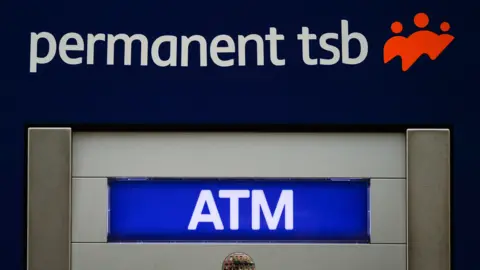
In April 2011, the Irish people found out they were going to be the new owners of a small bank called Permanent TSB (PTSB).
This was not an occasion for rejoicing.
A government-commissioned report had confirmed the rot in the country's banking system was deeper than feared, and PTSB needed a €4bn (£3.49bn) injection just to survive.
No commercial investor was ever going to do that deal, so the taxpayer would have to provide a bailout.
The €4bn was just a fraction of the public funds poured into the country's banks after they made huge losses on bad property loans.
Now, 15 years later, the era is finally closing.
This week, the Austrian bank BAWAG agreed to buy the government's majority stake in PTSB for €931m (£812m).
 Getty Images
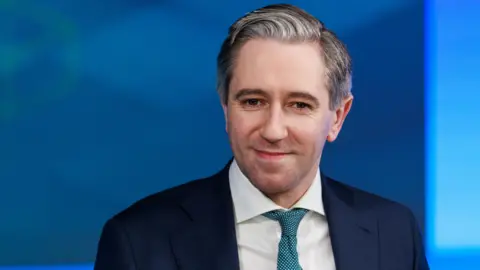
Tánaiste (Irish deputy prime minister) and Finance Minister Simon Harris hailed the deal as "the most significant development in the Irish retail banking market in over a decade."
His hope is that BAWAG will inject competition into a market which is dominated by Bank of Ireland and AIB, the two main survivors of the bailouts.
Harris also emphasised that the state had managed to get most of its money back from PTSB.
Aside from the payment from BAWAG, earlier asset sales and various fees paid means the total recovery from PTSB will be just over €3.7bn (£3.23bn).
However, as the state exits its final major shareholding, the debate over whether the bailouts "worked" remains complex.
While Harris noted that taxpayers are roughly €1.3bn (£1.13bn) above break-even on their bailouts of PTSB, AIB and Bank of Ireland, the picture is marred by the catastrophic failure of the more reckless institutions.
'Immense pressure'
Dan O'Brien, chief economist at the IIEA and an expert who lived through the crisis, said the Irish recovery timeline is remarkably similar to the Swedish banking crisis of the 1980s - a near 20-year cycle to regain stability.
Yet the sheer scale of the losses at the notorious Anglo Irish Bank, which cost taxpayers roughly €30bn (£26bn) prevents a neat story of success.
O'Brien suggests that "if you take Anglo out of it... it would have been like the Swedish case from the 80s, and you could definitely say it was a success".
The closing of the era also revives the debate over whether the international lenders to Ireland's failing banks should have shared some of the losses - what was known as "burning the bondholders".
O'Brien highlights that the decision to insulate those lenders was driven by "immense pressure" from the Eurozone.
"There was absolute certainty in Frankfurt that if... bank bonds were burnt, then that would affect the borrowing cost of all banks across the Eurozone," O'Brien explains.
This led to the infamous ultimatum from Jean-Claude Trichet, head of the European Central Bank, that "a bomb would go off in Dublin" if bondholders were not protected.
O'Brien says it is striking how that experience did not lead to a growth in Eurosceptism.
"If you look at opinion polling today about the European Union, Irish people are among the most pro-EU on all the metrics—in terms of pro-euro, pro-trust in the European Commission, trust in the European institutions, Ireland is right up at the top there."