How do cabbies feel about new drop-off charge at Stansted?

 Getty Images
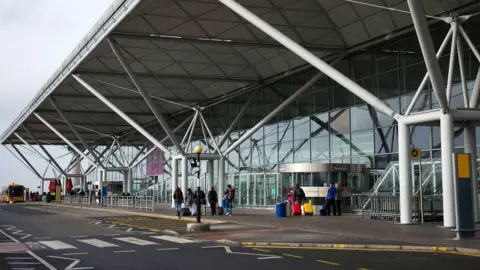
Taxi drivers have accused London Stansted Airport of greed after its drop-off and collection fees were hiked.
The cost of stopping outside the Essex terminal for under 15 minutes rose from £7 to £10 on 19 March.
It was free until 2012, when a £2 fee was introduced, but has steadily increased ever since.
Why do some cabbies feel they are "sitting ducks" - and what does the airport have to say about it?
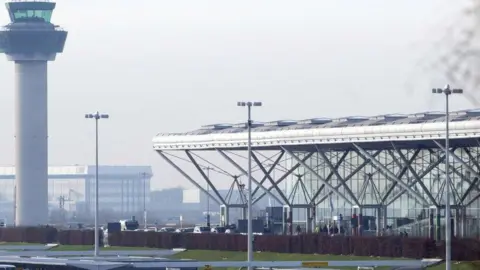
A record-breaking 29.3 million people took flight from Stansted in the year to September 2024, making it the UK's fourth busiest airport.
Offering journeys to more than 40 countries, it is a critical gateway for holidaymakers in the East of England - even hosting US presidents on occasion.
But those using its express set down now face a 40% price rise. The cost has also spiked to £28 for stays of between 15 and 30 minutes.
If a third of the airport's annual passengers used the drop-off and collection zone for under 15 minutes on at least one occasion, it would earn the site about £100m.
 PA Media
For Neil Godfrey, the price increase has made him worried that he might have to make cuts to his taxi fleet at East Anglian Airport Transfers.
The 53-year-old insists he has little choice but to raise the price of getting one of his taxis from Clacton-on-Sea, where they are based, to Stansted.
Customers may soon have to pay £90 rather than £80, he concedes.
"We're lucky if we can make £20 off this journey now, which isn't a lot of money really," says Godfrey, who is also wounded by more expensive fuel and staffing costs.
"People are starting to think it's cheaper to park at the airport and in our eyes that's not good because we could lose business."
"Extortionate" is the word Godfrey uses to describe Stansted's new drop-off cost.
"I'd like to know where the money goes... It's frustrating as I know the other airports will follow suit."
By comparison, Southend Airport charges £8 for 10-minute drop-offs. Unlike Stansted, it does not offer locals discounted rates.
'Sitting ducks'
Stansted bosses suggest having a fee helps to cut congestion on its drop-off ramp, as it encourages drivers to use alternative modes of transport.
They introduced a barrier-free system, powered by automatic number plate recognition (ANPR), in January 2025 to keep vehicles moving.
 Paul Eve
Cabbie Paul Eve, 62, says the new technology has been a success in busting queues.
However, he accused the airport of continuing to use congestion as a justification for hiking its prices.
"It's a rubbish excuse," Eve says. "It's pure greed because we're sitting ducks.
"I suppose they're thinking if people can afford a holiday, they can afford a few more quid at the drop-off."
The 62-year-old charges £90 for a trip to Stansted and says he will swallow the new cost so customers do not have to.
Stansted is due to become the UK's second busiest airport, after plans were agreed to increase its annual passenger numbers to 51 million in December.
It has a limit of 274,000 flights a year and it is carrying out work on a £1.1bn expansion.
Planning conditions dictate at least 50% of passengers must access the airport by public transport.
The airport points out that a free set down service operates from its mid-stay car park.
 Afzaal Nasir
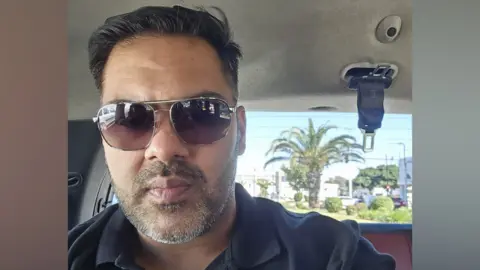
While this is useful for some, Afzaal Nasir, a taxi driver based in Chelmsford, says many customers want a door-to-door service.
"When it comes to dropping off the customer, it comes with a responsibility as well," he says.
"We can't just drop them anywhere, we have to drop them off somewhere nearby and somewhere safe."
The 38-year-old believes the new drop-off price "doesn't make sense" considering it used to be free, but will "take the hit" rather than pass the cost on to customers.
However, Stansted insists it is "the UK's number one airport for public transport use" due to its measures in place.
A spokesman says the express set down fees "make an important contribution to encouraging alternative, more sustainable transport options" and reducing congestion.
He explains that they help to cut "kiss and fly" journeys, which typically involve four car journeys per flight.
"We will continue to invest significant sums in measures that help people consider alternative ways of getting to the airport," the spokesman adds.
"These include new connections to unserved towns and villages, improvements to the customer experience at our coach station and investment in new fleets, in partnership with bus operators."
Follow Essex news on BBC Sounds, Facebook, Instagram and X.