Minimum wage rises to £12.71 an hour as firms warn of impact

 Getty Images
Around 2.7 million people are set to receive a pay rise this week as the national minimum wage goes up by 50p to £12.71 for over 21s.
Workers aged 18-20 will see an 85p rise to £10.85, and under-18s and apprentices will get 45p more to £8 an hour.
Young workers welcomed the rise, but some expressed concern about fewer job opportunities, while businesses said higher wage bills will force them to increase prices or cut staff.
The Low Pay Commission, the government agency which recommended the increases, said previous minimum wage rises for over-21s had "not had a significant negative impact on jobs".
Ifunanya Ezechukwu, 25, said the rise was a "step in the right direction".
"Especially with the cost of living being really bad, people need more money so they can actually afford the basics," she told BBC Newsbeat.
She doesn't think employers paying staff more will necessarily translate to fewer jobs.
"I feel like they're probably just going to up the prices of their services, so I don't think there'll be less job opportunities," she says.
"I just feel like some things might get more expensive, which is unfortunate, and then the cycle just continues."

Alex McCarthy, a university student who works part-time in a pub, says he is feeling "very, very happy" about the rise.
But the 18-year-old says it probably won't be enough for some of his friends, who are working while living at university but are still struggling to do weekly shops and are having to borrow money off their parents.
Amelia Evans, 18, believes the rise is necessary because "everything is going up in price". But she is concerned it will limit her job opportunities.
"So far this year I think I've done maybe 20 applications, and haven't got any. I feel like it's going to impact me even more now."
Spencer Bowman is the managing director of of Mettricks, a chain of four coffee shops in Southampton. He says he would normally be "thrilled" to pay staff more, but "the cost increases have got to be sustainable".
"There's nothing that I'd want more than to ensure that my team can earn a really fair amount of money for a fair day's work. And it's been one of my long-term ambitions to see hospitality workers, my employees, paid far more."
But Spencer says his business is being squeezed from every angle – as well as minimum wage, he has had increases in business rates, national insurance, and statutory sick pay. He also expects energy bills to go up because of the war in the Middle East.
"We're running on a minimum number of staff on shift. We can't run on fewer people," he says.
"If something doesn't give somewhere, we will be closing sites.
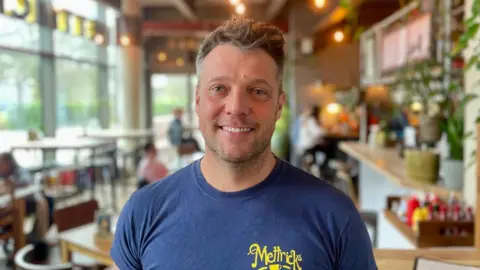
"It doesn't make any sense. Revenue is up. Our customer numbers are up. But our costs everywhere have hit a point where we're not financially sustainable and if that continues, there's only one outcome for that."
The minimum wage increases are on top of a 6.7% rise for over-21s and a 16.3% rise for 18 to 20-year-olds respectively last year, when there was also a rise in employers' National Insurance contributions.
Spencer is among hospitality industry voices calling on the government to reduce their rates of VAT to offset the rises in the costs of running their businesses.
Ministers are considering slowing down plans to pay adults of all ages the same minimum wage.
Labour committed in their election manifesto to remove "discretionary age bands" and increase the wages of 18 to 20-year-olds so they are paid the same as those over 21.
Prime Minister Sir Keir Starmer said wages were going up "for the lowest paid" but said the government "must go further to bear down on costs".
Lord Richard Harrington, the former Conservative MP who is now chairman of Make UK, the representative body of UK manufacturing - told BBC Radio 4's Today: "I don't think any of our members want to exploit working people and pay them a wage they can't live on."
He added that businesses "want to take on young people, they want to take on apprentices, but it's a lot of money [to pay] for an 18-year-old who probably isn't fully trained".
But Business Secretary Peter Kyle defended the decision to raise the rate as a choice he had to make, despite it being "difficult times" for businesses, saying: "I am not going to progress our country and have it moving forward on the back of screwing down on low-paid workers.
"I'm going to take them with us and invest in them and make sure they can enjoy and look forward to a life that gets better year after year."
Additional reporting by Georgia Levy-Collins, Lizzy Bella, and Jemma Crew

Get our flagship newsletter with all the headlines you need to start the day. Sign up here.