How much is council tax and what does it pay for?

 PA Media
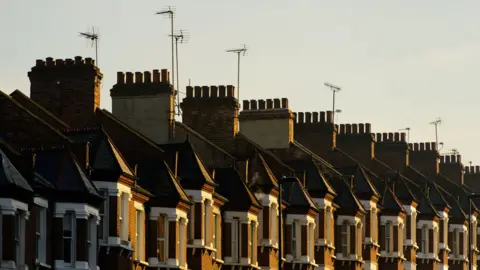
Council tax rose by an average of 4.9% for households in England on 1 April, with bills also going up in Scotland and Wales.
The Local Government Association, which represents councils in England, says budgets are under "severe financial pressure", with cuts to services possible.
Local elections will be held on 7 May for about 5,000 seats in 136 English councils and six mayoral posts. National elections will be held in Scotland and Wales.
Northern Ireland uses a domestic rates system instead of council tax.
What is council tax for and who pays it?
Council tax is a compulsory charge on properties in England, Scotland and Wales.
It is set by local authorities to raise money for services which can include:
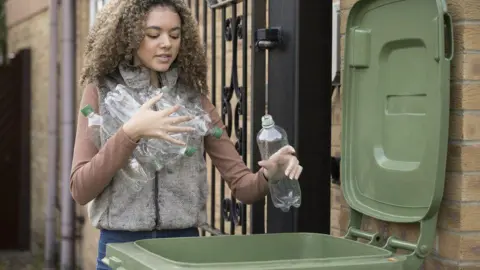
- rubbish collection
- street lighting
- libraries
- youth clubs
- parks and recreation facilities
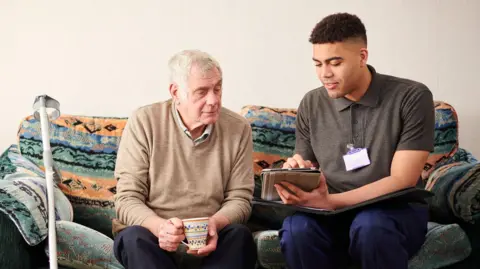
- care services
Council tax bills may also include additional charges.
These are used to fund care homes and adult social care services. Another charge funds local police and fire services.
Some cities with mayors, such as London and Manchester, can add charges for other services.
 Getty Images
Typically, anyone who is over 18 and owns or rents a home has to pay council tax.
However, someone living alone is entitled to a 25% reduction, and properties occupied only by students are exempt.
Some discounts are available if you - or someone you live with - has a disability.
How much are council tax bills going up in England?
 Getty
GettyCouncils in England with responsibility for social care can increase bills every year by 4.99% without having to hold a referendum or getting government approval.
Smaller councils without social care duties can put bills up by 2.99%.
Analysis by BBC Verify found that 124 of the 153 councils with social care duties planned to introduce a rise of 4.99% or more on 1 April.
The average council tax for a Band D property is expected to be £2,392 a year - up £111 from April 2025.
However, there are large variations.
Average increases of 9% in Shropshire and 8.6% in North Somerset were announced. These local authorities were among seven which had already been told they could put bills up by more than 5% due to their "challenging financial position".
The lowest increases - of about 2.5% - are in Hartlepool, Middlesbrough, Rutland, and Merton.
How do council tax bands work, and how can I check I'm in the correct band?
The amount of council tax you pay depends on your property's council tax band - from A to H.
Broadly speaking, the more expensive the property, the higher the band.
In England and Scotland, bands are based on the price the property would have sold for in 1991. Wales uses 2003 prices and Northern Ireland 2005 prices.
Many experts including the IFS think tank argue that a revaluation of council tax bands is "long overdue".
You can check the current council tax band for your home by clicking on the links below:
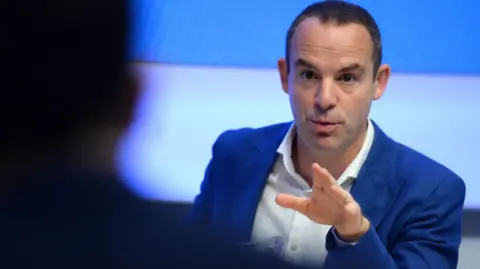
Moneysaving expert Martin Lewis says tens of thousands of homes could be in the wrong band.
 PA Media
You cannot ask for your council tax band to be lowered but in some circumstances you can ask for your property to be revalued, which may lead to a reclassification.
To do this, Lewis says you should compare your council tax band with that of neighbouring properties which are similar to yours in size and value. You then need to find out - or estimate - what your property would have been worth in 1991.
If you have evidence that suggests that your property has been wrongly assessed you can challenge your listing.
However, Lewis points out that your property might be in a higher band because your neighbours' bands are too low. This could mean they are moved up a band instead of you being moved down.
Where else do councils get their money?
 Getty Images
Local authorities in England get almost half of their funding from council tax.
About a third comes from central government grants and a fifth from business rates.
In February 2026, ministers said the local government finance settlement for 2026-27 to 2028-29 was worth around £78bn to councils across England.
They also announced an extra £440m of recovery grants for councils in economically deprived areas - and £272m to tackle homelessness.
The government said it would spend £5bn writing off 90% of councils' historic debts relating to support for children with special educational needs and disabilities (SEND), accumulated up to April 2026.
Councils can also raise money by charging for services including parking, swimming pools and planning applications. They can borrow money to fund improvements in their areas - including new schools, maintaining roads and providing sheltered housing - or to make investments intended to generate income.
Since 2010, they have bought shopping centres, office parks and solar farms and have funded large housing developments.
BBC research found councils' combined debts grew by 7% in 2024 to stand at £122bn, or equivalent to £1,700 per UK resident.
Some councils in financial trouble have been given permission to sell assets.
What happens when a council goes 'bankrupt'?
 Getty Images
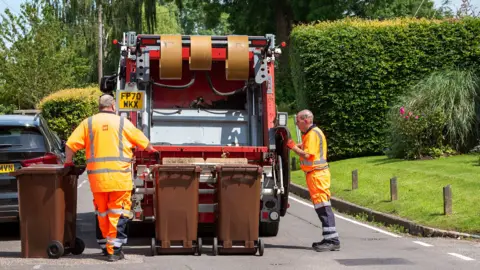
Councils cannot technically go bankrupt, but if they cannot balance their budget for the financial year, they can issue what is called a section 114 notice.
This means they cannot commit to most new spending, and residents may see reduced services, such as fewer bin collections or cuts to libraries.
Authorities to have issued section 114 notices include Birmingham City Council, Hackney, Hillingdon, Thurrock and Woking. Croydon has issued three notices, while Northamptonshire and Nottingham have issued two.
Some of these councils - plus a number of others which have not issued section 114 notices - have also received so-called "exceptional financial support" from the government to help manage their budgets.
What is the mansion tax and what will it cost?
Owners of properties in England worth more than £2m will have to pay an additional surcharge from April 2028.
The annual charge - nicknamed the mansion tax - will be on top of council tax, with four separate bands:
- properties valued between £2m and £2.5m: £2,500
- properties valued between £2.5m and £3.5m: £3,500
- properties valued between £3.5m and £5m: £5,000
- properties valued at more than £5m: £7,500
The majority of these properties are in London and the South East.
The price thresholds for each band will increase in line with inflation, and the money raised will go to the Treasury rather than the local authority.
The Office for Budget Responsibility (OBR) - which monitors government spending - expects the tax to raise about £400m a year by 2029-2030.
The Scottish government has said it will introduce a similar mansion tax, for properties worth more than £1m, also from April 2028.
A revaluation of the most expensive homes will also mean two extra higher council tax bands - one for properties valued between £1m and £2m, and one for homes valued above £2m.
How much are council tax bills going up in Scotland?
Almost a third of local authorities across Scotland announced council tax increases above the rate of inflation for April 2026.
Households in Aberdeenshire face a 10% increase for the second year in a row. Moray Council also announced a 10% increase, while Argyll and Bute council agreed a 9.7% rise.
The average Band D council tax bill in Scotland for 2025-26 was £1,543.
The Scottish government said it would give councils an extra £1bn in 2025-26 to help limit increases.
How much are council tax bills going up in Wales in April 2026?
Council tax bills in Wales are rising by an average of 4.9%.
The highest increases are in Conwy and Vale of Glamorgan at 6.5%, with the lowest at 3.5% in Neath Port Talbot.
The average Band D council tax bill in Wales for 2025-26 was £2,170.
Wales' 22 local authorities had been given £253m in December 2024 to help reduce increases, but council leaders said more was needed.
How much are domestic rates going up in Northern Ireland?
There are two elements to Northern Ireland's domestic rates system:
- the regional rate, set centrally by Stormont, covers services like hospitals and roads maintenance
- the district rate, set by individual councils, pays for local services such as bin collections and leisure services
The regional rate rises by 5% in April 2026, the same increase as in April 2025. The Department of Finance said this would add 63p per week to the average household bill.
The increase in the district rate varies across different councils.
Ards and North Down has the highest percentage rise at 4.5%, followed by both Belfast City Council and Derry City and Strabane at 4.48%. Fermanagh and Omagh were the lowest at 1.96%.