No selfies, no phones: Why wildlife destinations are starting to say 'no' to tourists

 Alamy
AlamyAs Indian tiger reserves implement a full ban on mobile phones during safaris, do we need to rethink how we behave as wildlife tourists?
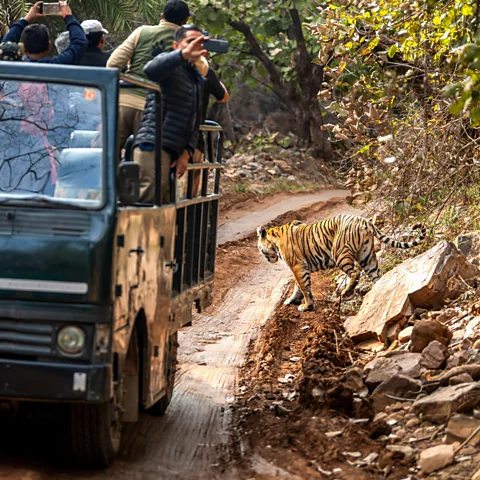
You're riding in a Jeep through a sun-dappled forest in India, when right before your eyes, a majestic tiger appears from the undergrowth. You immediately reach for your phone, angling it so you can capture your awestruck face and the majestic cat in the same frame. Success – you get the shot right before the predator slinks away.
Capturing such an image is the stuff of travel dreams. But thanks to a ruling from India's Supreme Court, it's a scene India's forests won't see for much longer. A supreme court ruling passed in November 2025 has led to the banning of mobile phones from the core tourism zones of some of the country's tiger reserves, deeming the devices – and the behaviour safari tourists exhibit when using them – too dangerous to humans and wildlife alike.
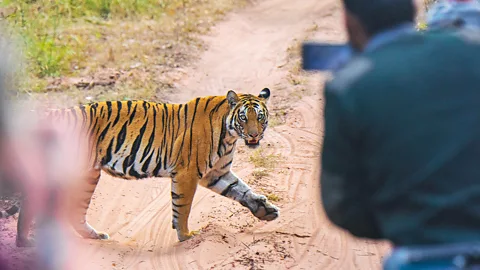
This February, a shocking viral video illustrated how bad things have got. In it, a wild tiger in Ranthambore National Park, Rajasthan is surrounded by multiple safari vehicles and is forced to pick its way around them to escape to the forest, while metres away, tourists snap photos and shout. The tiger appears cornered and stressed. In India, these kinds of overcrowded wildlife moments, termed "safari jams", are increasingly common.
 Alamy
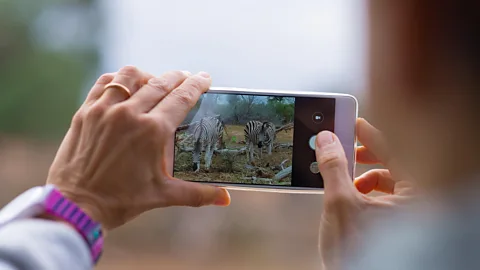
AlamyThe ruling feels like a response to the every-growing problem: that tourists no longer just want to see wildlife but want to document themselves seeing it, too.
The new rules for Indian tiger safaris
• Visitors are now required to put their mobile phones in a box before entering a tiger reserve, or to put it on silent and keep it in their bag. Per the legal ruling, the use of mobile phones within tourism zones of core tiger habitats is not permitted.
• Roads in tiger reserves cannot be used between dusk and dawn except for emergency vehicles.
• Fringe areas around tiger reserves have restricted development plans.
"People have got reckless in getting photos with the animals, and there have been incidents of the phone falling off and guides having to jump off the jeep to retrieve the phone," said Indian journalist Charukesi Ramadurai. "There was an incident where a child fell off a Jeep because the mother was taking a selfie and the child got jostled out of the way. The guide had to jump and pick up the child – the tiger was a few feet away."
No tag zone
India is home to more than 3,600 wild Bengal tigers, making up around 75% of the world's wild tiger population. Most of them live in one of the country’s 58 official tiger reserves, such as Ranthambore National Park in Rajasthan and Jim Corbett National Park in Uttarakhand. While the Bengal tiger continues to be an endangered species, conservation work in India has seen its numbers double between 2010 and 2022.
But with that increase in population has come an increased demand for tiger safaris, without essential respect for the wildlife, or an appreciation of how wild they can be. Tigers have accounted for 418 accidental deaths in India over the past five years.
For Sharad Kumar Vats, CEO of Nature Safari India, mobile phones have impacted safari behaviour at every level. Whatsapping between drivers, he says, means that are quicker to share sightings, thus increasing the likelihood of safari jams. Geotagged social media posts create another problem.
"If people tag their photos, specific spots become known as the watering hole of the tiger with the cubs, and everyone goes there," he said. "But you have to keep that area as inviolate as possible. We have to maintain distances and with mobile phones that was becoming a problem."
For Vats, the tiger should be the priority. "If we are not sensitive to them, they will cease to be. And when there is no tiger, there will be no tiger tourism."
Conservation comes first
The Supreme Court's new legislation has also banned night safaris since they disturb the tigers and limited development in fringe areas around the nation's tiger reserves. The ruling also prioritises sustainable tourism, focusing on supporting homestays and community-managed establishments and deprioritising anything that resembles mass tourism. Tourism operators were given three to six months to implement the measures, with the real impact expected to be seen later this year when reserves open after the monsoon season.
For Mumbai-based sustainable tourism consultant Ritu Makhija, the changes demand a full scale adaption from the tourism industry.
"The principle is simple and necessary: conservation comes first," she said. "Operators must design well-managed daytime experiences, moving beyond a singular focus on tiger sightings. Lodges need to align fully with environmental norms and invest in low-impact infrastructure, and travel planners must reset visitor expectations toward slower, more immersive wildlife experiences."
 Alamy
AlamyA global call for change
India is not the only country tightening wildlife rules.
How to take an ethical safari
• Ask operators if they hold an established certification from the Global Sustainable Tourism Council (GSTC) or a national or international tourism body.
• Prioritise safari tours that have a link to conservation, either within their own programmes or via charitable donations.
• Ask if guides and staff are from the local community. Guides should be knowledgeable about the area's wildlife and its conservation efforts. Staying in lodges owned and staffed by people who live in the area means that profits go back to the community.
Following disturbing video footage taken during last year’s wildebeest migration, where tourists blocked the path of the migrating animals, the Kenyan Ministry of Tourism and Wildlife unveiled new behavioural standards for tour operators, requiring them to adhere to stricter rules or face disciplinary or legal consequences. New regulations around polar bear watching in Svalbard also came into action last year, requiring wildlife cruises to stay 300 to 500m away from the apex predators, depending on the season. In Sri Lanka, overcrowding in national parks has led local tour operators to call for stronger government intervention and better regulation.
It's a clear signal that significant change is needed within wildlife tourism to rethink how conservation and tourism can work together. While the Indian tourism industry broadly welcomes the changes, questions are being raised around whether India’s approach goes far enough – and whether some interventions need more careful thought.
 Alamy
AlamyIn Kenya, private safari guide Zarek Cockar thinks that the issue goes beyond mobile phones and individual behaviour to a recalibration of what we expect from a safari.
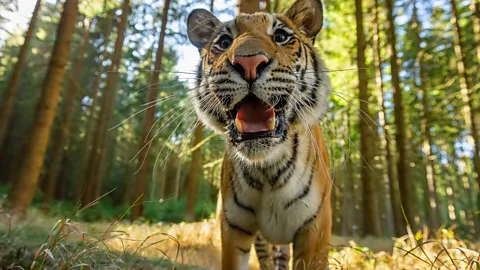
"Photographers with large lenses pushing to get onto the ground for a better angle can be far bigger offenders than someone quietly taking a photo on a phone," he said. "The deeper issue is often poor expectation setting from the outset. If guests arrive believing wildlife encounters are about getting ever closer or capturing a dramatic shot at any cost, the guide is then placed under enormous pressure to deliver."
More like this:
• The fall foliage town that banned influencers
• The European city where selfies are 'awkward'
• Why do tourists behave badly on holiday?
Cockar's suggestion is ensure guests understand their role in the custodianship of these extraordinary landscapes. Clear guidance, and a pledge, he says, could help reinforce where their responsibility lies.
Back in India, experienced safari tourist Prachi Joshi supports the notion of rethinking what a safari can be. "I believe tourists should stop chasing tiger sightings and instead focus on appreciating the wider ecosystem, the varied landscapes, rich birdlife and the natural moments that make the forest truly special," she said.
That may mean fewer guaranteed sightings and stricter rules for visitors. But perhaps that's the point – the privilege of a safari is not getting the shot, but being there at all.
--
If you liked this story, sign up for The Essential List newsletter – a handpicked selection of features, videos and can't-miss news, delivered to your inbox twice a week.
For more Travel stories from the BBC, follow us on Facebook and Instagram.