A desert’s once-in-a-decade super bloom

 Tom Wittwer
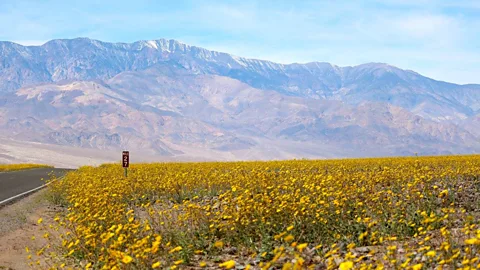
Thanks to strong El Niño activity and heavy autumn rains, Death Valley – one of the least hospitable places on Earth – is experiencing its biggest explosion of flowers since 2005.
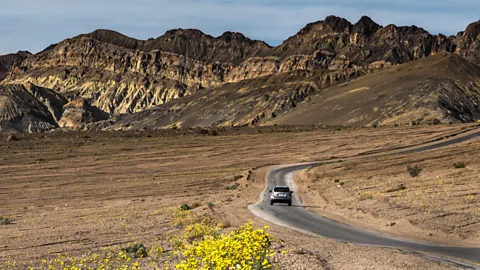
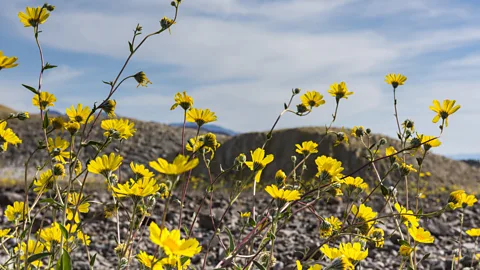
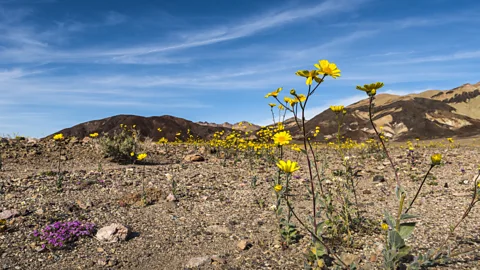
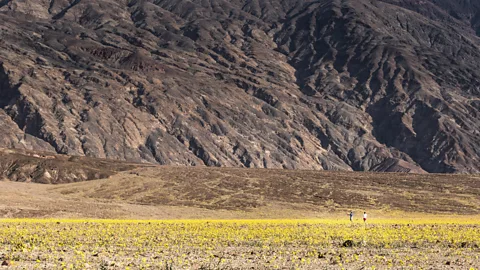
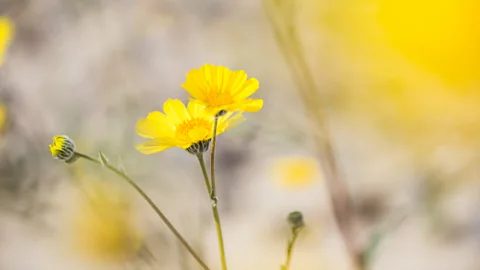
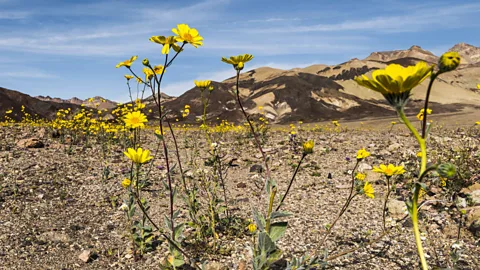
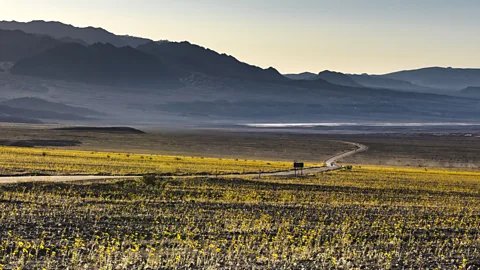
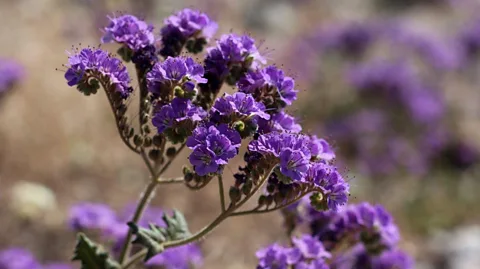
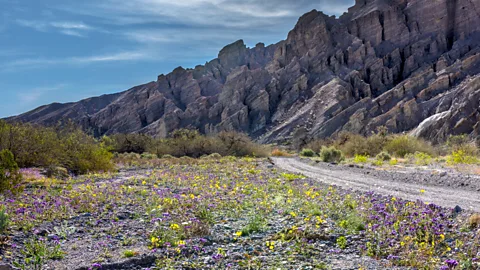
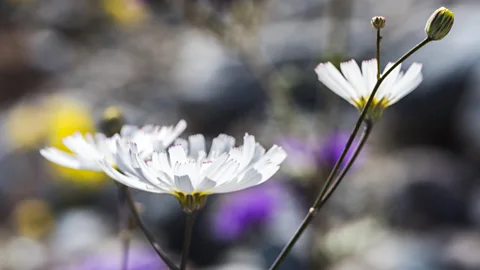
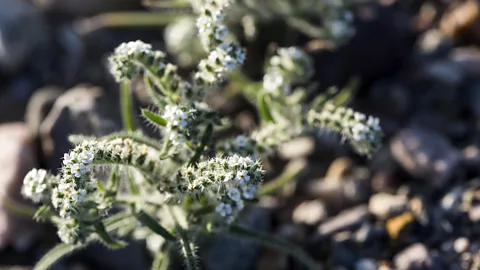
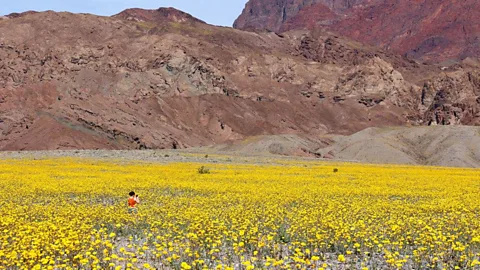
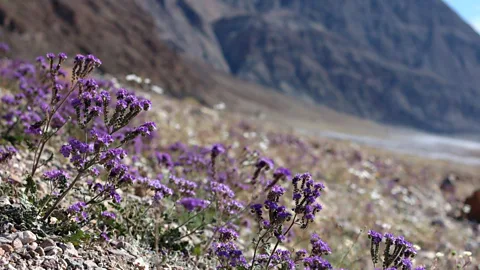
The desert was aglow with flowers. As I descended California’s Panamint Mountains, the familiar landscape turned my windshield into a movie screen. Vast swaths of yellow carpeted the once barren ground, the desert gold booms resting high on their stalks with vivid petals that radiated in the morning light. Other flowers with names like purple mat and gravel ghost peppered the landscape with fuschias and ethereal whites. I got out of my car, breathing in the sweet, lilting florals. This once-in-a-decade super bloom of wildflowers was why I and so many others had come to Death Valley National Park.
 Sivani Babu
“I was asleep, and I woke up, and there were flowers everywhere!” The bubbling voice that spilled into the morning belonged to a young girl of about six who wore fine pollen, the colour of a canary feather, like face paint. Her parents and she had driven all night from the lush redwoods of northern California to see the desert blooms. The largest national park in the contiguous United States, Death Valley stretches from California into Nevada and draws an international crowd of roughly 1m visitors each year, but seldom do people visit with so much urgency. Such is the power of a phenomenon that is both rare and transient.
 Sivani Babu
The recipe for a Death Valley super bloom appears simple: heavy rains, followed by warm temperatures and lighter rain showers. If it is too hot or too cold, if the wind is too dry or if there is too much or too rain little, the wildflowers might still bloom, but not with the synchronization and density of a super bloom. The great complication, of course, is that Death Valley is the driest place in North America and the hottest on Earth. Rain is rare. Unmerciful heat is not.
 Sivani Babu
Much like the previous two super blooms in 2005 and 1998, this year’s bloom is the product of strong El Niño activity. Heavy rains fell last October, stimulating millions of seeds that had been lying dormant in the soil for years. Autumn and winter then brought the right amount of warmth and rain to trigger the mass sprouting of seedlings.
 Sivani Babu
If conditions hold, the super bloom could carry through the month, but there are no guarantees in the desert. A change in the weather could return the land to barren rock and soil, rapidly turning the blossoms to seeds that might not sprout again for years. This is life in Death Valley: hard-fought and short-lived.
 Sivani Babu
 Sivani Babu
 Sivani Babu
 Tom Wittwer
 Sivani Babu
 Sivani Babu
 Sivani Babu
 Tom Wittwer
 Tom WittwerTom Wittwer