In pictures: Hiking the Sinai Trail

Nour el Din Sherif Sinai TrailNour el Din Sherif
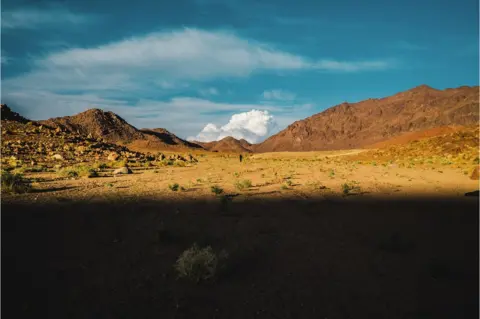
The Sinai Trail began as a 220km (137 mile), 12-day hiking route run by three Bedouin tribes. It opened in 2015, running from the Gulf of Aqaba to the top of Egypt's highest mountain, Jebel Katherina.
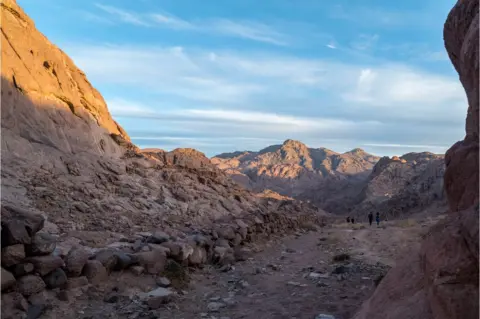
Nour el Din Sherif Jebel Katherina looms high over hikers on the Sinai TrailNour el Din Sherif
Jebel Katherina looms high over hikers on the Sinai Trail. According to Christian tradition, angels carried the body of St Katherine to the top of this mountain when she was martyred under Roman rule. Today, a small, Orthodox chapel sits atop the summit.
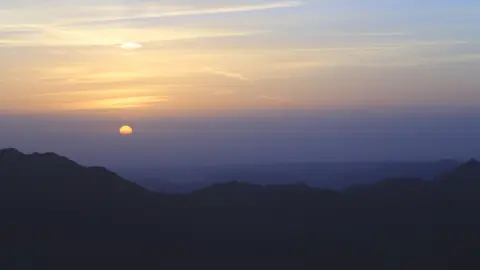
Nour el Din Sherif The Sun goes down behind the Gulf of SuezNour el Din Sherif
The sun goes down behind the Gulf of Suez. The Sinai is a great continental land bridge and from the highest points of the trail, hikers can look west to see the Sun go down behind Africa, waking to see it rise the next morning over Asia.
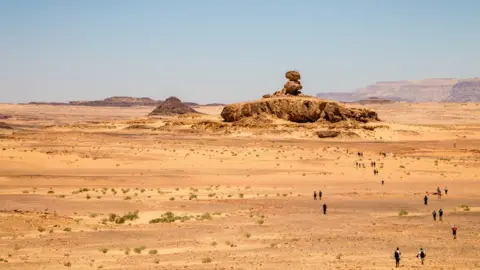
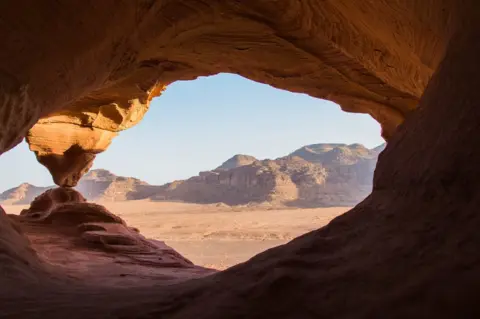
Nour el Din Sherif Outcrop of Jebel MukkabirNour el Din Sherif
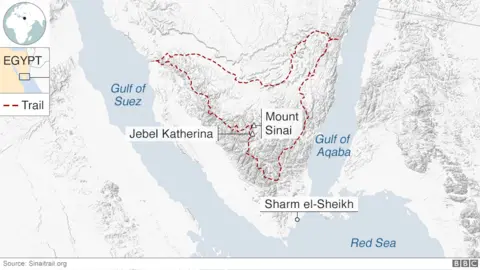
This year the trail was extended to 550km, taking 42 days to finish. The expansion brought in five additional Bedouin tribes. The tribes have all been marginalised from mainstream tourism, and the trail is a new source of income for them.
Map of Sinai Trail route
The route of the 550km Sinai Trail
Nour el Din Sherif Wadi Um AjraafNour el Din Sherif
The extended trail shows the most beautiful parts of the Sinai to the world and aims to change perceptions that the peninsula is a hotbed for terrorism. Most militant attacks have taken place in North Sinai, which is a closed military zone.
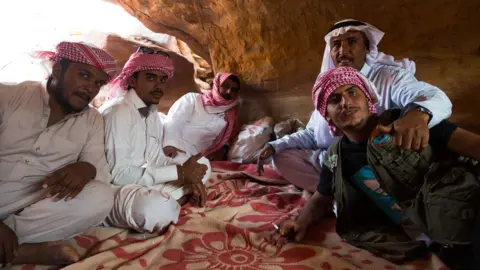
Nour el Din Sherif Tribesmen of the Muzeina and Alegat tribes sit in a caveNour el Din Sherif
Tribesmen of the Muzeina and Alegat tribes sit in a cave, sheltering from the midday sun. Today, around 50 Bedouin from the eight tribes work regularly on the Sinai Trail as cooks, guides, hosts and traders.
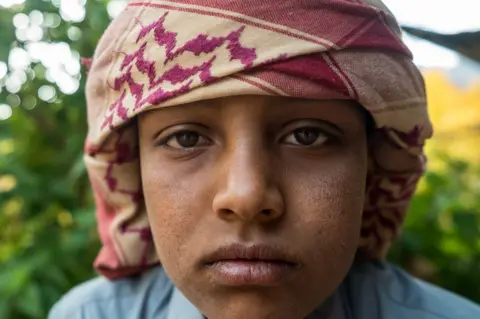
Wael Hussein Al Sayed  Young Bedouin boyWael Hussein Al Sayed
Younger Bedouin work on the trail as apprentices. One of the trail's goals is to create a space where traditional Bedouin knowledge can be passed from older to younger generations, as it always has been. This helps keep it alive, in a real, breathing way for the future.
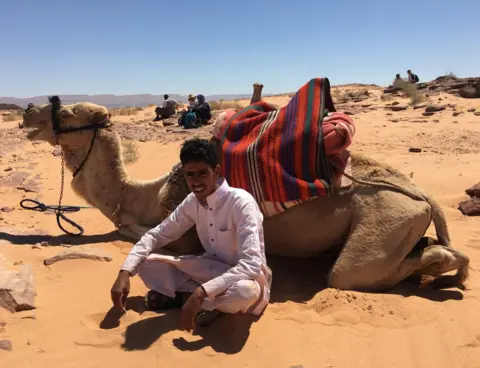
Wael Hussein Al Sayed  Boy with camelWael Hussein Al Sayed
Younger Bedouin boys come with their fathers or brothers and start off learning to load camels and getting to know the routes, water sources, place names, the stories of the land and all the things a Bedouin needs to guide people safely.
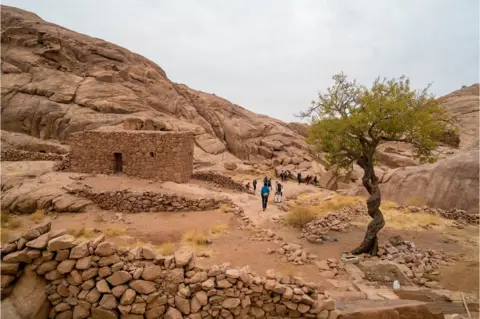
Nour el Din Sherif Chapel in Mount SinaiNour el Din Sherif
More than 500 hikers from Egypt and other countries have hiked the Sinai Trail since it opened three years ago. Here a group passes a small chapel hidden amongst the hills.
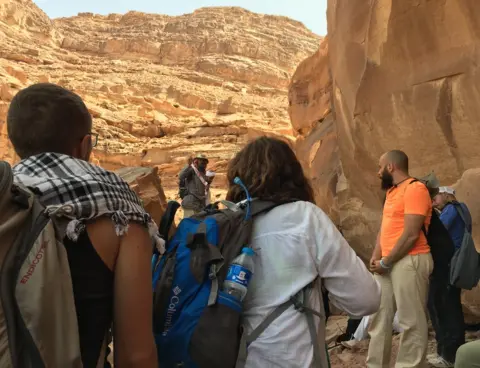
Wael Hussein Al Sayed  Bedouin guideWael Hussein Al Sayed
Bedouin guide Nasser Mansour of the Jebeleya (top) explaining to hikers rock formations and plants in the area.
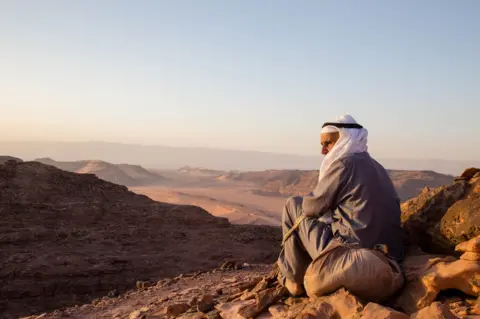
Wael Hussein Al Sayed  A tribesman of the Garasha looks over the rugged deserts of the AlegatWael Hussein Al Sayed
The Garasha and Alegat are two of the Bedouin tribes from South Sinai that will work together on the Sinai Trail. In the distance is the flat tableland of Hadabt el Teeh, the territory of another Bedouin tribe.
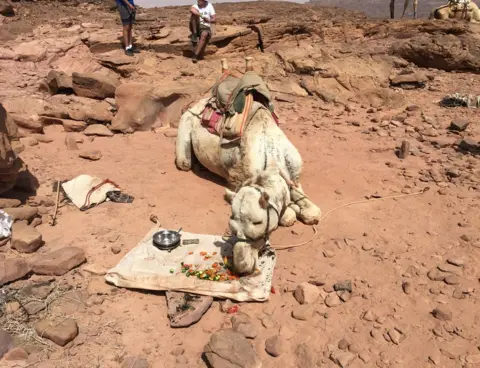
Wael Hussein Al Sayed  Camel eatingWael Hussein Al Sayed
The Bedouin form a special bond with their camels, walking with them, feeding them and caring for them when they are sick.