Local elections profile: Brent

 Getty Images
Ahead of the local elections on Thursday 7 May, we have produced short guides to London's 32 boroughs.
Where is it? The London Borough of Brent is in north west London, bordered by Hammersmith and Fulham, Harrow, Barnet, Camden, Westminster, Ealing.
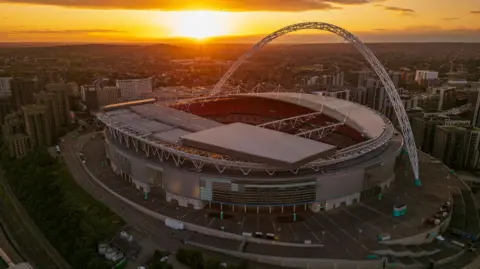
What's it like? Brent is one of the most ethnically diverse local authorities in the UK, a mix of urban districts in the east and suburban neighbourhoods in the west. It is also home to England's national football stadium.
Neighbourhoods: Kenton, Kilburn, Willesden, Wembley, Harlesden, Stonebridge, Kingsbury, Kensal Green, Neasden, Sudbury Park, Cricklewood, Queen's Park.
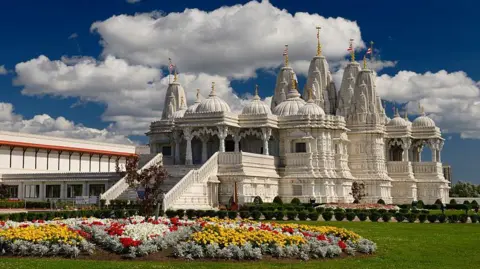
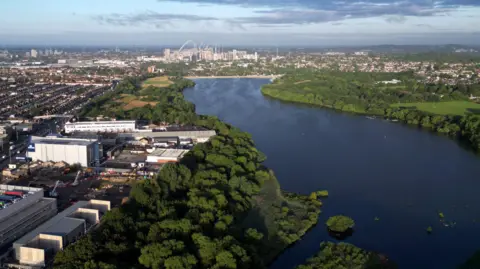
Places of interest: Wembley Stadium, Welsh Harp Reservoir, BAPS Shri Swaminarayan Mandir in Neasden, Willesden Gallery, Kiln Theatre, Fryent Country Park, Chalkhill Open Space, Mapesbury Dell.
Pub quiz fact: Brent is the only London borough named after a river.
Population: (2024 estimate) 352,976.
Demographics: According to the 2021 census, 34.6% of people in Brent identified their ethnic group as white, 32.8% identified as Asian, 17.5% identified as black, 5.1% as mixed race and 10% as other.
Brent has the highest percentage of non-UK born residents in England and Wales, with 56% of its population born outside the UK.
Average property price: According to the Office for National Statistics (ONS), the average house price in Brent in December 2025 was £568,000.
Average monthly rent: The ONS reported that the average monthly rent in January 2026 in Brent was £1,933.
Council tax: Band D council tax in the borough for 2026/27 is £2,235.
Transport: According to TfL, there are 21 Tube stations in the borough, 12 London Overground stations and around 600 bus stops.
More information about Brent can be found here.
 Getty Images
Local history: The area that is now Brent has been settled since prehistoric times, with Roman activity found in Kingsbury and Dollis Hill.
Wembley was an area of rural hamlets and farmland until the arrival of the railways in the mid-19th century. It was later developed as suburban housing, known as Metroland, and hosted the British Empire Exhibition in 1924, resulting in the development of Wembley Stadium.
Willesden went from an area producing apples, pears and vegetables for the city of London to a major centre for factories, especially car manufacturing, and the expansion of working class housing.
During the Second World War, Willesden suffered severe bomb damage due to the heavy concentration of munitions and other defence industries.
After the war, both suburbs attracted immigrants from Ireland, India and the Caribbean.
 Getty Images
What is the borough's electoral history? The creation of Brent in 1965 came about by the merger of Wembley and Willesden. The new local authority was named after the river that separated the two Middlesex boroughs. It has mostly been run by Labour, with several periods of no overall control and a brief period of Tory rule in the late 1960s.
What happened in 2022? The turnout was 30.7% with a 3% swing from Labour to Conservatives.
Labour: 49 seats (-10)
Conservative: 5 seats (+2)
Lib Dems: 3 seats (+2)
Boundary changes reduced the number of seats by six in 2022.
Since the election, five Labour councillors defected to the Greens and one Labour councillor defected to the Conservatives.
Election expert Tony Travers on what might happen in Brent in 2026
Professor Tony Travers, of the London School of Economics, said Labour is well in control in Brent, but they're losing slightly to the Conservatives in the north of the borough.
They could lose to Greens in other parts of the borough as well, there have been previous defections. So, although Labour are likely to hold on, it will likely be with a reduced majority.
Listen to the best of BBC Radio London on Sounds and follow BBC London on Facebook, X and Instagram. Send your story ideas to hello.bbclondon@bbc.co.uk