CO2 plant reopens to combat possible food shortages

 Ensus
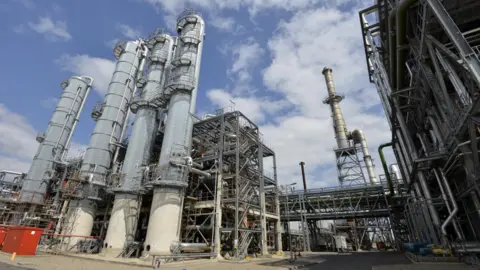
EnsusA carbon dioxide (CO2) plant has reopened as part of a contingency plan against supply disruption caused by the war in Iran.
The plant in Teesside, operated by Ensus, manufactures bioethanol, which produces CO2 used in food and drink production and the slaughter of livestock.
It comes as the government warned the UK could face some food shortages by the summer, in a worst case scenario, if the conflict continued.
Ensus chairman Grant Pearson said it was important to protect "our key supply chains", while a government spokesperson said it was "continuing to work with business groups to tackle the impact of events in the Middle East".
They added the government planned for a "worse case scenario" and it was not "a prediction of future events".
The government decided to temporarily restart the Ensus bioethanol plant in Redcar, which was mothballed after a trade deal with the US to remove a tariff on American ethanol imports.
The plant manufactures CO2 which is used to stun livestock during slaughter as well as in packaging to keep food fresh, and in fizzy drinks.
Supermarkets could face issues sourcing some food by the summer if a key shipping route - the Strait of Hormuz - stays closed.
Recruitment
Pearson said the move would protect existing jobs at the plant, "as we did lose a few people over the period where we were offline".
"So we will be recruiting a few additional roles into the business, which is good news, but the biggest benefit is keeping the jobs safe in the North East and on Teesside."
Bioethanol is also used as an additive to fuels and Pearson said that was "important" to help keep fuel available.
He said the discussions with the government were with the view to ensure the plant was available as a contingency but also to look at how new policies could allow the plant to "get back up and running" long-term, without government support.
"I'm very confident [that will happen], the fact that we've had these challenges at the moment, I think that shows how important it is for us to protect our key supply chains in our chemical industries," he said.