Blue plaques for women installed after campaign

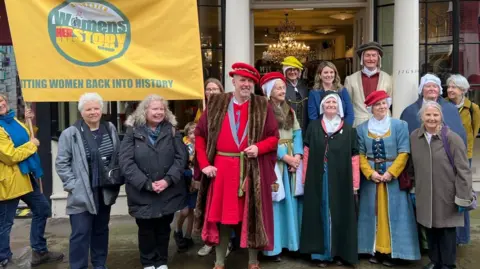 Chichester Women's History Group
Three blue plaques recognising overlooked women from Chichester's past are being unveiled, after campaigners identified an imbalance with the attention paid to famous men.
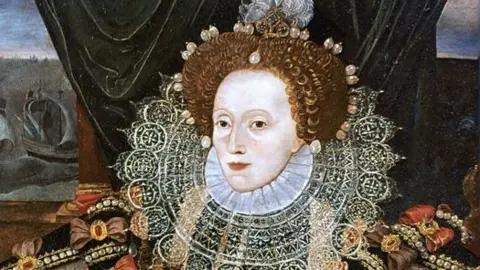
Chichester City Council approved the plaques for a 17th Century Quaker Margery Wilkinson, 18th Century poet Charlotte Smith and Queen Elizabeth I.
Francesca Tambling, from Chichester Women's History Group, said members were "thrilled" the plaques had been awarded, adding: "Until a few years ago, there was only one plaque for a woman and about 20 for men."
She said in 2018, when celebrations marked 100 years since women got the vote, she requested a plaque for suffragist Muriel Matters but was turned down.
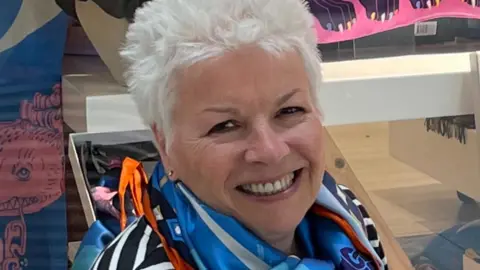 Francesca Tambling
"She was one of the first women to speak in parliament," Tambling said.
"She went up on an airship and threw pamphlets out. I mean, she's an amazing woman, and they said no, and this threw down the gauntlet."
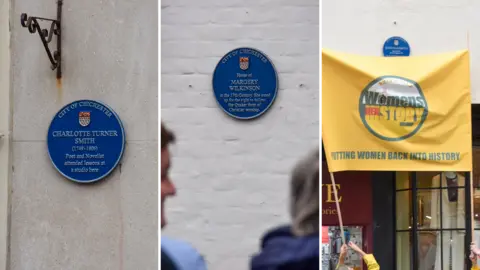 Chichester City Council
The history group went on to draw up a list of about 45 other women who were notable in Chichester, in its campaign for women to have greater recognition.
Tambling said the group also wanted to see more statues of women in the city, adding: "There are something like nine or 10 statues of men and none of a named woman."
Guests at the unveiling on Friday will include author Kate Mosse, Jess Brown-Fuller MP, Mayor of Chichester Councillor Sean McHale and a town crier.
 Chichester Women's History Group
Wilkinson held Quaker meetings in her house at a time when non-Anglican worship was not allowed, Tambling said.
"They were illegal," she said. "They used to get raided by the local youths and informers, and Margery carried on preaching.
"She complained about the harassment they were getting, and so they put her in jail for two years in Horsham."
Smith, who grew up in Chichester and wrote in the 1800s, had 13 children, Tambling added.
She said she believed nine of the writer's children survived, adding: "I don't know how women coped."
She said Smith had an abusive husband, who she later divorced, and went on to work for a living, but still achieved fame as a poet and became an important influence on other writers.
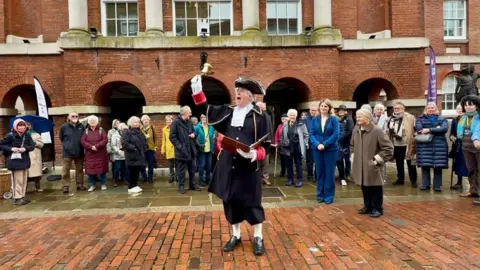 Chichester Women's History Group
Queen Elizabeth I visited the city in 1591 and is believed to have held audiences in the cathedral, Tambling said.
She said: "The venue where the plaque is, is still an Elizabethan building, which is fantastic."
 Getty Images
Follow BBC Sussex on Facebook, on X, and on Instagram. Send your story ideas to southeasttoday@bbc.co.uk or WhatsApp us on 08081 002250.