Retailers criticise SNP's 'gimmick' food price cap promise

 Getty Images
SNP leader John Swinney has pledged to use the Scottish government's devolved public health powers to cap the price of essential everyday foods.
He said it was a "moral outrage" that people cannot afford to feed themselves properly because of the rising cost of living.
But retail groups criticised the plan as a "potty gimmick" and smaller shops fear it could leave them at a disadvantage against big supermarkets.
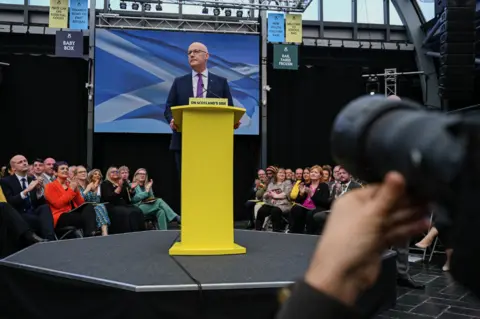
Unveiling his party's manifesto for the Holyrood election, Swinney urged the UK government not to block the move.
The SNP pledged in the manifesto that the cost of between 20 and 50 essential items would be capped.
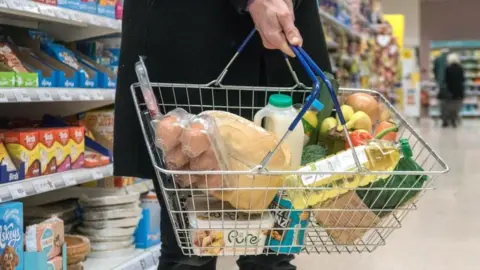
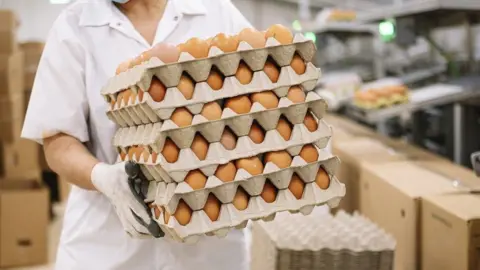
Swinney said this would apply to "everyday items that make up a decent diet", such as bread, milk, cheese, eggs, rice and chicken in large supermarkets.
 PA Media
But the Scottish Retail Consortium (SRC) said Scotland's supermarket food prices were already among the most affordable in Europe.
It said higher prices were a result of rising supply chain and commodity costs and "relentless rises" in statutory costs from governments.
SRC deputy head Ewan MacDonald-Russell said: "Supermarkets have always run on very slim margins, especially when compared with other parts of the food supply chain, but profits have fallen significantly in recent times.
"Even so, retailers continue to invest heavily to keep prices down, expand their affordable food ranges, lock in the price of many essentials, and raise pay for staff."
MacDonald-Russell criticised the "muddle of new regulations and taxes" coming from government policies."
He added: "Rather than recreating 1970s-style price controls and potty gimmicks, public policy should focus on cutting retailers' costs so that resources can be directed to keeping prices as low as possible for customers."
Under the SNP's plan, supermarkets would be required to cap the price of at least one brand of each "essential" item - but would not have to cap the prices of all brands.
It appears similar to the cheaper, value ranges that already exist in many supermarkets.
The Scottish Grocers' Federation (SGF) claimed the policy could create a competitive disadvantage for smaller local shops and "distort the market" through changing consumer behaviour.
The organisation's head of policy Luke McGarty, said: "While the policy may be aimed at larger retailers, price caps on selected products will inevitably have knock-on effects for similar items sold in local stores.
"Capped prices in supermarkets could encourage customers to travel further to out-of-town locations for staple goods typically purchased locally.
"Local stores play a vital role in their communities, providing accessible, lifeline goods and services, supporting local employment, and enabling a local multiplier effect."
'Who's going to pay for it?'
McGarty said many local stores would feel compelled to try and match supermarket prices, which could "threaten both their viability and the benefits they provide".
The SGF said it would "engage fully" with the consultation process and seek to engage ministers if the SNP win at the election on 7 May.
Farmstock Scotland, which runs a co-operative of livestock producers, said keeping prices affordable was "really commendable", but questioned who would bear the cost of a price cap.
Managing Director Jonny Williams, said: "Who's going to pay for it? Our members, Scottish farmers, are operating in a global marketplace.
"Farmers are facing rising costs and are under real pressure with higher labour costs, higher fuel costs, higher fertiliser costs and to balance the books."
 Getty Images
It is not clear from the SNP's manifesto how the price cap would be introduced or implemented.
The party said it would be a public health measure, similar to the minimum unit price of alcohol.
The Food and Drink Federation Scotland, which represents manufacturers, said the policy had a "real risk of undermining investment, resilience and food security".
The group's chief executive officer, David Thomson, said: "Our sector is already facing intense pressure from rising regulatory and policy costs, alongside global economic challenges.
"Businesses have worked hard to absorb these pressures and keep prices as low as possible for shoppers, but there is no headroom left. "
The federation urged the SNP to provide clarity on how the price cap would operate, who would bear the cost and how supply chains would be protected.
Impact of food poverty
The SNP is urging the UK government not to block the proposal under the Internal Market Act - which is designed to ensure shared trading standards across the UK.
Swinney said the price cap was both a cost-of-living and public health measure.
The Scottish Deep End project, which represents GPs in socio-economically disadvantaged communities, said it it supported improving "affordability, accessibility and availability" of healthy food.
It said this would work best alongside measures to reduce the number of fast food outlets in poorer areas.
A spokesperson said: "We see the impact of food poverty on the health of our patients and their families every day.
"It is a key driver of both malnourishment and of obesity, which puts people at risk of developing many serious long term conditions such as heart disease, diabetes and cancer.
"Making healthy food more affordable is a one important way to address this, but the food also needs to be more easily available and accessible to those who need it the most."
