'Attenborough made a documentary about my garden'

 Plimsoll Productions
A woman whose urban garden has featured in a new documentary series by David Attenborough says seeing the variety of wildlife up close was "extraordinary".
Louise Vergette's home in Bristol featured on episode two of Secret Garden on 5 April. The BBC series is narrated by Sir David Attenborough, who turns 100 in May.
Though Vergette did not get to meet "the icon" himself, she said hearing Attenborough refer to her by name "sounded like we were mates".
What emerges in the episode is a garden functioning not simply as a refuge from city streets, but as part of a wider urban ecosystem supporting diverse species.
The series spans five episodes set in different gardens across the UK, with a focus on how gardeners can do their bit to save struggling species.
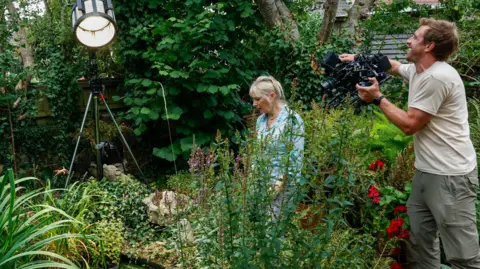
Producers first became aware of the secret haven after Vergette's partner, also a wildlife filmmaker, released a video he had made during the first lockdown in spring.
Vergette soon had camera crews, cables and "masses of equipment" trailing through her home, as the team patiently waited to capture a glimpse of life after dark.
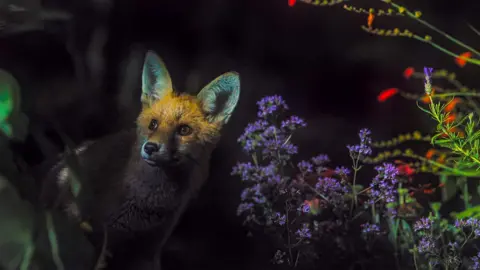
Footage filmed over several months revealed a host of animals whose lives intersect daily, from birds competing at feeders to foxes asserting their territory.
 BBC / Plimsoll Productions
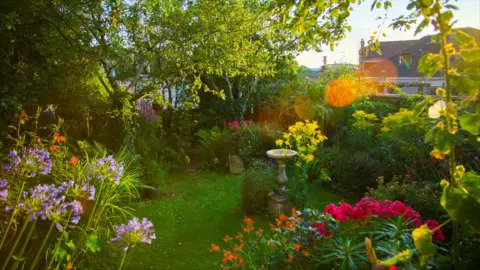
Vergette, who carefully cultivated her garden to encourage wildlife, said she was "chuffed to bits" with the footage of them "behaving naturally" in their habitats.
As Attenborough himself puts it, "Lou has created a haven for wildlife, but even she doesn't know the half of what goes on here".
"It's extraordinary, it was a real thrill to see things," Vergette told BBC Radio Bristol.
"With the quality of filming these days, you feel like you're there with them."
The artist commended the film crew for executing what was "not an easy project" considering the unpredictability of working with animals.
She added it allowed her to appreciate her "hedgehog highways" in action and watch as frogs turned her pond into an arena.
 Plimsoll Productions
Series producer Bill Markham said gardens can play a "powerful role" in supporting biodiversity and helping reverse wildlife declines across the country.
There are an estimated 25 million gardens in the UK, together covering more land than all our national nature reserves combined.
"Rather than being isolated patches, they form a vast, interconnected network of green spaces," he said.
"By making space for nature in our own backyards, gardeners can become a crucial part of the solution - helping to restore biodiversity from the ground up."
Markham recommended creating a pond, letting parts of the lawn grow long, planting native trees, making a compost heap, or simply avoiding pesticides.
Follow BBC Bristol on Facebook, X and Instagram. Send your story ideas to us on email or via WhatsApp on 0800 313 4630.