Iran war threatens to increase pothole repair costs

 BBC
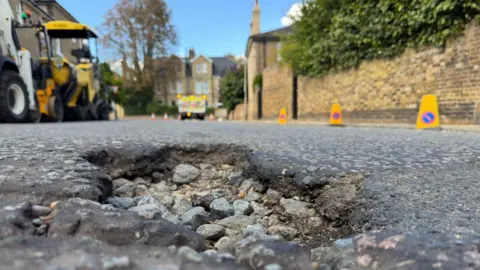
BBCThe war in Iran is threatening to increase the cost of filling potholes, according to a leading council officer.
Ann Carruthers, director of environment and transport at Leicestershire County Council said a number of factors, including wetter weather and rising inflation, were already making it difficult to clear the backlog of road repairs.
But she added the rising price of Brent Crude is also becoming a factor, as it will increase the cost of oil-based bitumen.
"There are emerging risks around the Iran war and what that is doing in terms of the cost of fuel," Carruthers said. "The cost of oil-based products has gone way up, which hits directly on to our highway maintenance operation."
The price of Brent Crude rose above $108.95 a barrel on Thursday, after US President Donald Trump reiterated threats to hit Iran "extremely hard" in the coming weeks.
The price of Brent was about $72 a barrel on 27 February, the day before the war started.
The government increased funding to repair the nation's roads to £1.6bn in the last financial year, which was £500m higher than the previous sum.
But the Asphalt Industry Alliance then warned in March the cost of fixing crumbling roads in England and Wales had risen to an estimated £18.6bn and would take 12 years to complete if the funding was available.
 EPA
EPALeicestershire County Council received 2,933 reports of potholes on the county's roads in February compared to just 791 in February 2025 and 1,143 in February 2024.
Speaking at a recent meeting of the council's Corporate Governance Committee, Carruthers, said: "This winter has exceeded every other winter in terms of numbers of potholes and defects we are seeing coming forward through the system.
"We have had over three times the amount we had last year and way over our highest peak before that.
"It's not just Leicestershire, this is hitting right across the country."
 PA Media
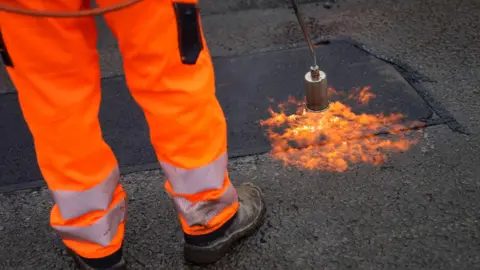
Agency staff are being hired for two weeks after Easter to help with repairs, but Carruthers said hiring them had cost twice the amount it would cost for council staff to carry out the same tasks.
"There's a national demand for this so it's really difficult to recruit in this area," she said. "We are delivering less with the money we have because everything is costing more.
"We are really struggling on our highways inspections because it is taking so much longer to get round the inspection schedules."
Carruthers added rising rainfall levels, inflation and years of under investment were also making it more difficult to tackle the backlog.
Met Office data, which dates back 260 years, shows six out of the 10 wettest half year periods between October and March have been recorded since the year 2000.
Carruthers said: "We are seeing more intense rainfall, not just in the winter but in summer as well.
"This winter, we in Leicestershire have had our wettest winter ever since records began in 1856."
Inflation has also meant council budgets do not stretch as far, while rising traffic levels including additional heavy goods vehicles mean extra wear and tear on road surfaces.
Carruthers added there had been about a decade of underinvestment in Leicestershire's roads network, estimated at about a £100m shortfall in the amount that should have been budgeted.
The council also recorded a 135% increase in pothole damage insurance claims in February compared to the same month last year.
Funding to tackle potholes in Leicestershire over the next four years is £145m.
Carruthers said: "That's good news but I want to temper enthusiasm - we will use it all but it still won't do what we need it to do."
Listen to BBC Radio Leicester on Sounds and follow BBC Leicester on Facebook, on X, or on Instagram. Send your story ideas to eastmidsnews@bbc.co.uk or via WhatsApp on 0808 100 2210.