School shootings a new trauma for Turkey as nation mourns

 Reuters
Outside a morgue in south-eastern Turkey about a dozen men rushed to carry a coffin, but it was light - just the weight of a 10-year boy.
His father followed behind, propped up by relatives on both sides but weighed down by grief. "Oh, my martyred child," he wailed, "oh my darling."
His son was one of eight children shot dead on Wednesday in the city of Kahramanmaras by a fellow student,14, who also killed a teacher. This city, traditionally famous for its ice cream, now has a new and terrible distinction – it is the location of Turkey's first deadly mass school shooting.
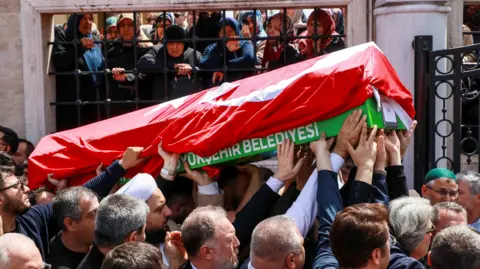
Relatives, neighbours and emergency services gathered around as coffins emerged one by one each draped in the Turkish flag. There was an angry yell from one woman towards a line of waiting police. "Too late, too late," she chided. "You didn't save the children." Another woman shouted that the attacker should be hung in the main square, but he is already dead. He was killed at the scene.
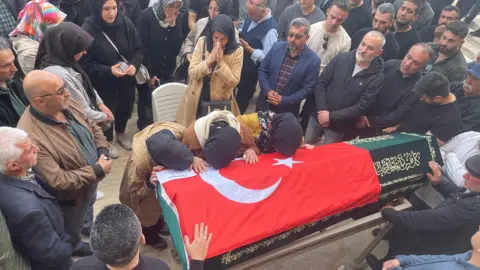
Outside the main mosque, a mother wept, leaning forward to stroke the coffin of her daughter, Zeynep. From the family home, beside the Ayser Calik Secondary School, she heard the shots that killed her 10-year-old – shots that have reverberated around Turkey.
Relatives told us Zeynep was clever and respectful.
"She became an angel, and she flew away," said Mahmut, her uncle, his voice breaking. "My only wish is to have more security at the schools, so this does not happen again. This pain landed on us. I do not want it to fall on anyone else."
The attack came just one day after a former student roamed the corridors of another school in the same region, shooting at will. He wounded 16 but killed only himself.
"There have been two attacks, in a very short period, both in cities with lower incomes," says Prof Asli Carkoglu, an expert in teen psychology. "These things do have a way of spreading."
She is worried the deadly shooting here could become "an example for young minds that are frustrated enough".
The attack was a tragedy but "not a surprise" to people like her who work with young adults and adolescents, she said.
"There have been stabbings, beatings and attempted suicides in the school system," she told the BBC. "The guns weren't there before, but the violence was."
As the victims of the attack were being lowered into their graves, more details were emerging about the killer. The authorities here say he referred on social media to an American gunman, Elliot Rodgers, who killed six students in California in 2014. They also say an entry on his computer, dated 11 April, indicated there would be a major attack "in the near future".
He did not have to go far to get weapons – just to the bedroom of his father, a former police officer who is himself now under arrest. He has made a statement to the authorities, according to reports in the local media, painting a picture of a bright but troubled teenager who spent a lot of time playing war games on his computer and was attending a psychologist.
While mass school shootings are a familiar horror for the US, this is a new trauma for Turkey. The authorities want to calm the public and control the narrative.
Around 150 people have been detained for social media posts about the killings, accused of spreading misinformation, or "glorifying crime and criminals". More than 1,000 social media accounts and Telegram groups have been blocked.
There is no evidence of any link between the two attacks this week. And police say "initial findings indicate" that the killer in Kahramanmaras acted alone and was not linked to any terrorist organisation.
At the school gates, now locked, and guarded by police, teachers laid flowers in memory of the children who were killed where they should have been safe.