Two Cuba-bound aid ships missing after leaving Mexico
A search and rescue operation for two missing sailboats filled with humanitarian supplies travelling from Mexico to Cuba is under way in the Caribbean.
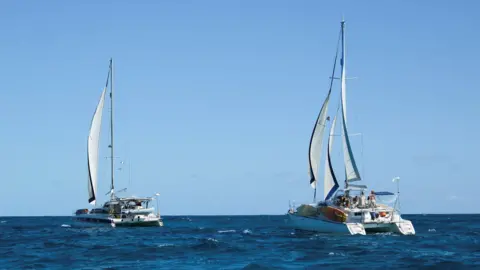
Mexico has deployed naval search teams and military aircraft to locate the Friendship and Tigger Moth, which were carrying at least nine crew members, the Mexican navy said.
The vessels had been expected to arrive in the Cuban capital, Havana, on Tuesday or Wednesday, but there had been no communication from them and no confirmation of their arrival, the navy said.
They are among several vessels that have sought to carry supplies to the island nation since the US imposed an oil blockade in January, prompting a chronic fuel shortage.
The Mexican navy said it was committed to using all resources at its disposal to locate the boats and ensure the safety of the crews.
The two missing ships departed Isla Mujeres, in Mexico's easternmost state of Quintana Roo, on 20 March.
The nine crew members are from Poland, France, Cuba and the US. Mexico said it has established contact with maritime rescue co-ordination centres from each country along with their diplomatic representatives.
"The captains and crews are experienced sailors, and both vessels are equipped with appropriate safety systems and signalling equipment," the convoy's spokesperson told Reuters in a statement.
"We are co-operating fully with the authorities and remain confident in the crews' ability to reach Havana safely."
The captain of the Friendship, Adnaan Stumo, told the BBC they were "taking a whole bunch of aid, [a] bunch of solidarity activists, and we're sailing directly" in video messages as they were setting off.
"We are saying that we are not standing for the continued siege and destruction of the ability of the Cuban people to live a dignified life and have self-determination," he said.
Cuban President Miguel Díaz-Canel expressed concern over the missing vessels in a social media post, writing: "From our country, we are doing everything possible in the search and rescue of these brothers in struggle."
Earlier in the week, the Cuban government widely celebrated and warmly received another boat that had carried 14 tonnes of humanitarian aid to the island.
The vessel, dubbed "Granma 2.0" after the boat in which Fidel Castro returned to Cuba to launch its 1950s revolution, delivered solar panels, medicines, baby formula, bicycles and food.

 Reuters
Volunteers and NGOs have largely spearheaded efforts to deliver humanitarian aid to Cuba since US President Donald Trump's oil embargo on the communist-run country began.
The United Nation has warned Cuba faced "dire" supply shortages, with more than 50,000 surgeries cancelled in Cuba as fuel supply constraints and aging infrastructure have caused multiple nationwide blackouts.
Coupled with shortages of food and medicine, the situation has triggered rare public dissent in the form of street protests.
Since the US seized former Venezuelan President Nicolás Maduro in January and cut off the supply of oil from Cuba's regional ally, Trump has turned his attention to the Caribbean island.
He has threatened tariffs on any country supplying oil to Cuba, mulled a "friendly takeover" of the nation and has urged it to "make a deal" or face unspecified consequences.
The Cuban government has since confirmed it was in talks with the US to resolve their differences, but its deputy foreign minister Carlos Fernandez de Cossio has insisted that "the political system of Cuba is not up for negotiation".

Get our flagship newsletter with all the headlines you need to start the day. Sign up here.