Stately home gardener talks of climate change impact

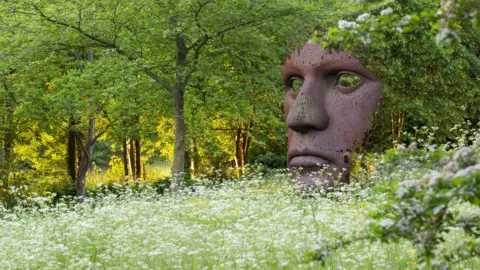 Burghley House
Joe Whitehead has the big responsibility of maintaining 50 acres of gardens at Burghley House — an Elizabethan mansion near Peterborough. The head gardener talks about how a previous "lost wilderness" has been turned into an award-nominated garden over a 35-year journey, and the challenges posed by climate change.
The seasons have become "erratic", Whitehead says, which has affected maintenance schedules.
"We're having to watch the weather, predict what's going on, be far more mindful about the stresses plants are going to face," he adds.
Is climate change a challenge?

"Absolutely", Whitehead said.
"If I was to go back 20 years, part of my role was in a walled kitchen garden which is completely productive. March and April would be our main sowing months.
"Now April's too dry; your main sowing months are probably end of February to March.
"Things are erratic; we had rainstorms in winter and then last summer was one of the driest on record, so we have all these constant extremes and it's certainly windier these days too.
"But in a way, it makes it more of an interesting challenge."
He says watering such a large garden brings its own challenges.
To help with this, every border is heavily mulched with compost, which locks moisture into the soil, keeps it healthy, and supports plant growth.
New planters are thoroughly watered at the beginning and carefully maintained during their first year, after which they are expected to be more self-sufficient. He stresses that "good soil care" is essential throughout.
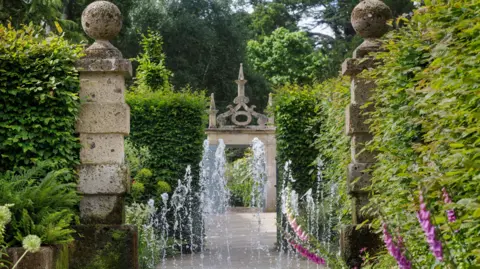 Burghley House
Whitehead took up the head gardener job nine years ago and says the gardens "have come a long way" in that time.
"When I first came, our remit was to put Burghley on the map as a destination for gardens," he said.
"One of the key things we've introduced in the last couple of years is a network of hard paths.
"We've also planted probably over 100,000 plants in the last eight years.
"Before, it was just grass and you kind of found your way, but now it leads you to places and all of a sudden it feels like a proper garden, so adding the paths has been quite powerful and made it more accessible too."
What are the key highlights?
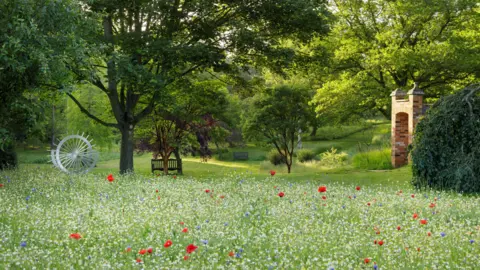 Burghley House
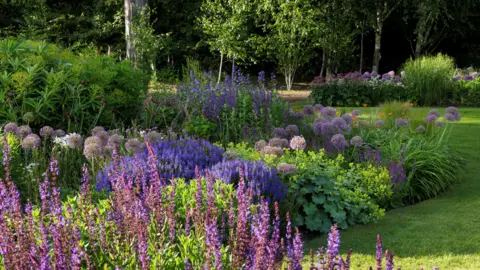
The gardens include themed spaces, a man-made stream and a play area.
"People tell us they're looking the best they've looked," he says.
"All the plants we've been putting in, which are now starting to mature, make the kind of displays we envisaged.
"We've created lots of layers. We open in the middle of February because we have a huge amount of snowdrops - they are the main highlights.
"Then we move into the daffodil season, followed by big blossom displays.
"That leads into the kind of green phase where plants are growing, followed by wildflowers, which are a big aspect of what we do, followed by autumn and winter colours.
"When people come, we like to think they'll see something that they've not seen before."
He also says every year there's a different sculpture exhibition, alongside the permanent fixtures.
The Burghley Snail sculpture and a face sculpture near the wildflowers are the most "striking" pieces, Whitehead feels.
One-thousand-year-old oaks
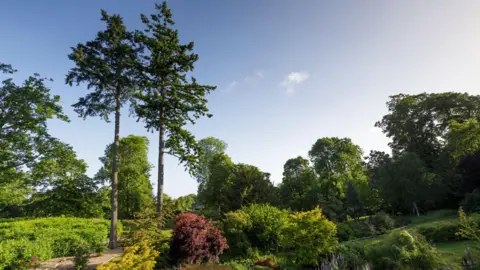 Burghley House
Whitehead says the estate is home to some of the "best ancient oak trees", with the oldest estimated to be 800-1,000 years old.
"And it still looks like it could be there for another 500 years; it's amazing," he says.
A nearly 250-year-old hornbeam tree is another attractive feature near the entrance to the gardens, alongside two Douglas firs imported from North America, which are about 100 ft (30m) tall.
"When we get really strong winds, these trees just rock and take it all in; they're so strong and a real dominating feature in the heart of the garden," he adds.
How are the gardens maintained?
The team led by Whitehead includes seven gardeners and 20 volunteers.
During the open season, at least one gardener is on site and volunteers work all around the year.
Whitehead says: "The weather is clearly two weeks ahead so we're constantly writing up plans and then changing them.
"People often ask 'what do you do in the winter?', but there's so much maintenance to be done.
"You have four to six weeks where you can do changes, make new beds, put new paths in, create new features - it is probably the busiest six weeks of the gardening calendar."
Whitehead says they are trying to make the gardens "sustainable" including a conscious effort to reduce the use of chemicals, which he says is "difficult".
"We're not completely organic, but we don't use any organic insecticides or fungicides," he says.
"We do use some herbicides, because we have miles and miles of paths, but invariably we don't use a lot of weed killer. We're aiming to get away from that if we can at some point."
He also says that when leaves fall during autumn, rather than collecting them and blowing them off the borders, where possible, they leave them and allow nature to take its course.
"It's all about making better informed decisions so that instead of us dominating nature we're trying to get on a bit more of a balance really," he says.
 Burghley House
The gardens have been shortlisted for Historic Houses' Garden of the Year.
"We're so chuffed just to get to this point, just to be shortlisted," he says.
"In those eight years we've come a long way for our management to feel like we're ready to put in for that competition. It's pretty cool really."
Do you have a story suggestion for Peterborough? Contact us below.
Follow Peterborough news on BBC Sounds, Facebook, Instagram and X.