In photos: A pesticide tragedy that haunts an Indian state

 Madhuraj/Kochi Biennale Foundation
Warning: This story contains images that some readers may find distressing.
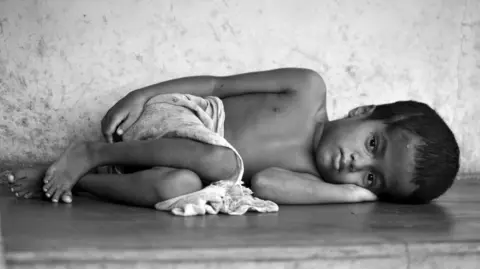
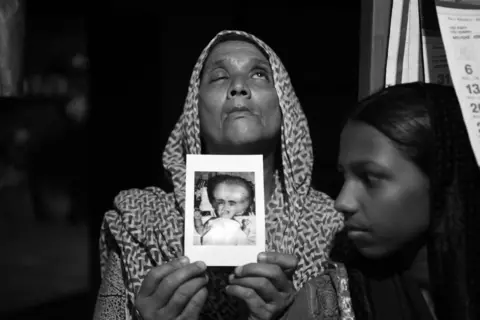
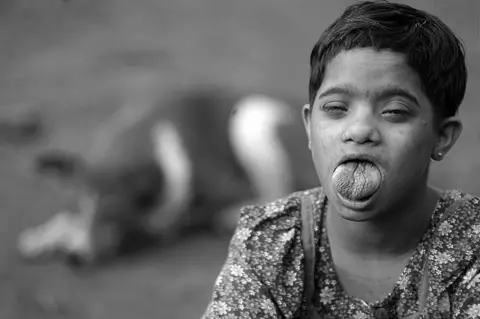
Haunting photographs of children with deformed limbs and swollen heads make up one of the exhibits at the ongoing Kochi-Muziris Biennale, an exhibition of contemporary art held annually in the southern Indian state of Kerala.
The photographs, by photojournalist Madhuraj (who uses only one name), chronicle the health impacts believed to be caused by endosulfan - a cheap but highly toxic pesticide - on hundreds of children in Kerala's Kasargod district in the 1990s and 2000s.
For more than 20 years, beginning in the 1970s, the Plantation Corporation of Kerala sprayed endosulfan on cashew plantations in Kasargod two-to-three times a year. Later, the pesticide was also used on crops like tea, paddy and mango.
In the 1990s, residents reported birth defects in animals and children, including physical and neurological conditions like cerebral palsy, epilepsy and hydrocephalus (fluid build-up in the brain).
Locals also reported rashes, hormonal issues, asthma and cancer - diseases that some environmental organisations and the Kerala government later attributed to endosulfan poisoning.
Some scientists in India have challenged the linking of endosulfan to these diseases, saying that there is insufficient evidence. But in 2004, Kerala's Pollution Control Board stopped using the pesticide.
In 2011, the Stockholm Convention on Persistent Organic Pollutants implemented a worldwide ban on its production and use. The same year, India's Supreme Court passed an order banning the use, sale, production and export of endosulfan across the country.
In 2017, the Supreme Court ordered the Kerala government to pay 500,000 rupees ($5,400; £4,000) as compensation to each of the 5,000 victims.
Many of the victims were poor labourers and their families belonged to disadvantaged castes and tribal groups with little access to proper nutrition and healthcare.
Madhuraj documented the endosulfan issue in Kasargod for over two decades, visiting the homes of people believed to be impacted by the pesticide several times to understand its effect on their lives.
"I have witnessed first-hand the debilitating impact on victims and how this pesticide has destroyed entire families," Madhuraj told the BBC.
"In many homes, parents have multiple children with physical and mental disabilities, making it extremely difficult to care for them. I have also seen elderly people struggle to care for their spouses who have developed ailments because of prolonged exposure to the pesticide," he adds.
Here are some of Madhuraj's photographs, taken over the past two-and-a-half decades.
Warning: The photos contain graphic imagery, which some readers may find distressing.
 Madhuraj/Kochi Biennale Foundation
 Madhuraj/Kochi Biennale Foundation
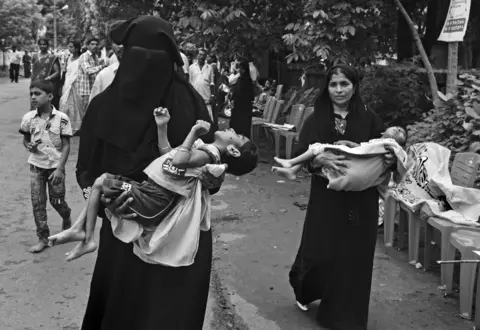
In the late 1990s and early 2000s, civil society groups, environment organisations and local people held massive protests demanding a ban on endosulfan. For years, parents who believed their children were impacted by the pesticide turned up to protests with their sick children in tow, demanding medical help and compensation from the government.
Madhuraj says these parents have spent years fighting private and public battles - the hardest being trying to keep their children alive.
"Every journey I have taken through the affected areas has convinced me that Kerala, which has made great strides in the health sector, has not done justice to the victims of the endosulfan tragedy," Madhuraj says.
 Madhuraj/Kochi Biennale Foundation
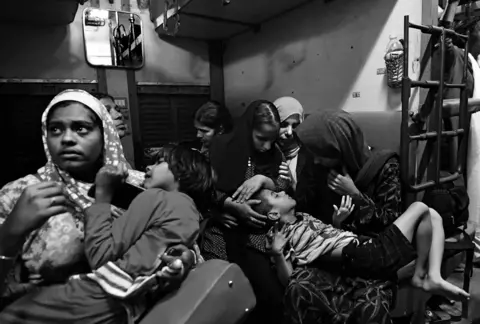 Madhuraj/Kochi Biennale Foundation
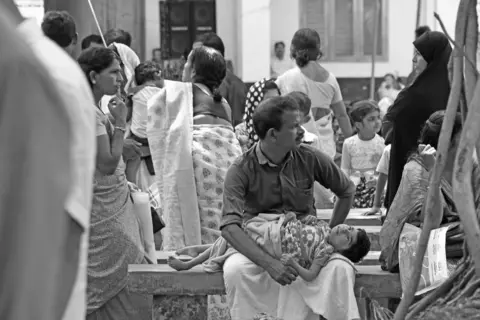 Madhuraj/Kochi Biennale Foundation
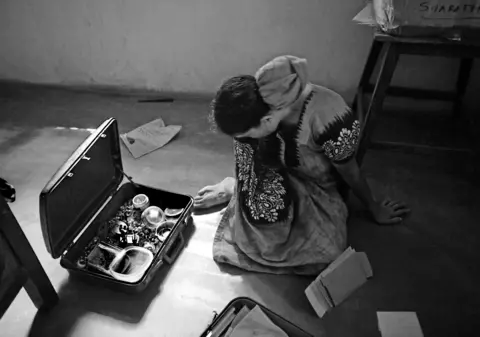 Madhuraj/Kochi Biennale Foundation
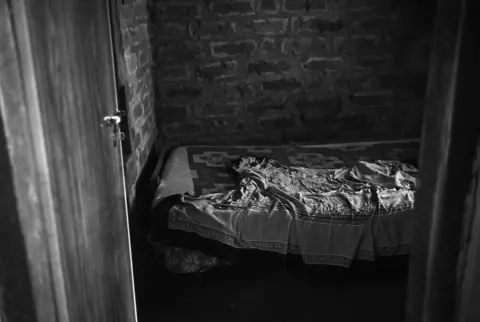 Madhuraj/Kochi Biennale Foundation
The tragic story of Vimala and her daughter, Reshma, who was 28 years old at the time of her death, underscores the heart-wrenching nature of the endosulfan tragedy.
According to reports in the media, Reshma, who was born with intellectual disabilities, was looked after by her grandmother while her mother went to work. Her father died when she was a child. In 2014, her grandmother died.
In 2019, during the Covid-19 pandemic, a special school that Reshma went to closed down.
In 2022, police said, Vimala allegedly killed her daughter before taking her own life. They told the media that Vimala struggled to care for her daughter alone.
Madhuraj said he decided to showcase his photos on the endosulfan tragedy at the Kochi Biennale because he wanted it to get more attention.
"Such disasters, and their human cost, should not be forgotten," he added.