Funding to expand SEND support in mainstream schools

 PA Media
More than £235m has been allocated for councils in the south of England to deliver more school places for children with special educational needs and disabilities (SEND) over the next year.
The funding is part of the first round of more than £3bn aimed at creating inclusive classrooms across England.
The Department for Education (DfE) promised a "transformative expansion" of inclusion bases - physical spaces in mainstream schools that enable early specialist support.
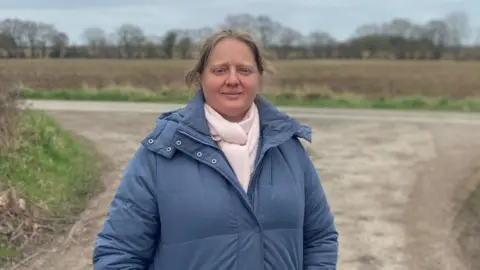
Dr Claire Brenner, founder of campaign group Oxfordshire SEND Parents Action, said there was "general unease" among parents in the SEND community on the focus on inclusion bases.
As part of the deal, local authorities will be required to sign a written agreement to prioritise increasing SEND places in mainstream schools.
They must also adopt strategies such as reducing the number of children with SEND who need to travel long distances to school, and making sure every child who needs a place in an inclusion base can access one.
The DfE said councils should also ensure sufficient special school and alternative provision places for young people with the most complex needs.
Total allocation for local authorities in the south for 2026-27
South East
Hampshire: £26,599,142
Isle of Wight: £1,210,581
Portsmouth: £2,248,198
Reading: £3,544,704
Bracknell Forest: £2,586,923
West Berkshire: £1,713,217
Slough: £2,396,984
Southampton: £3,484,905
Windsor and Maidenhead: £1,713,217
Wokingham: £2,220,867
Oxfordshire: £11,299,378
South West
Bournemouth Christchurch and Poole: £5,449,672
Dorset: £5,544,672
'Significant step'
The announcement on Tuesday followed the government's "landmark" SEND reforms, marking what it said was a "significant step towards ending the postcode lottery of support".
The DfE said inclusion bases enable pupils to move seamlessly between specialist support and mainstream classes, meeting a "wide range of needs" and building confidence and belonging.
But campaigner Claire Brenner, who is also the parent of a child with SEND, said while she welcomed any extra funding, she is worried that this is "inclusion on paper".
She told BBC Radio Oxford: "[Inclusion bases] feel a bit more like exclusion rooms if you're not also providing funding for more staff who have the appropriate training who can provide the support for these children.
"We need more special school spaces - yes, if children can be educated in mainstream that's great - but the uncomfortable reality is that an awful lot of children can't be educated in mainstream, some of them can't be educated in school at all."
Georgia Gould, Minister for School Standards, said: "Inclusion is a choice, one this government is proud to make, and the funding we're backing councils with will help make it a reality.
"Our SEND reforms will deliver specialist places where they are needed and ensure every secondary school has a space designed for children with SEND which they – and their families - can rely on.
"This is a further step towards rebuilding trust in the system and transforming outcomes for young people."
Sean Gaul, Oxfordshire County Council's Lib Dem cabinet member for children, education and young people's services, said: "We welcome the government's announcement of additional high needs capital funding and the clear national focus on creating more inclusive environments within mainstream schools.
"We also welcome the continued expansion of inclusion bases and see this as an important part of building a more sustainable, inclusive SEND system for the future."
Labour-run Reading Borough Council also welcomed the proposal to expand inclusion bases.
"Reading has an ambition to ensure that every child has a local school place that meets their needs and our plan to deliver this will build on the Government's proposals," it added.
Meanwhile, Richard Burton, Bournemouth Christchurch and Poole (BCP) Council's Lib Dem Cabinet Member for Children, Young People, Education and Skills, said: "We recognise that the government inherited this problem, and we welcome the fact they are now taking steps to address it.
"But real reform depends on long-term, secure funding that allows councils and partners, including schools, to plan properly and identify the best provision to meet children's needs."
Portsmouth City Council and Southampton City Council declined to comment.
You can follow BBC Oxfordshire on Facebook, X (Twitter), or Instagram.