Push to revive market gardens to meet local demand

 BBC
BBCA not-for-profit project is calling for more market gardens to feed the demand for locally produced fruit and vegetables.
OxFarmToFork, lead by Good Food Oxfordshire, says less than 1% of the produce grown in Oxfordshire stays here and that farmers need to make space to grow more of it.
According to the project's 2025 impact report, the initiative is "a thriving supply chain", counting 21 buyers, including Oxford Colleges, who are connected directly with 18 local producers.
Project lead Janie Bickersteth said the group, that started in 2023, wanted to show that "it is possible to grow food without damaging the environment" and help people eat better.
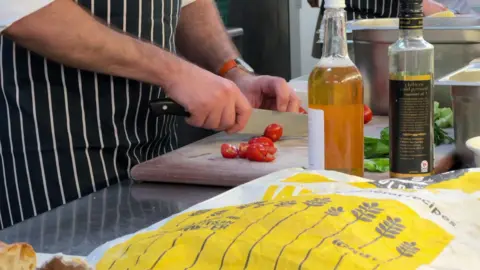
The OxFarmToFork report says £350,000 in local transactions have been generated through the project, with annual sales projected to reach £300,000 by the end of 2026.
It adds that due to zero-emissions logistics, collecting from farms within 50 miles of Oxford City, it has saved "over 2.8 million food miles".
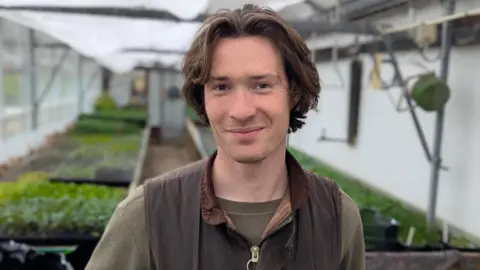
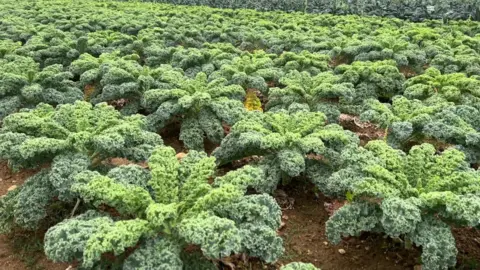
Harrison Fannon, co-founder of Worthy Earth, which has market gardens across Oxfordshire, Hampshire and Surrey, described it as "a small-scale horticultural business" that grows vegetables, flowers and herbs in order to deliver to the local area.
Fannon said market gardens had recently had "a bit of a resurgence" as people started to "think about how to create a better food system".
He said in the Oxfordshire village of Garsington there used to be three market gardens in the Victorian period through to the early 20th Century.
"Market gardens are a really good way of being able to grow food in a way that is good for the environment," he said.
OxFarmToFork reported that last year £32,000 was reinvested directly into infrastructure, including polytunnels and root washers.
"For some producers, OxFarmToFork now represents more than 50% of their total sales," it said.
Project lead Janie Bickersteth said: "We need to get more people onto the land."
"It's not AI proof, it's not robot proof, but it's a fantastic way to live outdoors," she said.
"All that we're trying to do is show that it is possible to grow food without damaging the environment and helping people to eat better, put better food in their bodies."
Fannon believes, given the choice, residents would prefer more market gardens staffed by local people than supermarkets that lack "human connection".
You can follow BBC Oxfordshire on Facebook, X (Twitter), or Instagram.