Fire-hit farms secure grazing for spring lambing

 Getty
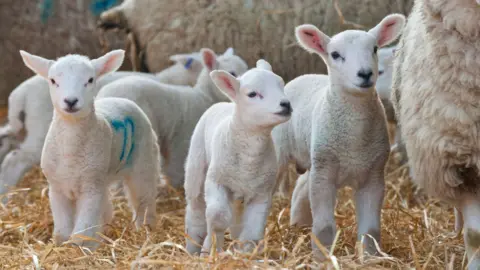
GettyEvery farm affected by a fire which burned for more than 40 days on moorland in North Yorkshire has found pasture land for the spring lambing season, according to the North York Moors National Park Authority (NYMNPA).
The fire on Fylingdales and Langdale moors in the national park began on 11 August and at its height covered nearly 10 sq miles (25 sq km).
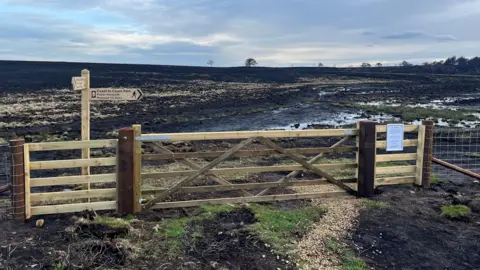
It destroyed vast tracts of heather, grass, and fencing, forcing farmers to feed livestock indoors over winter and was described by North Yorkshire Council as the worst wildfire in the county's history.
The NYMNPA said it had worked with farmers to make sure they had somewhere for their stock to be ahead of the lambing season.
Mark Young, project development manager with the authority, said: "They've all found areas to graze.
"They're not going to be on the moorland at Fylingdales this spring, the land's not ready to receive them yet. We wanted to make sure we got through that important period."
As well as the damage caused to the moorland by the fire, rising feed prices, driven by Russia's invasion of Ukraine and higher energy costs, have added to farmers' financial strain.
"There's enormous pressure on farmers," Young said.
"I don't want to understate how tough this is for people who are making their living out on the moor."
He said they had largely met their goal of replacing lost fencing by the end of March, with help from the Farming in Protected Landscapes scheme and Forestry England.
Areas where more than 20 World War Two ordnance below ground detonated during the fire will take slightly longer to fence.
"We don't want to be banging fence posts in in areas where there may be risks around that," Young said.
 Mark Young/North York Moors National Park Authority
Young stressed that the temporary grazing arrangements could not last indefinitely.
"From the livestock's point of view, they're on land that's a little nicer to graze.
"These are upland sheep though and it's important that we get them back up on to those areas as quickly as we can so they don't lose those important instincts to live in that climate."
Spring is a crucial time for lambing, as most ewes are bred in autumn and give birth in early to mid-spring after a five-month pregnancy.
An investigation by North Yorkshire Fire & Rescue found that the wildfire was caused by cooking with a naked flame.
The Scarborough and Whitby Labour MP Alison Hume, who represents the area at Westminster, has called for increased patrols to look for illegal wild camping and tougher penalties for offenders, citing the risks such activity poses to both the public and the environment.
Listen to highlights from North Yorkshire on BBC Sounds, catch up with the latest episode of Look North.