Domestic abuse charity wants more police support

 BBC
BBCRegular communication with victims of domestic abuse has often been forgotten by Guernsey Police, according to a charity supporting survivors.
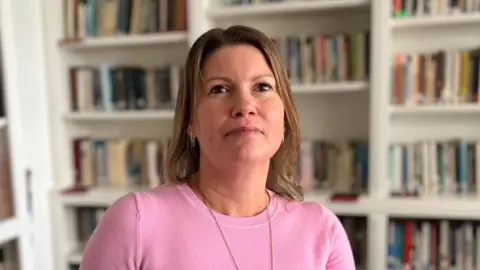
Naomi Wright, CEO of the charity Safer, a domestic abuse charity based in the island, said they aim to make contact with a victim within 48 hours of their first contact with police, but sometimes that was not happening - particularly over weekends or long holidays.
This came after calls for Guernsey Police to do more to support victims from a woman who was was strangled by her former partner.
Guernsey Police have been approached for a comment.
Wright, who has worked for the charity since 2012, said she still found victims experiences "shocking".
She said she also felt "empowered about the amount of strength and courage and resilience people have to move forward, report it, speak about it, which all helps other victims and survivors as well".
Wright said the experience people had with police was "a mixed bag", some had really positive experiences and other did not.
"We work with the police really closely and... I know they all have the best of intentions and they want to do the best for victims and survivors," she said.
"I think sometimes that focusing on that perpetrator and getting an end point to it for justice and forget that sometimes there's a victim at the end of it.
"It's a job to them [but] it's their life for the victim and survivor and understanding what's going on and communication is so important for that person."
'Humans make errors'
Wright said the ideal time frame for a police referral to the charity was 24 to 48 hours after the incident was reported to the police.
She said a lot of the time that was the case but there were times where it didn't because of a long weekend or things being missed.
"We're all human, humans make errors, so we don't always get them," she said.
She added: "We like to get them (the referral) that soon because we then have the best opportunity to contact a victim or survivor and the best opportunity to engage with them at the earliest point."
Sometimes the charity would get a referral but would not be able to get through to the victim or had issues with the mobile number not working so even if they got the the referral in the time frame they were not able to help straight away.
'Listening to victims'
The comments from the charity come after Alice - not her real name - was left "black and blue" after a vicious assault and said her experience with police had left her unlikely to ever rely on the force for support again.
Wright said she was disappointed for the experience Alice had, but said it reinforced her "drive to want to be able to make things better for victims and survivors... and make domestic abuse unacceptable".
Alice was invited to the police station for a discussion about her concerns after the BBC contacted police for comment.
Wright said: "I think it's a good thing that they are listening to victims and survivors.
"It's okay to admit to not doing things the best all the time... if that's what's happened everyone needs to understand why that is... so we can improve."
Wright advised those struggling with domestic abuse to reach out to the charity on their helpline or over email.
She said: "We're not there to judge, we're not there to tell them what to do, we're there to listen."
If you have been affected by any of the issues in this story, help and support is available at BBC Action Line.
Follow BBC Guernsey on X and Facebook and Instagram. Send your story ideas to channel.islands@bbc.co.uk.