Rare textile dye books to be preserved with grant

 Guzelian/ Lorne Campbell
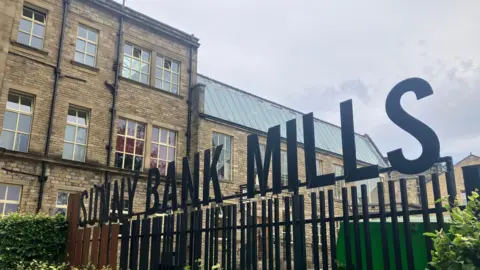
A former textile mill in Leeds has been awarded almost £250,000 for a project to preserve historical dye ledgers.
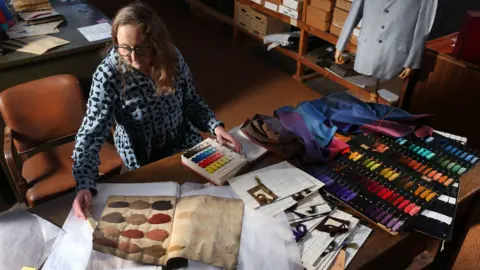
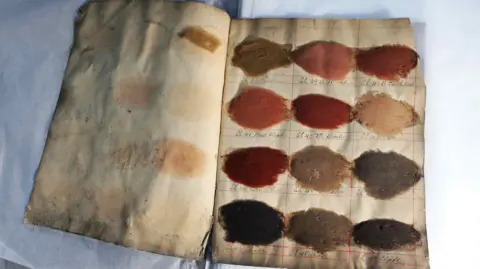
The National Lottery Heritage Fund money will be used to protect fragile hand-bound books, containing samples of dyed wool fibres at Sunny Bank Mills in Farsley.
Six records, dating back from 1888 to 1908, were discovered in the eaves of one of the buildings being regenerated at the site.
Rachel Moaby, Heritage Director at Sunny Bank Mills, said the ledgers gave an insight into a "unique bit of our textile history in the North".
"They are rare to find because there is not many of them out there," she contined.
"This mixing of dyes, this crossover period is a rare area of research.
"They offer an extraordinary snapshot of dyeing practices at a time of huge technological change."
 BBC/ Elizabeth Baines
The £243,449 funding will go towards uncovering, preserving and sharing the ledgers.
Known as dyevolution, the three-year-project will showcase the shift from natural dyes to the early use of synthetic colour, a transformation that reshaped textile manufacturing worldwide.
Moaby described the find as a "major part of the textile industry of the North and Farsley and this Yorkshire area".
 Guzelian/ Lorne Campbell
The project will be delivered with the support of the British Museum.
Dr Diego Tamburini, Scientist for Polymers and Modern Organic Materials at the British Museum, said the ledgers were an "invaluable and rare resource."
"They provide a unique window into how dyers experimented with new materials at the dawn of synthetic colour," he said.
"There is going to be loads of connections and access for the community to learn about and share about and be part of the whole project over the three years."
The project will also research the people connected to the objects.
"They are just dusty old objects, but when you start to research the people that were here at that time, it really brings it alive," Moaby added.
Listen to highlights from West Yorkshire on BBC Sounds, catch up with the latest episode of Look North.