Vineyard shares its 'unusual' method of winemaking

 Albury Vineyard
A Surrey vineyard has shared its "unusual" method of winemaking which involves manure and horns from cattle.
Albury Vineyard, in Guildford, has become one of the country's most prominent advocates of "biodynamic winemaking", a method where growers do not use artificial fertilisers.
Nick Wenman has told Secret Surrey his vineyard produces about 35,000 bottles of wine each year, adding the health of the soil is the core part of product quality.
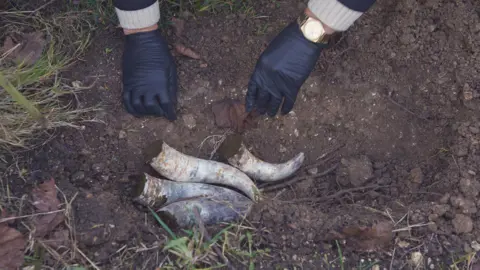
"One of the biodynamic operations we do is the cow horn compost," he said. "We fill cow horns with cow manure and bury the horns in the ground."
The procedure, known as Horn Manure or Preparation 500, is carried out in October, he added.
Wenman explains that after several months underground the manure transforms into a dark, humus‑rich material.
Once unearthed in spring, the material is mixed with water, vigorously stirred, and sprayed across the vineyard in small quantities.
He says the substance acts as a fertiliser, which stimulates microbial life in the soil and improves the vines' ability to absorb nutrients.
"Unless you have healthy soil you are not going to have healthy vines and you don't have good wine at the end of it," Wenman said.
 Albury Vineyard
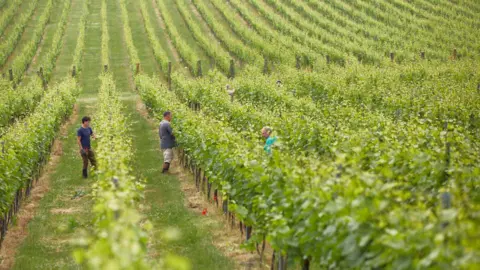
Wenman describes biodynamic winemaking as a little "unusual".
He says growers follow a holistic approach to winemaking, meaning the health of the soil and plant are interlinked.
He says they use a "biodynamic calendar", which is based on the lunar cycle.
"There are different phases of the moon, which have different gravitational pull and that changes the flow of the sap in the vines," Wenmen said.
"When the moon is descending, the saps go back down into the vines but when the moon is ascending it comes up."
Wenman says lunar activity therefore helps them decide how they treat the vines, whether it is pruning or fertilising.
He told Secret Surrey they supported biodynamic winemaking as part of its broader commitment to sustainability.
Follow BBC Surrey on Facebook, on X. Send your story ideas to southeasttoday@bbc.co.uk or WhatsApp us on 08081 002250.