'Our UNESCO model village is a place you can work, play and live in'

 Getty Images
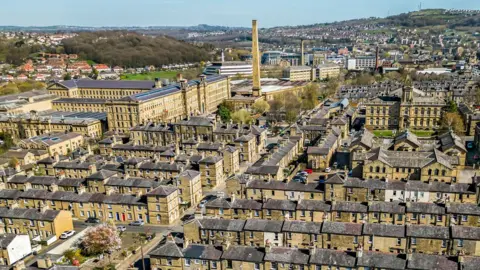
The model village of Saltaire in West Yorkshire is celebrating 25 years as a UNESCO World Heritage Site, marking it as a place of global importance. But what does that status mean for the people who live there?
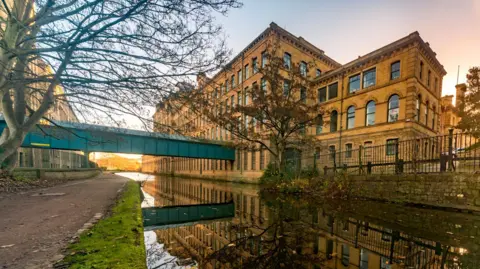
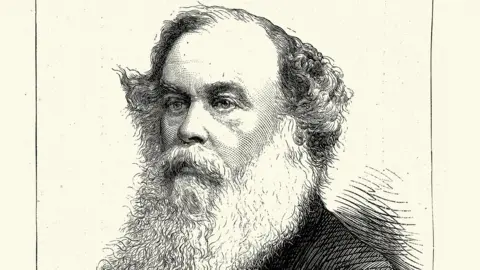
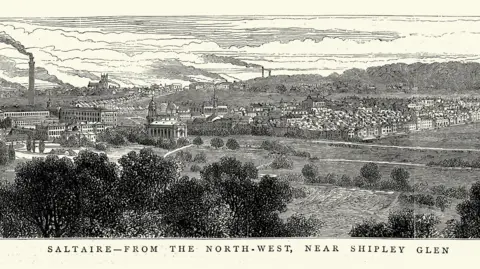
Situated on the River Aire, less than four miles from Bradford, Saltaire was built by industrialist Sir Titus Salt between 1851 and 1871 to provide homes and amenities for the workers in his textile mill.
Salt's Mill produced cloth made from alpaca wool from South America.
One of the reasons Salt chose the site was because of its location on the Leeds & Liverpool canal, connecting it to Liverpool docks.
According to historians from the Canal & River Trust, legend has it that Salt visited a warehouse in Liverpool and saw an alpaca - but was told the wool was no good for cloth making. He decided to take a chance on the material, and succeeded.
Eventually even Queen Victoria was wearing his alpaca cloth.
 Getty Images
The terraced houses he built for his workers were revolutionary, says Maggie Smith, trustee of the Saltaire World Heritage Education Association.
"He was way ahead of his time - 100 years before the welfare state, Salt was meeting every possible human need," she says.
"Salt did his level best while in Bradford for 30 years, became Lord Mayor, pushed for improvements, but began to realise with Chartist riots going on that the working people weren't getting a good deal.
"So from his point of view, the answer was to build near Bradford, which was a crucial trading hub, but to build in the countryside and to actually provide for all his workers' needs."
In the village, Salt provided education, pensions and improved hygiene.
"If you compare him with some of his contemporaries like Samuel Lister, they bought landed estates, they didn't do what he did," says Smith.
"So whether you call it philanthropy or paternalism or attempts to control workers, all I know is that it worked.
"We've got long service certificates from people who started work with Salt aged 10 and were still working 70 years later. That's the longest one we have. He was 80 and still going strong.
"Infant mortality reduced rapidly, lifespans increased, communities were formed."
 Getty Images
In 2001 the village was awarded UNESCO World Heritage Site status, meaning it is a place of global historical importance and must be protected.
Brandi Hall-Crossgrove, Bradford Council's World Heritage Site officer, works with property owners, residents and businesses to make sure they are preserving and conserving the site.
One of the big challenges, she says, is managing growing "gentrification".
"It's tourism, but it's also the place that's lived in. The residents would say it's a living village," she says.
"It's listed the same as Venice, but we don't want it to become Venice. We want it to be a living, breathing village where you can work, play and live.
"It's about mitigating those things, that they don't become Airbnbs and that people do live there and keep up the places. It's part of the intangible cultural heritage of the place, having people living there and using the space.
"And that's something I don't want to lose. That's something that has very much been lost in Venice and is starting to be lost in Bath even."
She says the village has changed "drastically" in the past 25 years.
"Back in the 1980s, it was derelict and not doing well at all. Now we're at the point that we're worried about gentrification."
Living and working in a UNESCO World Heritage Site presents it challenges.
Many of the buildings are listed, meaning anyone wanting to make changes to their property has to go through a rigorous process.
"A lot of people say, 'We don't live in a museum.' I personally like to say, 'Yes, you do, but it's a living museum.'
"It is somewhere you live and it will adjust like a museum adjusts for different things. But that's exactly what it is. We're a living testament to the historical past."
 Getty Images
Zoë Silver is a co-director, along with her sister Davina, of the key building in the village, Salt's Mill.
In 1987 their father Jonathan Silver bought the Grade II* listed mill and hung it with pictures by David Hockney.
It now boasts an art gallery, shops, restaurants and spaces for hire with about 1,000 people working on site.
"It's the most extraordinary achievement and it's the most extraordinary place and it's a living place, it's a breathing place, it's constantly evolving, constantly changing," says Zoë.
"So I think in some ways that makes it unique as a World Heritage Site.
"I find the whole place inspiring and beautiful and extraordinary.
"From our office window, I can only see part of a window jutting out of the side of the mill, but it's got the most amazing stonework, it's got a beautiful arch, it's got beautiful keystone.
"The level of detailing on every piece of stonework is amazing. I think the whole place is absolutely monumental and incredible."
She says the level of work required to maintain the historic mill is "constant".
"We're here every day and we're always taking care of different aspects.
"Any building needs constant care and if you don't do it, it bites you on the bum.
"But here, it's just like times by six billion because it's so huge and it demands constant care, but it also deserves it because it's so incredible."
Listen to highlights from West Yorkshire on BBC Sounds, catch up with the latest episode of Look North.